Genome Analysis Unit, Discovery Research, Amgen Inc., South San Francisco , CA, USA.
Front Immunol. 2012 Nov 22;3:336. doi: 10.3389/fimmu.2012.00336. eCollection 2012.
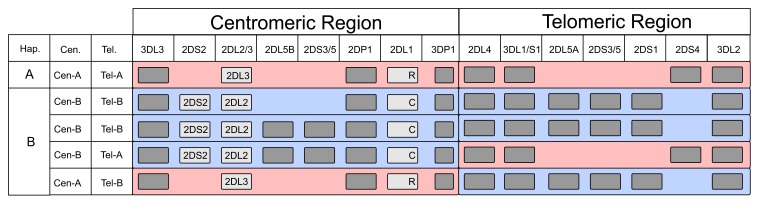
Interactions between killer immunoglobulin-like receptors (KIRs) and their HLA-A, -B, and -C ligands diversify the functions of human natural killer cells. Consequently, combinations of KIR and HLA genotypes affect resistance to infection and autoimmunity, success of reproduction and outcome of hematopoietic cell transplantation. HLA-C, with its C1 and C2 epitopes, evolved in hominids to be specialized KIR ligands. The system's foundation was the C1 epitope, with C2 a later addition, by several million years. The human inhibitory receptor for C1 is encoded by KIR2DL2/3, a gene having two divergent allelic lineages: KIR2DL2 is a B KIR haplotype component and KIR2DL3 an A KIR haplotype component. Although KIR2DL2 and KIR2DL3 exhibit quantitative differences in specificity and avidity for HLA-C, they qualitatively differ in their genetics, functional effect, and clinical influence. This is due to linkage disequilibrium between KIR2DL2 and KIR2DS2, a closely related activating receptor that was selected for lost recognition of HLA-C.
杀伤细胞免疫球蛋白样受体 (KIR) 与其 HLA-A、-B 和 -C 配体的相互作用使人类自然杀伤细胞的功能多样化。因此,KIR 和 HLA 基因型的组合影响感染和自身免疫的抗性、生殖的成功以及造血细胞移植的结果。HLA-C 及其 C1 和 C2 表位在人类中进化为专门的 KIR 配体。该系统的基础是 C1 表位,C2 是几百万年前的后来添加物。人类 C1 的抑制性受体由 KIR2DL2/3 编码,该基因有两个不同的等位基因谱系:KIR2DL2 是 B KIR 单倍型的组成部分,KIR2DL3 是 A KIR 单倍型的组成部分。尽管 KIR2DL2 和 KIR2DL3 在对 HLA-C 的特异性和亲和力方面存在定量差异,但它们在遗传学、功能效应和临床影响方面存在质的差异。这是由于 KIR2DL2 与 KIR2DS2 之间的连锁不平衡所致,KIR2DS2 是一种密切相关的激活受体,其选择是为了失去对 HLA-C 的识别。