Department of Pathology, University of Michigan Medical School, Ann Arbor, MI, USA.
EMBO Mol Med. 2012 Dec;4(12):1234-43. doi: 10.1002/emmm.201201375.
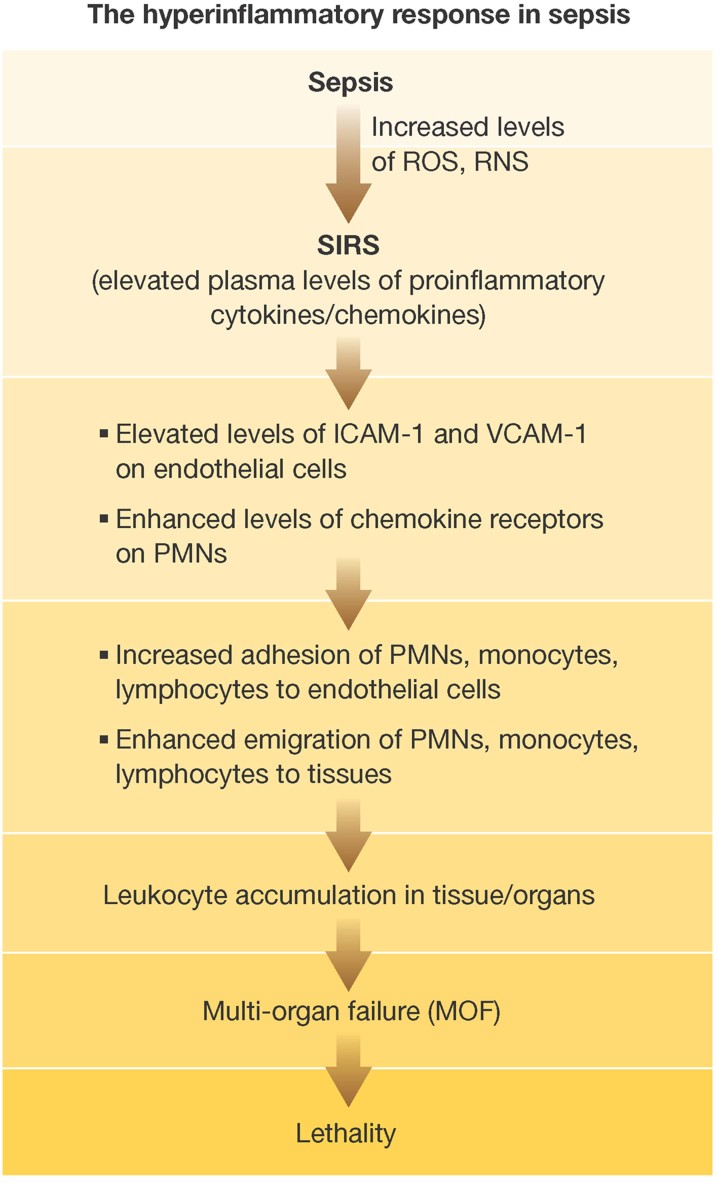
Models of sepsis have been instructive in understanding the sequence of events in animals and, to an extent, in humans with sepsis. Events developing early in sepsis suggest that a hyperinflammatory state exists, accompanied by a buildup of oxidants in tissues reflective of a redox imbalance. Development of immunosuppression and degraded innate and adaptive immune responses are well-established complications of sepsis. In addition, there is robust activation of the complement system, which contributes to the harmful effects of sepsis. These events appear to be associated with development of multiorgan failure. The relevance of animal models of sepsis to human sepsis and the failure of human clinical trials are discussed, together with suggestions as to how clinical trial design might be improved.
败血症模型在理解动物和一定程度上败血症患者的事件序列方面具有启发性。败血症早期发生的事件表明存在过度炎症状态,同时组织中氧化剂的积累反映了氧化还原失衡。免疫抑制和先天及适应性免疫反应受损是败血症的既定并发症。此外,补体系统也被强烈激活,这有助于败血症的有害影响。这些事件似乎与多器官衰竭的发展有关。本文讨论了败血症动物模型与人类败血症的相关性以及人类临床试验的失败,并就如何改进临床试验设计提出了建议。