Pulmonary Center, Boston University School of Medicine, Boston, Massachusetts, United States of America.
PLoS Genet. 2012;8(11):e1003105. doi: 10.1371/journal.pgen.1003105. Epub 2012 Nov 29.
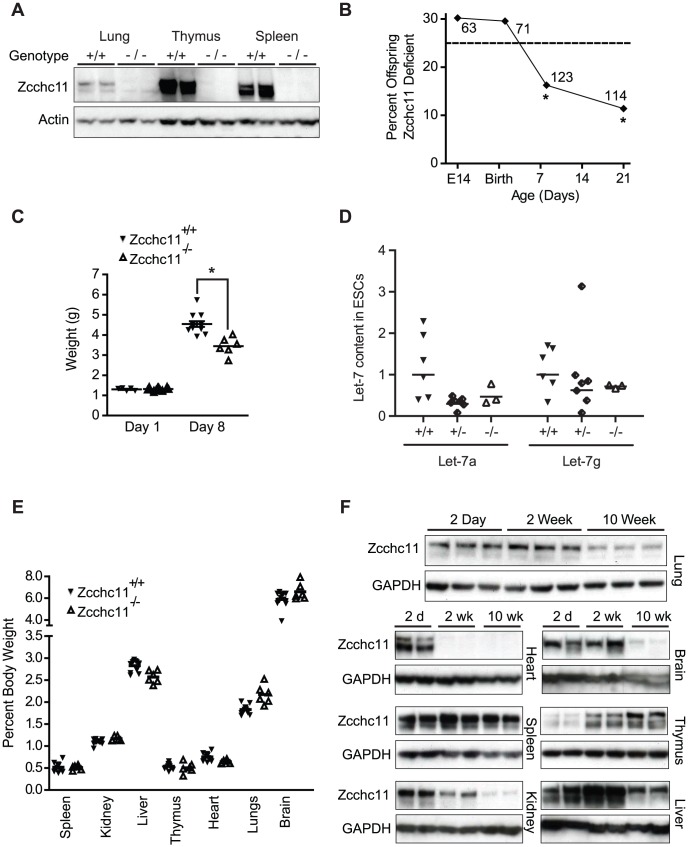
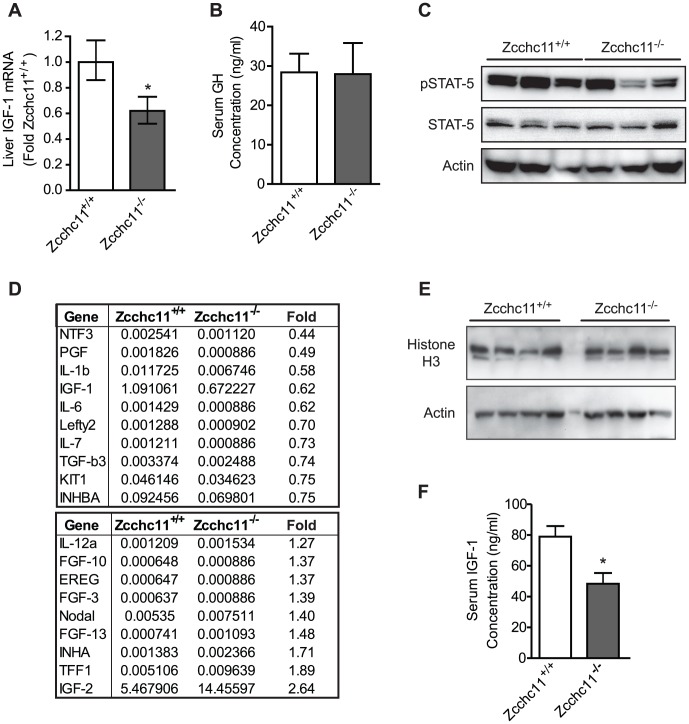
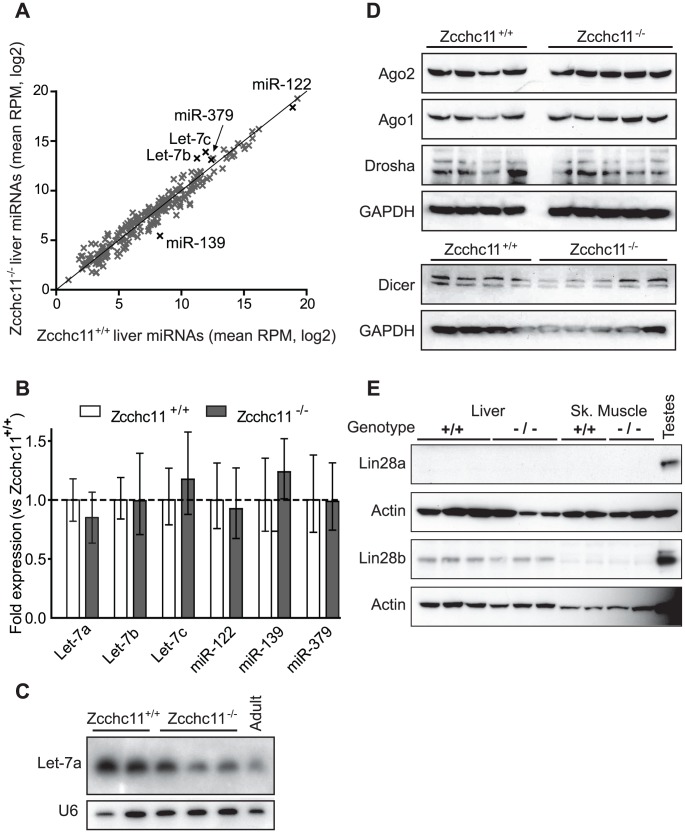
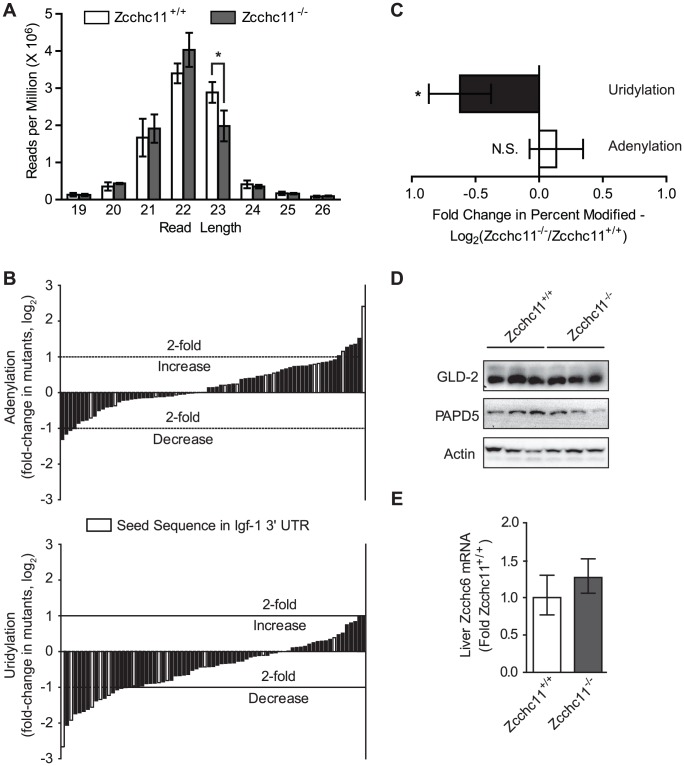
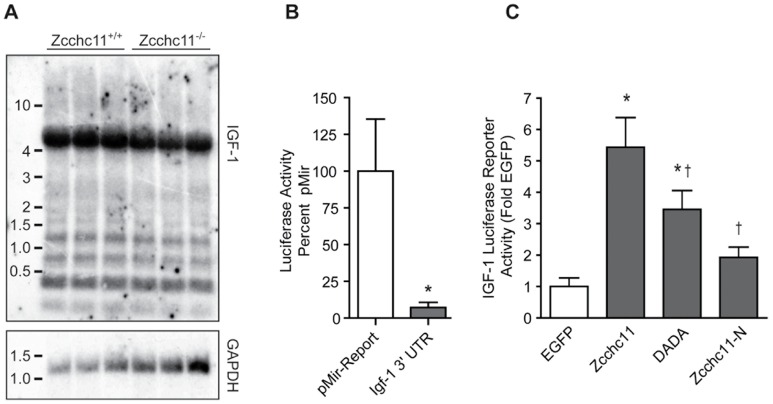
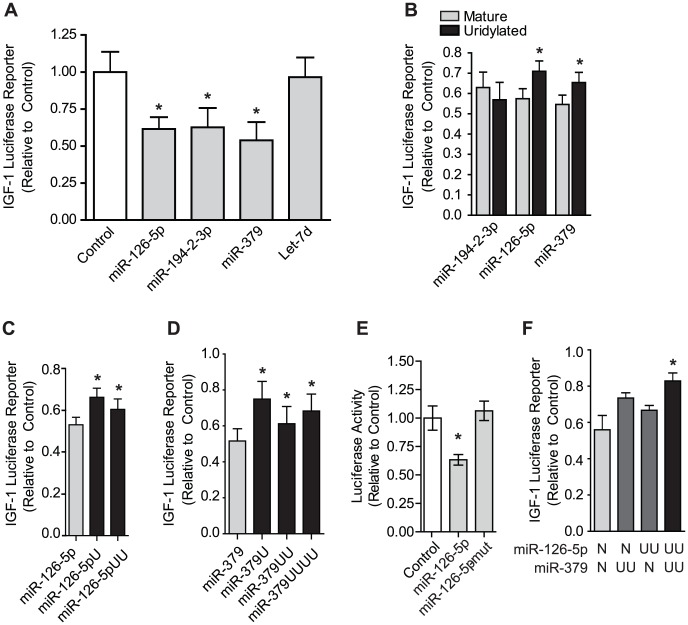
The Zcchc11 enzyme is implicated in microRNA (miRNA) regulation. It can uridylate let-7 precursors to decrease quantities of the mature miRNA in embryonic stem cell lines, suggested to mediate stem cell maintenance. It can uridylate mature miR-26 to relieve silencing activity without impacting miRNA content in cancer cell lines, suggested to mediate cytokine and growth factor expression. Broader roles of Zcchc11 in shaping or remodeling the miRNome or in directing biological or physiological processes remain entirely speculative. We generated Zcchc11-deficient mice to address these knowledge gaps. Zcchc11 deficiency had no impact on embryogenesis or fetal development, but it significantly decreased survival and growth immediately following birth, indicating a role for this enzyme in early postnatal fitness. Deep sequencing of small RNAs from neonatal livers revealed roles of this enzyme in miRNA sequence diversity. Zcchc11 deficiency diminished the lengths and terminal uridine frequencies for diverse mature miRNAs, but it had no influence on the quantities of any miRNAs. The expression of IGF-1, a liver-derived protein essential to early growth and survival, was enhanced by Zcchc11 expression in vitro, and miRNA silencing of IGF-1 was alleviated by uridylation events observed to be Zcchc11-dependent in the neonatal liver. In neonatal mice, Zcchc11 deficiency significantly decreased IGF-1 mRNA in the liver and IGF-1 protein in the blood. We conclude that the Zcchc11-mediated terminal uridylation of mature miRNAs is pervasive and physiologically significant, especially important in the neonatal period for fostering IGF-1 expression and enhancing postnatal growth and survival. We propose that the miRNA 3' terminus is a regulatory node upon which multiple enzymes converge to direct silencing activity and tune gene expression.
Zcchc11 酶参与 microRNA(miRNA)调节。它可以对 let-7 前体进行尿嘧啶化,从而减少胚胎干细胞系中成熟 miRNA 的数量,这表明它可以介导干细胞的维持。它可以对成熟的 miR-26 进行尿嘧啶化,从而减轻沉默活性,而不影响癌细胞系中的 miRNA 含量,这表明它可以介导细胞因子和生长因子的表达。Zcchc11 在塑造或重塑 miRNome 或指导生物或生理过程中的更广泛作用仍然完全是推测性的。我们生成了 Zcchc11 缺陷型小鼠来解决这些知识空白。Zcchc11 缺陷对胚胎发生或胎儿发育没有影响,但它在出生后立即显著降低了存活率和生长速度,表明该酶在新生儿后期的适应能力中起作用。来自新生肝脏的小 RNA 的深度测序揭示了该酶在 miRNA 序列多样性中的作用。Zcchc11 缺陷减少了各种成熟 miRNA 的长度和末端尿嘧啶频率,但对任何 miRNA 的数量都没有影响。IGF-1 的表达,一种对早期生长和存活至关重要的肝脏衍生蛋白,在体外通过 Zcchc11 的表达增强,并且 IGF-1 的 miRNA 沉默通过在新生肝脏中观察到的依赖 Zcchc11 的尿嘧啶化事件得到缓解。在新生小鼠中,Zcchc11 缺陷显著降低了肝脏中的 IGF-1 mRNA 和血液中的 IGF-1 蛋白。我们得出结论,Zcchc11 介导的成熟 miRNA 的末端尿嘧啶化是普遍存在且具有生理意义的,尤其是在新生儿期,对于促进 IGF-1 表达和增强出生后生长和存活非常重要。我们提出,miRNA 3' 末端是多个酶汇聚以指导沉默活性和调整基因表达的调节节点。