Department of Endocrinology, The First Affiliated Hospital of the Fourth Military Medical University, Xi'an, Shaanxi, China.
PLoS One. 2012;7(11):e51186. doi: 10.1371/journal.pone.0051186. Epub 2012 Nov 30.
Obesity has been demonstrated to be associated with increased serum uric acid (SUA); however, little is known regarding the relationship between maximum weight, or maximum weight fluctuation, and uric acid concentration. Through retrospective means, we determined the association of maximum weight with SUA risk.
Data of 21,414 participants (8,630 males and 12,784 females) from the 2007-8 China National Diabetes and Metabolic Disorders Study were analyzed for parameters including lifestyle habits, biochemical blood analysis and self-reported maximum weight.
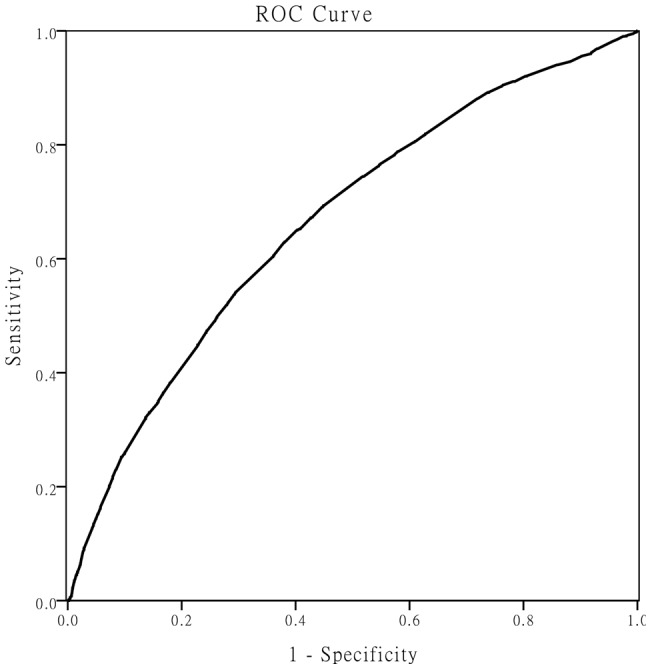
Elevated SUA subjects shared a cluster of demographic features. After adjustment for age, gender, education, smoking, drinking, physical activity, WHR, height, eGFR(evaluate glomerular filtration rate), and diuretic usage, multivariate logistic regression models demonstrated maximum weight was associated with increased risk of elevated SUA level (P<0.001). Duration of maximum weight was related with decreased risk of elevated SUA level (P<0.001). There was a significant correlation between time of weight loss and risk of increased SUA level reduction (P<0.001). Furthermore, our data indicated that the degree of weight loss from maximum weight was another important factor for the risk of increased SUA level reduction (P<0.001). Finally, ROC curve analysis revealed area under the curve was 0.661 (95% CI, 0.647-0.674), statistically significant for maximum weight association with hyperuricemia (P<0.001).
Maximum weight is a strong risk factor for increased uric acid level in the Chinese population, which might serve as a novel clinical indicator suggesting hyperuricemia. Controlling maximum weight, keeping weight to the appropriate range, and maintaining the stable weight may be conducive for decreasing risk of hyperuricemia.
肥胖已被证实与血清尿酸(SUA)升高有关;然而,关于最大体重或最大体重波动与尿酸浓度之间的关系知之甚少。通过回顾性方法,我们确定了最大体重与 SUA 风险的关系。
对 2007-2008 年中国国家糖尿病和代谢紊乱研究中的 21414 名参与者(男性 8630 名,女性 12784 名)的数据进行了分析,包括生活方式习惯、生化血液分析和自我报告的最大体重。
SUA 升高的受试者具有一组共同的人口统计学特征。在校正年龄、性别、教育程度、吸烟、饮酒、体力活动、腰臀比、身高、eGFR(肾小球滤过率评估)和利尿剂使用情况后,多变量逻辑回归模型表明,最大体重与升高的 SUA 水平升高风险相关(P<0.001)。最大体重持续时间与降低升高的 SUA 水平风险相关(P<0.001)。体重减轻的时间与降低升高的 SUA 水平风险呈显著相关(P<0.001)。此外,我们的数据表明,最大体重减轻的程度是降低升高的 SUA 水平风险的另一个重要因素(P<0.001)。最后,ROC 曲线分析显示曲线下面积为 0.661(95%CI,0.647-0.674),最大体重与高尿酸血症的相关性具有统计学意义(P<0.001)。
最大体重是中国人尿酸水平升高的一个强烈危险因素,它可能是提示高尿酸血症的一个新的临床指标。控制最大体重,将体重保持在适当的范围内,保持稳定的体重可能有利于降低高尿酸血症的风险。