The Centre for Marine Bio-Innovation, University of New South Wales, Sydney, Australia.
PLoS One. 2012;7(12):e50854. doi: 10.1371/journal.pone.0050854. Epub 2012 Dec 3.
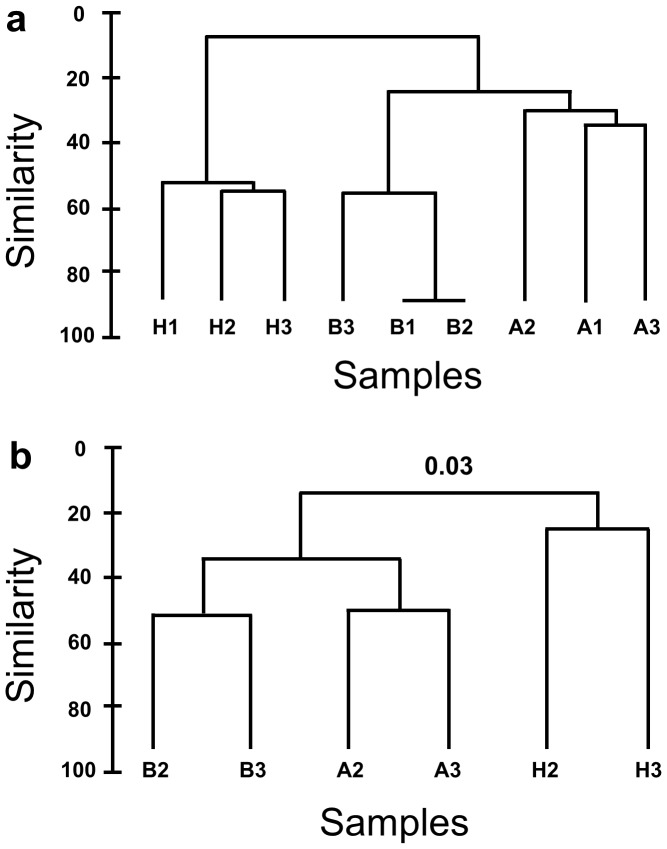
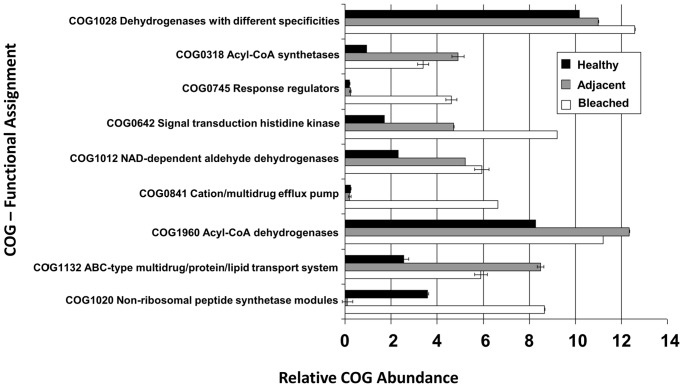
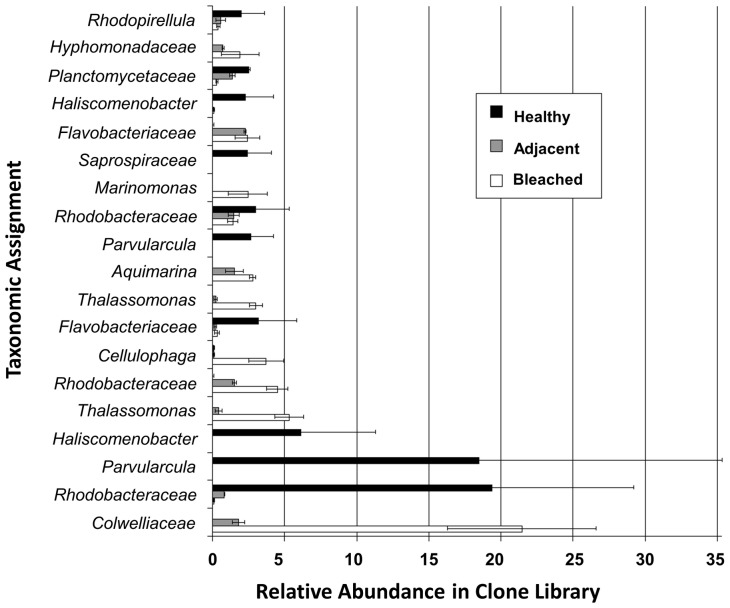
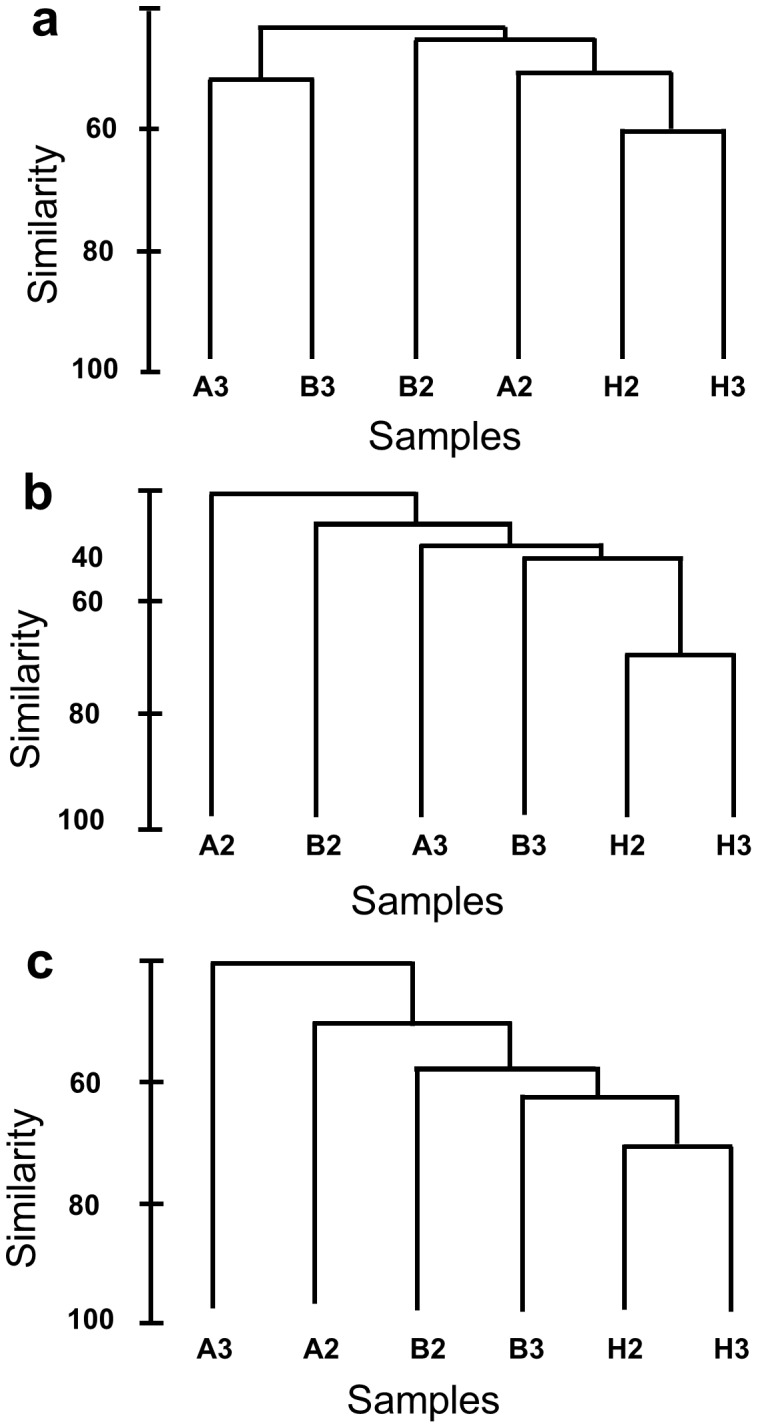
Disease is increasingly viewed as a major factor in the ecology of marine communities and its impact appears to be increasing with environmental change, such as global warming. The temperate macroalga Delisea pulchra bleaches in Southeast Australia during warm summer periods, a phenomenon which previous studies have indicated is caused by a temperature induced bacterial disease. In order to better understand the ecology of this disease, the bacterial communities associated with threes type of samples was investigated using 16S rRNA gene and environmental shotgun sequencing: 1) unbleached (healthy) D. pulchra 2) bleached parts of D. pulchra and 3) apparently healthy tissue adjacent to bleached regions. Phylogenetic differences between healthy and bleached communities mainly reflected relative changes in the taxa Colwelliaceae, Rhodobacteraceae, Thalassomonas and Parvularcula. Comparative metagenomics showed clear difference in the communities of healthy and diseased D. pulchra as reflected by changes in functions associated with transcriptional regulation, cation/multidrug efflux and non-ribosomal peptide synthesis. Importantly, the phylogenetic and functional composition of apparently healthy tissue adjacent to bleached sections of the thalli indicated that changes in the microbial communities already occur in the absence of visible tissue damage. This shift in unbleached sections might be due to the decrease in furanones, algal metabolites which are antagonists of bacterial quorum sensing. This study reveals the complex shift in the community composition associated with bleaching of Delisea pulchra and together with previous studies is consistent with a model in which elevated temperatures reduce levels of chemical defenses in stressed thalli, leading to colonization or proliferation by opportunistic pathogens or scavengers.
疾病日益被视为海洋群落生态的一个主要因素,其影响似乎随着环境变化(如全球变暖)而增加。在澳大利亚东南部的温暖夏季期间,温带大型海藻 Delisea pulchra 会发生漂白现象,先前的研究表明,这是由温度诱导的细菌疾病引起的。为了更好地了解这种疾病的生态学,使用 16S rRNA 基因和环境鸟枪法测序研究了与三种类型样本相关的细菌群落:1)未漂白(健康)的 D. pulchra 2)D. pulchra 的漂白部分和 3)明显健康的组织毗邻漂白区域。健康和漂白群落之间的系统发育差异主要反映了 Colwelliaceae、Rhodobacteraceae、Thalassomonas 和 Parvularcula 分类群的相对变化。比较宏基因组学表明,健康和患病 D. pulchra 之间的群落存在明显差异,这反映在与转录调控、阳离子/多药外排和非核糖体肽合成相关的功能变化上。重要的是,与漂白部位相邻的未漂白组织的微生物群落的系统发育和功能组成表明,在没有可见组织损伤的情况下,微生物群落已经发生了变化。未漂白部分的这种转变可能是由于呋喃酮的减少,呋喃酮是一种细菌群体感应的拮抗剂,是藻类代谢物。这项研究揭示了与 Delisea pulchra 漂白相关的群落组成的复杂变化,与先前的研究一致,表明高温降低了应激组织中化学防御的水平,导致机会性病原体或清道夫的定植或增殖。