Laboratory of Molecular Biophysics, Department of Biochemistry, University of Oxford, South Parks Road, Oxford OX1 3QU, UK.
J Synchrotron Radiat. 2013 Jan;20(Pt 1):23-36. doi: 10.1107/S0909049512046237. Epub 2012 Dec 5.
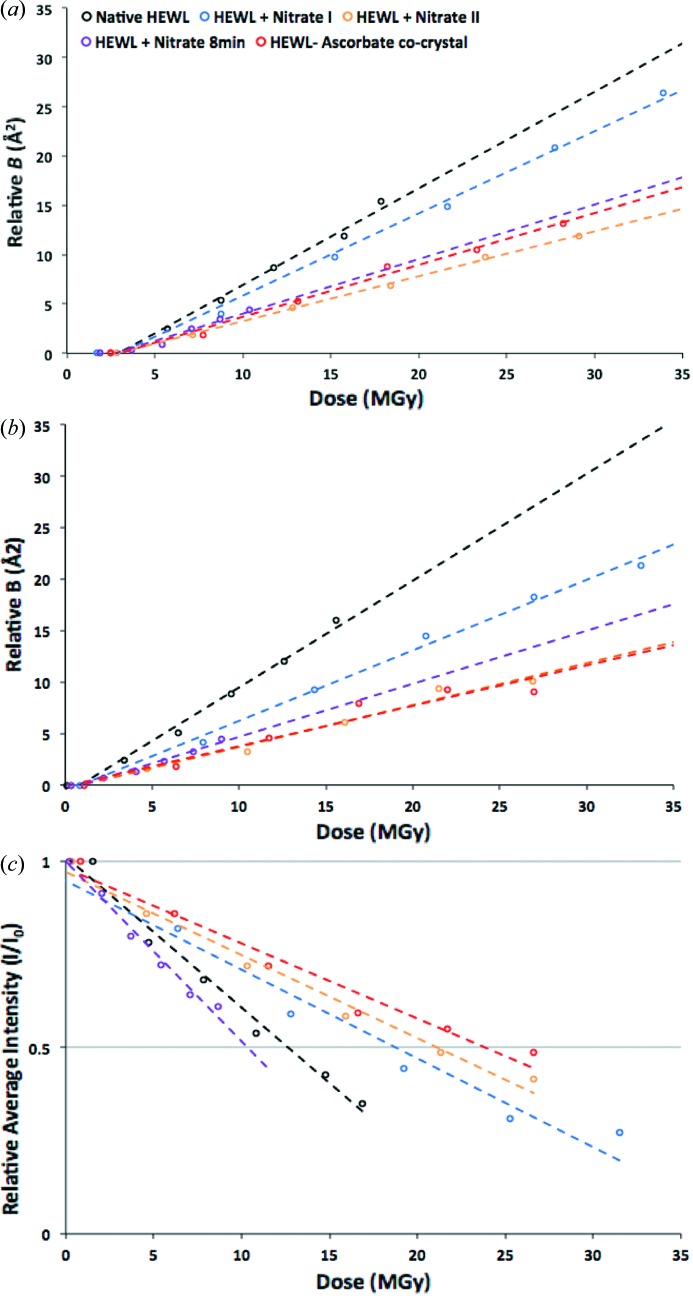
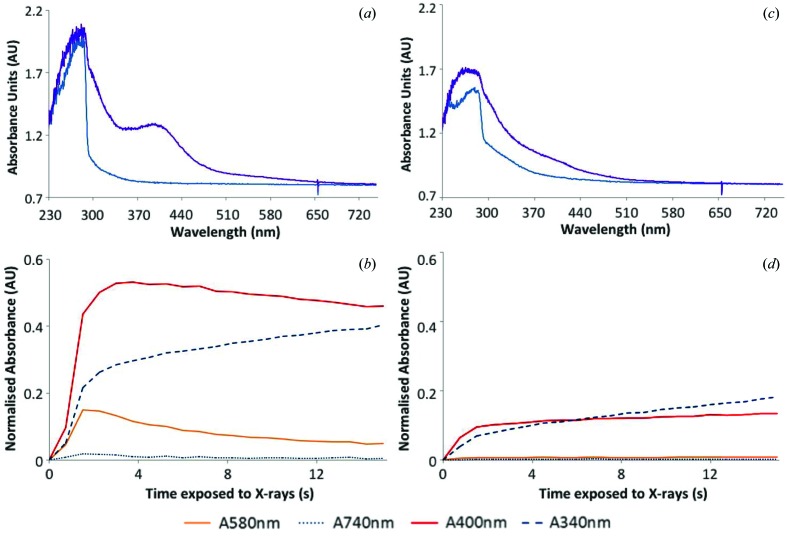
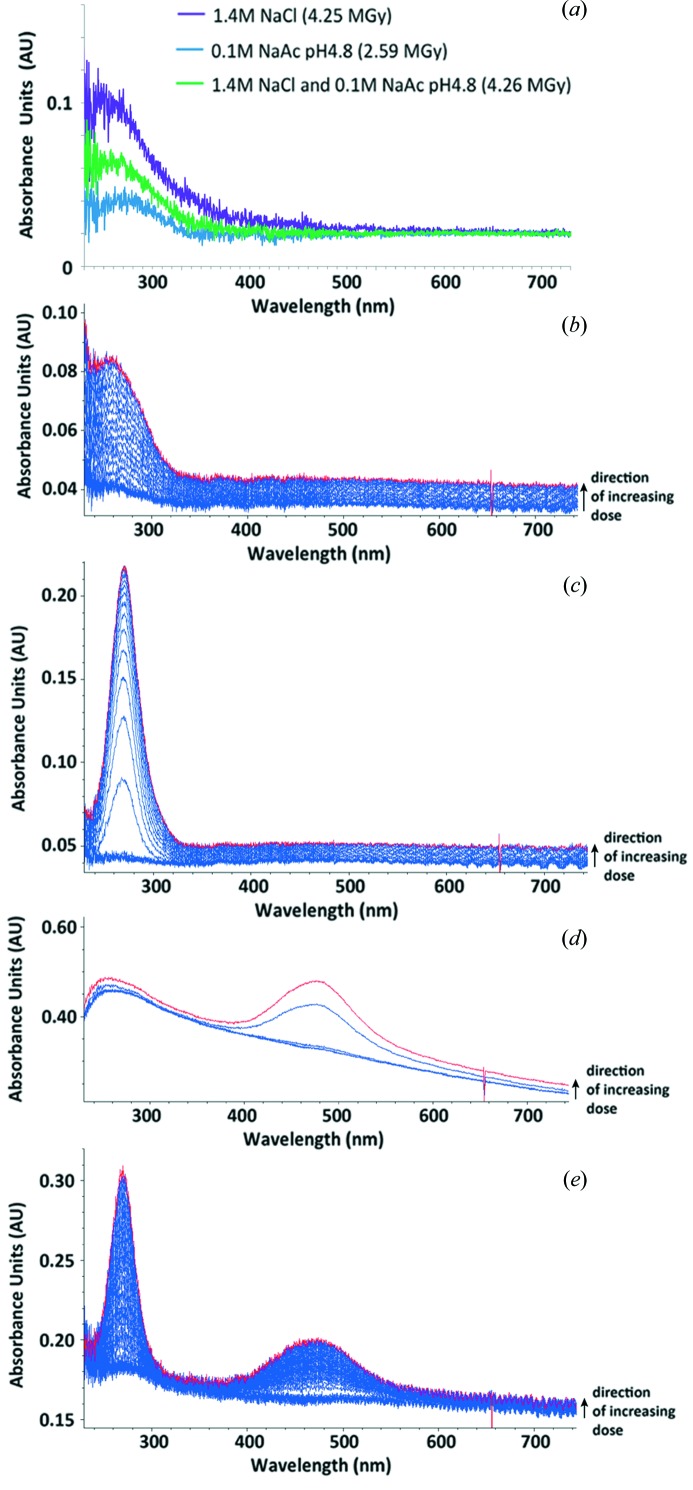
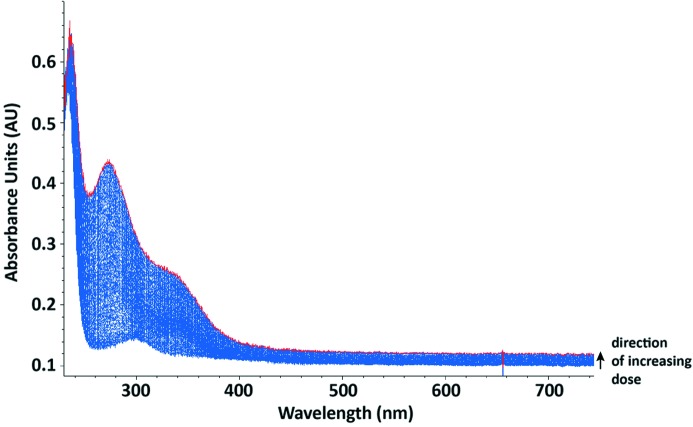
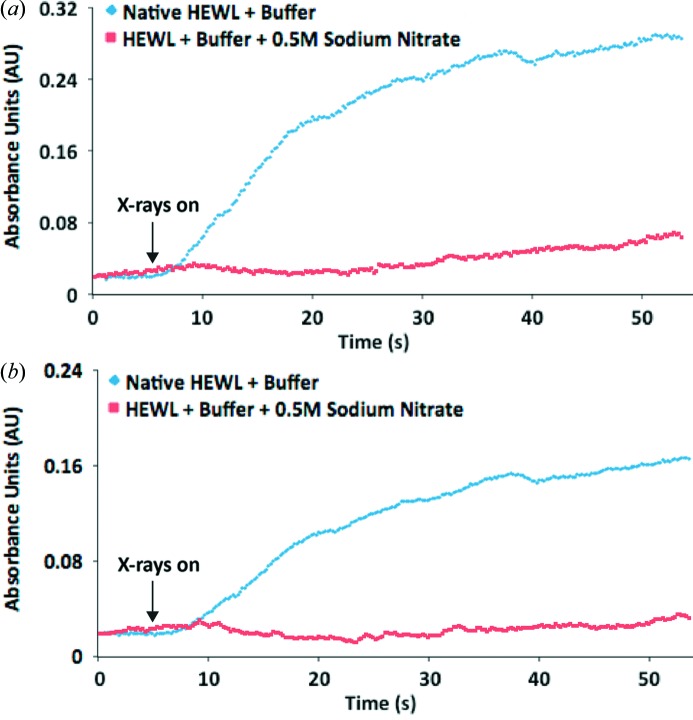
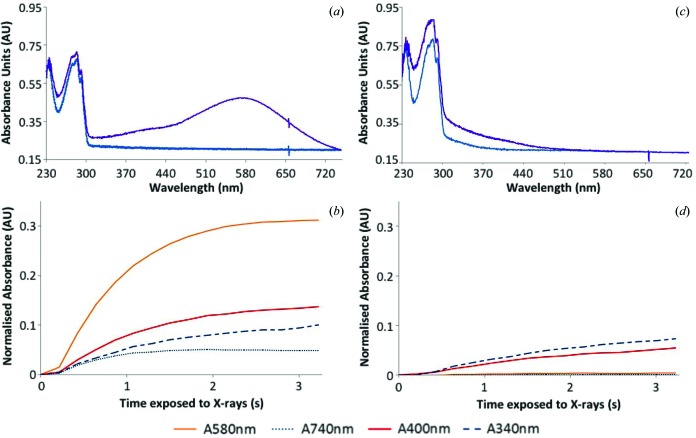
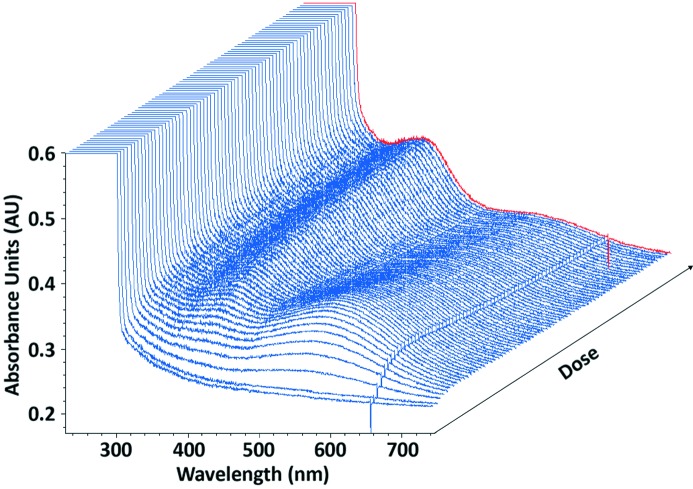
An extensive radiation chemistry literature would suggest that the addition of certain radical scavengers might mitigate the effects of radiation damage during protein crystallography diffraction data collection. However, attempts to demonstrate and quantify such an amelioration and its dose dependence have not yielded consistent results, either at room temperature (RT) or 100 K. Here the information thus far available is summarized and reasons for this lack of quantitative success are identified. Firstly, several different metrics have been used to monitor and quantify the rate of damage, and, as shown here, these can give results which are in conflict regarding scavenger efficacy. In addition, significant variation in results from data collected from crystals treated in nominally the same way has been observed. Secondly, typical crystallization conditions contain substantial concentrations of chemical species which already interact strongly with some of the X-ray-induced radicals that the added scavengers are intended to intercept. These interactions are probed here by the complementary technique of on-line microspectrophotometry carried out on solutions and crystals held both at 100 K and RT, the latter enabled by the use of a beamline-mounted humidifying device. With the help of computational chemistry, attempts are made to assign some of the characteristic spectral features observed experimentally. A further source of uncertainty undoubtedly lies in the challenge of reliably measuring the parameters necessary for the accurate calculation of the absorbed dose (e.g. crystal size and shape, beam profile) and its distribution within the volume of the crystal (an issue addressed in detail in another article in this issue). While microspectrophotometry reveals that the production of various species can be quenched by the addition of scavengers, it is less clear that this observation can be translated into a significant gain in crystal dose tolerance for macromolecular crystallographers.
大量辐射化学文献表明,添加某些自由基清除剂可能会减轻蛋白质晶体学衍射数据收集过程中辐射损伤的影响。然而,试图证明和量化这种改善及其剂量依赖性的尝试并未在室温 (RT) 或 100 K 下产生一致的结果。在这里,总结了迄今为止可用的信息,并确定了缺乏定量成功的原因。首先,已经使用了几种不同的指标来监测和量化损伤速率,并且,如这里所示,这些指标可能会给出关于清除剂功效的冲突结果。此外,从以名义上相同的方式处理的晶体中收集的数据中观察到了显著的结果差异。其次,典型的结晶条件包含大量的化学物质,这些物质已经与一些 X 射线诱导的自由基强烈相互作用,而添加的清除剂旨在拦截这些自由基。在这里,通过在 100 K 和 RT 下进行在线微分光光度法(在线微分光光度法是一种互补技术)来探测这些相互作用,后者得益于使用束线上安装的加湿设备。借助计算化学,尝试对实验中观察到的一些特征光谱特征进行分配。另一个不确定的来源无疑在于可靠地测量吸收剂量(例如晶体的大小和形状、光束轮廓)及其在晶体体积内分布的必要参数的挑战(这是本期另一篇文章中详细讨论的问题)。虽然微分光光度法表明可以通过添加清除剂来猝灭各种物质的产生,但尚不清楚这种观察结果是否可以转化为大分子晶体学家对晶体剂量耐受性的显著提高。