Creutzfeldt Johan, Hedman Leif, Heinrichs LeRoy, Youngblood Patricia, Felländer-Tsai Li
Department of Clinical Science, Intervention and Technology, Karolinska Institutet, Stockholm, Sweden.
J Med Internet Res. 2013 Jan 14;15(1):e9. doi: 10.2196/jmir.1715.
Approximately 300,000 people suffer sudden cardiac arrest (SCA) annually in the United States. Less than 30% of out-of-hospital victims receive cardiopulmonary resuscitation (CPR) despite the American Heart Association training over 12 million laypersons annually to conduct CPR. New engaging learning methods are needed for CPR education, especially in schools. Massively multiplayer virtual worlds (MMVW) offer platforms for serious games that are promising learning methods that take advantage of the computer capabilities of today's youth (ie, the digital native generation).
Our main aim was to assess the feasibility of cardiopulmonary resuscitation training in high school students by using avatars in MMVM. We also analyzed experiences, self-efficacy, and concentration in response to training.
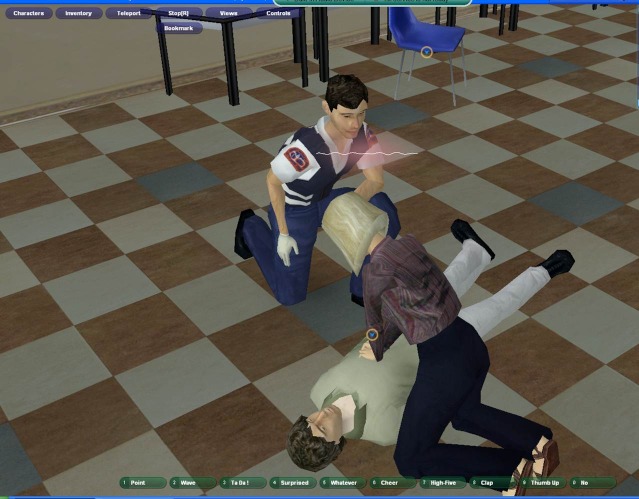
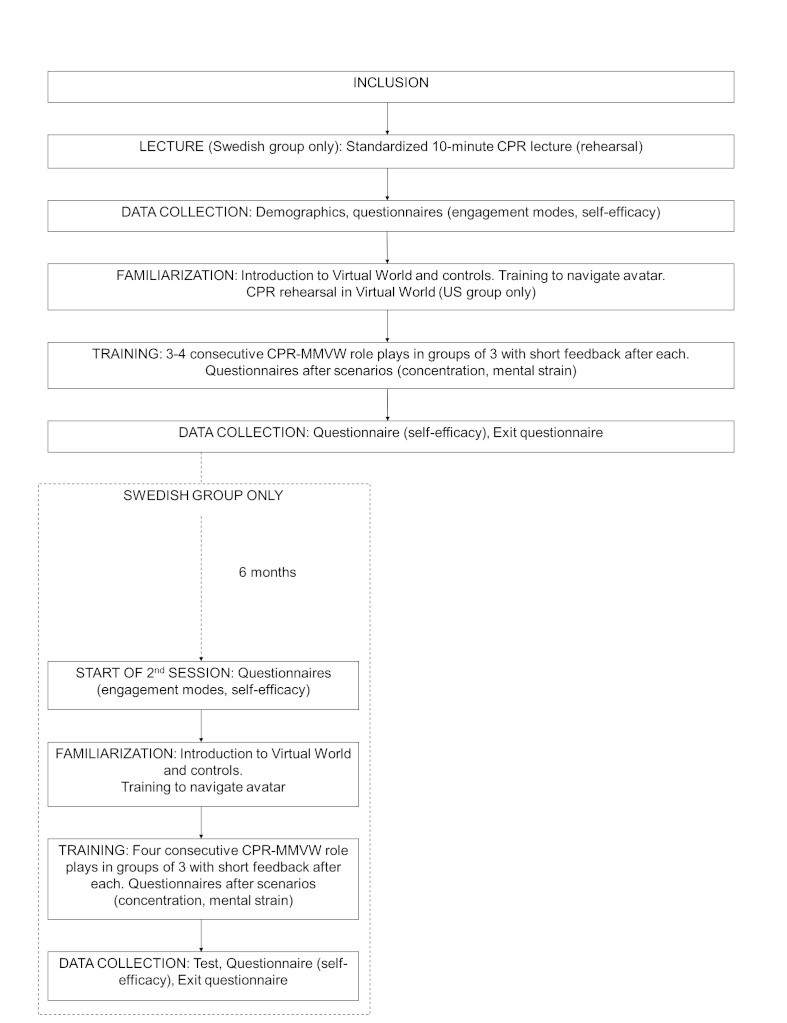
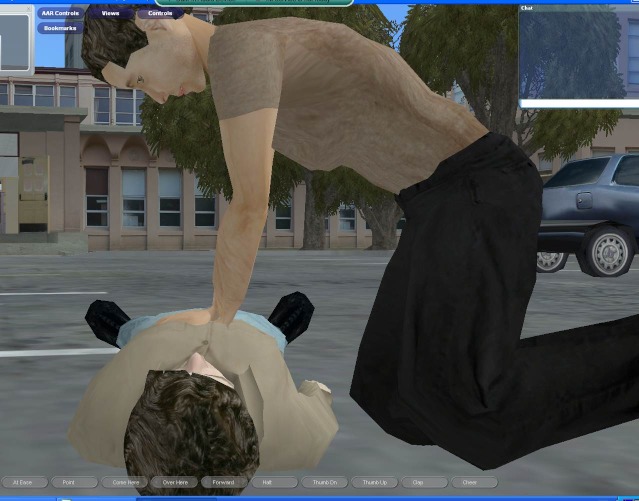
In this prospective international collaborative study, an e-learning method was used with high school students in Sweden and the United States. A software game platform was modified for use as a serious game to train in emergency medical situations. Using MMVW technology, participants in teams of 3 were engaged in virtual-world scenarios to learn how to treat victims suffering cardiac arrest. Short debriefings were carried out after each scenario. A total of 36 high school students (Sweden, n=12; United States, n=24) participated. Their self-efficacy and concentration (task motivation) were assessed. An exit questionnaire was used to solicit experiences and attitudes toward this type of training. Among the Swedish students, a follow-up was carried out after 6 months. Depending on the distributions, t tests or Mann-Whitney tests were used. Correlation between variables was assessed by using Spearman rank correlation. Regression analyses were used for time-dependent variables.
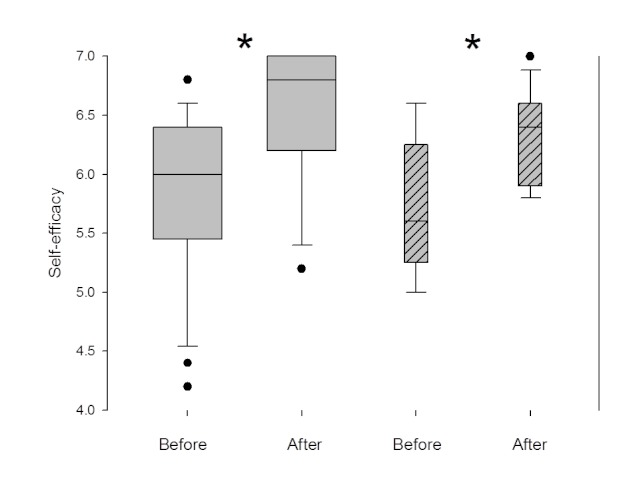
The participants enjoyed the training and reported a self-perceived benefit as a consequence of training. The mean rating for self-efficacy increased from 5.8/7 (SD 0.72) to 6.5/7 (SD 0.57, P<.001). In the Swedish follow-up, it subsequently increased from 5.7/7 (SD 0.56) to 6.3/7 (SD 0.38, P=.006). In the Swedish group, the mean concentration value increased from 52.4/100 (SD 9.8) to 62.7/100 (SD 8.9, P=.05); in the US group, the concentration value increased from 70.8/100 (SD 7.9) to 82.5/100 (SD 4.7, P<.001). We found a significant positive correlation (P<.001) between self-efficacy and concentration scores. Overall, the participants were moderately or highly immersed and the software was easy to use.
By using online MMVWs, team training in CPR is feasible and reliable for this international group of high school students (Sweden and United States). A high level of appreciation was reported among these adolescents and their self-efficacy increased significantly. The described training is a novel and interesting way to learn CPR teamwork, and in the future could be combined with psychomotor skills training.
在美国,每年约有30万人发生心脏骤停(SCA)。尽管美国心脏协会每年培训超过1200万非专业人员进行心肺复苏(CPR),但院外心脏骤停患者接受CPR的比例不到30%。CPR教育需要新的引人入胜的学习方法,尤其是在学校。大型多人虚拟世界(MMVW)为严肃游戏提供了平台,是利用当今青少年(即数字原生代)计算机能力的有前景的学习方法。
我们的主要目的是评估在MMVM中使用虚拟角色对高中生进行心肺复苏培训的可行性。我们还分析了培训后的体验、自我效能感和注意力。
在这项前瞻性国际合作研究中,瑞典和美国的高中生采用了一种电子学习方法。对一个软件游戏平台进行了修改,用作严肃游戏以在紧急医疗情况下进行培训。利用MMVW技术,3人一组的参与者参与虚拟世界场景,学习如何救治心脏骤停患者。每个场景结束后进行简短的汇报。共有36名高中生(瑞典12名;美国24名)参与。评估了他们的自我效能感和注意力(任务动机)。使用一份退场问卷来征求对这种培训类型的体验和态度。在瑞典学生中,6个月后进行了随访。根据分布情况,使用t检验或曼-惠特尼检验。使用斯皮尔曼等级相关性评估变量之间的相关性。对时间依赖性变量进行回归分析。
参与者喜欢这种培训,并报告培训后自我感觉有益。自我效能感的平均评分从5.8/7(标准差0.72)提高到6.5/7(标准差0.57,P<0.001)。在瑞典的随访中,随后从5.7/7(标准差0.56)提高到6.3/7(标准差0.38),P=0.006。在瑞典组中,平均注意力值从52.4/100(标准差9.8)提高到62.7/100(标准差8.9),P=0.05;在美国组中,注意力值从70.8/100(标准差7.9)提高到82.5/100(标准差4.7),P<0.001。我们发现自我效能感得分与注意力得分之间存在显著正相关(P<0.001)。总体而言,参与者有中度或高度沉浸感,软件易于使用。
通过使用在线MMVW,对这个国际高中生群体(瑞典和美国)进行CPR团队培训是可行且可靠的。这些青少年中报告了高度的认可度,并且他们的自我效能感显著提高。所描述的培训是学习CPR团队合作的一种新颖有趣的方式,未来可与心理运动技能培训相结合。