Centre National de Recherche et de Formation sur le Paludisme, Ouagadougou, Burkina Faso.
PLoS One. 2013;8(1):e50036. doi: 10.1371/journal.pone.0050036. Epub 2013 Jan 8.
Malariometric parameters are often primary endpoints of efficacy trials of malaria vaccine candidates. This study aims to describe the epidemiology of malaria prior to the conduct of a series of drug and vaccine trials in a rural area of Burkina Faso.
Malaria incidence was prospectively evaluated over one year follow-up among two cohorts of children aged 0-5 years living in the Saponé health district. The parents of 1089 children comprising a passive case detection cohort were encouraged to seek care from the local health clinic at any time their child felt sick. Among this cohort, 555 children were randomly selected for inclusion in an active surveillance sub-cohort evaluated for clinical malaria during twice weekly home visits. Malaria prevalence was evaluated by cross-sectional survey during the low and high transmission seasons.
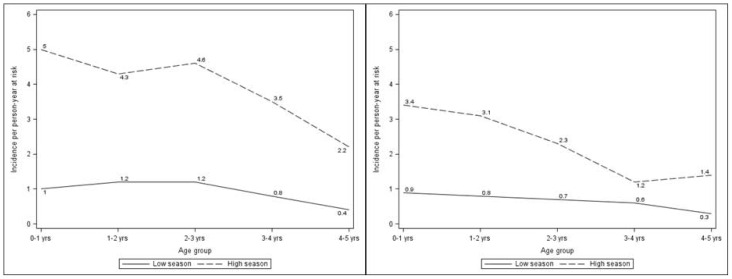
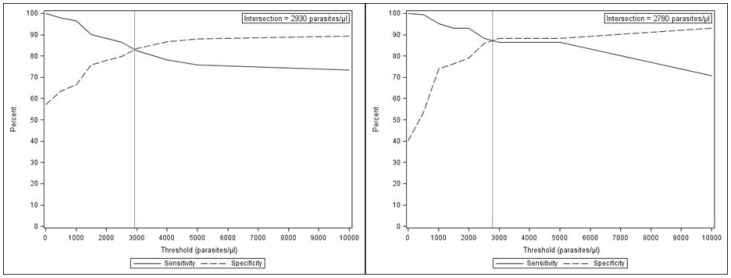
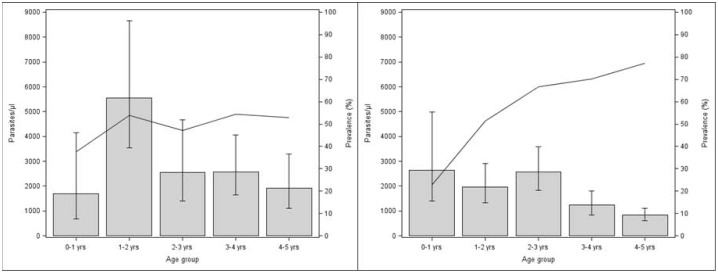
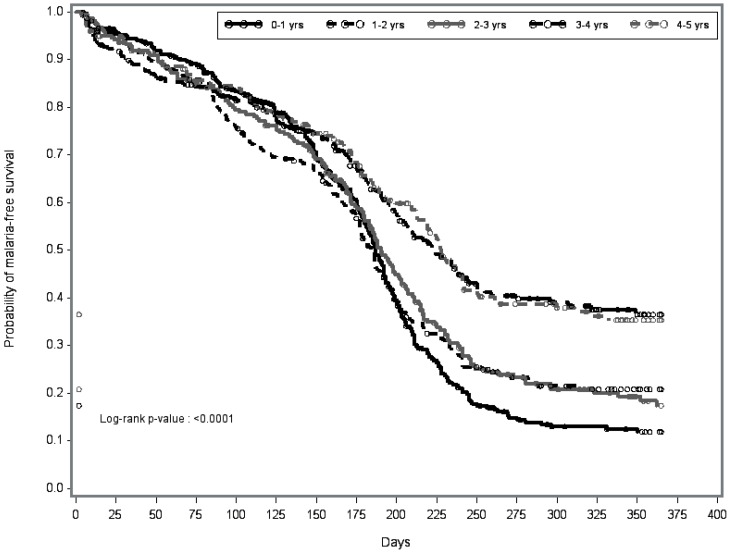
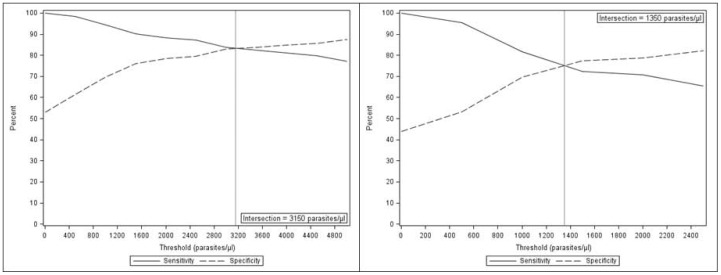
Number of episodes per child ranged from 0 to 6 per year. Cumulative incidence was 67.4% in the passive and 86.2% in the active cohort and was highest among children 0-1 years. Clinical malaria prevalence was 9.8% in the low and 13.0% in the high season (p>0.05). Median days to first malaria episode ranged from 187 (95% CI 180-193) among children 0-1 years to 228 (95% CI 212, 242) among children 4-5 years. The alternative parasite thresholds for the malaria case definition that achieved optimal sensitivity and specificity (70-80%) were 3150 parasites/µl in the high and 1350 parasites/µl in the low season.
Clinical malaria burden was highest among the youngest age group children, who may represent the most appropriate target population for malaria vaccine candidate development. The pyrogenic threshold of parasitaemia varied markedly by season, suggesting a value for alternative parasitaemia levels in the malaria case defintion. Regional epidemiology of malaria described, Sapone area field centers are positioned for future conduct of malaria vaccine trials.
疟疾学参数通常是疟疾候选疫苗疗效试验的主要终点。本研究旨在描述布基纳法索农村地区进行一系列药物和疫苗试验前的疟疾流行病学情况。
在萨蓬地区卫生区,对两组 0-5 岁儿童进行为期一年的前瞻性随访,评估疟疾发病率。鼓励 1089 名儿童的家长在其孩子感到不适时随时到当地诊所就诊。在此队列中,随机选择 555 名儿童纳入主动监测子队列,通过每周两次的家访评估临床疟疾。在低和高传播季节通过横断面调查评估疟疾患病率。
每名儿童的发作次数从 0 次到 6 次/年不等。被动队列的累积发病率为 67.4%,主动队列的累积发病率为 86.2%,0-1 岁儿童的发病率最高。低、高传播季节的临床疟疾患病率分别为 9.8%和 13.0%(p>0.05)。0-1 岁儿童首次疟疾发作的中位天数为 187 天(95%CI 180-193),4-5 岁儿童为 228 天(95%CI 212-242)。高、低传播季节疟疾病例定义的最佳敏感性和特异性(70-80%)的替代寄生虫阈值分别为 3150 个/μl 和 1350 个/μl。
临床疟疾负担在年龄最小的儿童中最高,他们可能是最适合疟疾候选疫苗开发的目标人群。发热性寄生虫血症的阈值因季节而异,表明疟疾病例定义中替代寄生虫血症水平具有一定价值。本研究描述了萨蓬地区的疟疾区域流行病学情况,该地区的现场中心已为未来的疟疾疫苗试验做好了准备。