MRC Centre for Virus Research, Institute of Infection, Immunity and Inflammation, College of Medical, Veterinary and Life Sciences, University of Glasgow, Glasgow, United Kingdom.
PLoS Pathog. 2013 Jan;9(1):e1003133. doi: 10.1371/journal.ppat.1003133. Epub 2013 Jan 10.
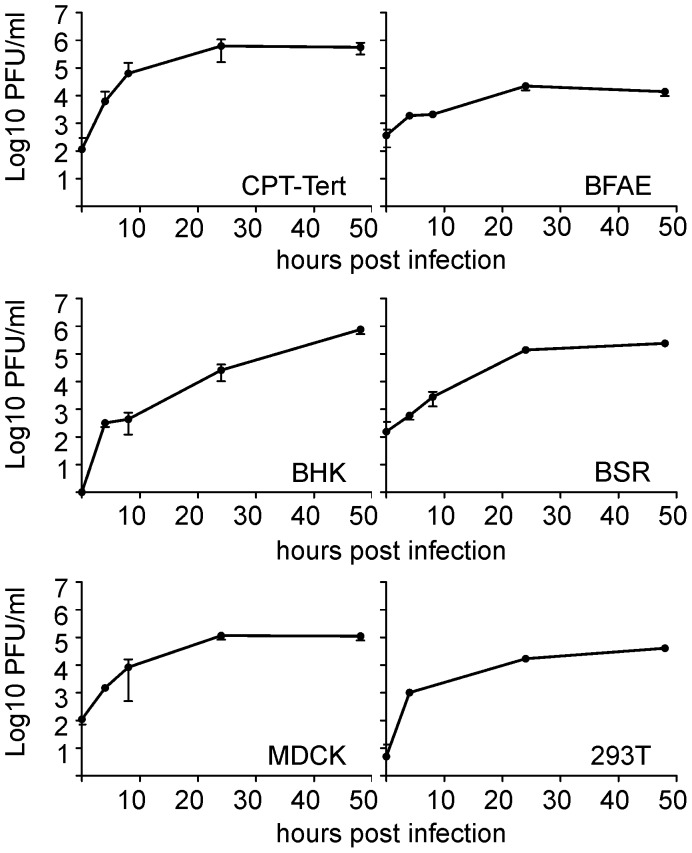
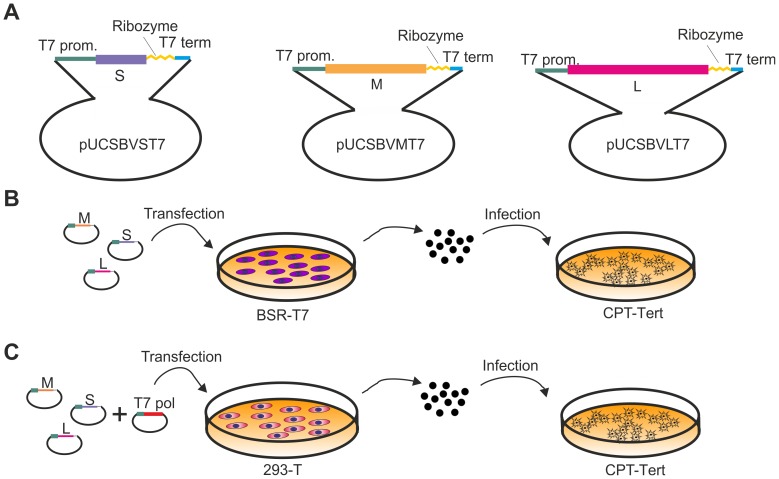
Schmallenberg virus (SBV) is an emerging orthobunyavirus of ruminants associated with outbreaks of congenital malformations in aborted and stillborn animals. Since its discovery in November 2011, SBV has spread very rapidly to many European countries. Here, we developed molecular and serological tools, and an experimental in vivo model as a platform to study SBV pathogenesis, tropism and virus-host cell interactions. Using a synthetic biology approach, we developed a reverse genetics system for the rapid rescue and genetic manipulation of SBV. We showed that SBV has a wide tropism in cell culture and "synthetic" SBV replicates in vitro as efficiently as wild type virus. We developed an experimental mouse model to study SBV infection and showed that this virus replicates abundantly in neurons where it causes cerebral malacia and vacuolation of the cerebral cortex. These virus-induced acute lesions are useful in understanding the progression from vacuolation to porencephaly and extensive tissue destruction, often observed in aborted lambs and calves in naturally occurring Schmallenberg cases. Indeed, we detected high levels of SBV antigens in the neurons of the gray matter of brain and spinal cord of naturally affected lambs and calves, suggesting that muscular hypoplasia observed in SBV-infected lambs is mostly secondary to central nervous system damage. Finally, we investigated the molecular determinants of SBV virulence. Interestingly, we found a biological SBV clone that after passage in cell culture displays increased virulence in mice. We also found that a SBV deletion mutant of the non-structural NSs protein (SBVΔNSs) is less virulent in mice than wild type SBV. Attenuation of SBV virulence depends on the inability of SBVΔNSs to block IFN synthesis in virus infected cells. In conclusion, this work provides a useful experimental framework to study the biology and pathogenesis of SBV.
沙尔贝林病毒(SBV)是一种新兴的反刍动物正呼肠孤病毒,与流产和死胎动物先天性畸形的爆发有关。自 2011 年 11 月发现以来,SBV 已迅速传播到许多欧洲国家。在这里,我们开发了分子和血清学工具,以及一个实验性体内模型,作为研究 SBV 发病机制、嗜性和病毒-宿主细胞相互作用的平台。我们采用合成生物学方法,开发了一种用于快速拯救和遗传操作 SBV 的反向遗传学系统。我们表明,SBV 在细胞培养中有广泛的嗜性,“合成”SBV 在体外的复制效率与野生型病毒一样高。我们开发了一种实验性小鼠模型来研究 SBV 感染,并表明该病毒在神经元中大量复制,导致大脑软化和大脑皮层空泡化。这些病毒诱导的急性病变有助于理解从空泡化到脑裂和广泛组织破坏的进展,这在自然发生的沙尔贝林病例中经常观察到流产的羔羊和小牛。事实上,我们在自然感染的羔羊和小牛的灰质神经元中检测到了 SBV 抗原的高水平,这表明在 SBV 感染的羔羊中观察到的肌肉发育不良主要是继发于中枢神经系统损伤。最后,我们研究了 SBV 毒力的分子决定因素。有趣的是,我们发现了一种具有生物学活性的 SBV 克隆,在细胞培养中传代后,在小鼠中的毒力增加。我们还发现,非结构 NSs 蛋白(SBVΔNSs)缺失突变的 SBV 在小鼠中的毒力比野生型 SBV 低。SBV 毒力的减弱取决于 SBVΔNSs 无法阻止病毒感染细胞中 IFN 的合成。总之,这项工作为研究 SBV 的生物学和发病机制提供了一个有用的实验框架。