Gouzil Julie, Fablet Aurore, Lara Estelle, Caignard Grégory, Cochet Marielle, Kundlacz Cindy, Palmarini Massimo, Varela Mariana, Breard Emmanuel, Sailleau Corinne, Viarouge Cyril, Coulpier Muriel, Zientara Stéphan, Vitour Damien
ANSES, UMR1161 Virologie, Laboratory for Animal Health, Maisons-Alfort, France.
INRA, UMR1161, Maisons-Alfort, France.
J Virol. 2016 Dec 16;91(1). doi: 10.1128/JVI.01263-16. Print 2017 Jan 1.
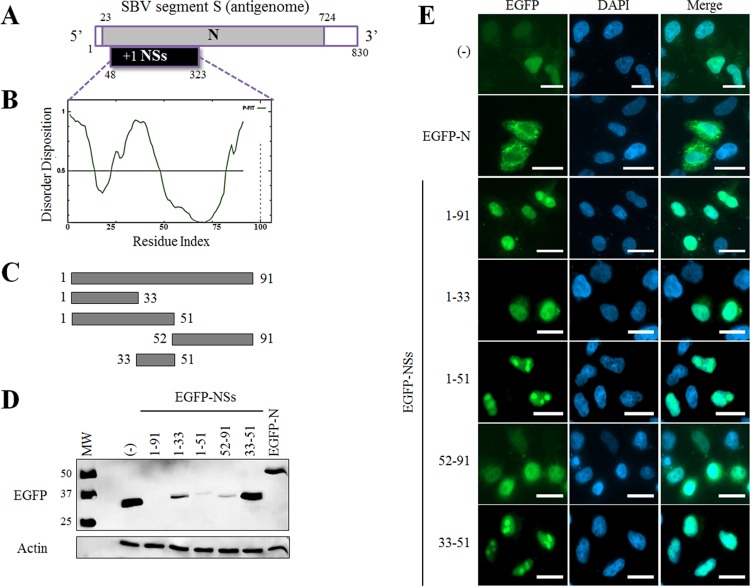
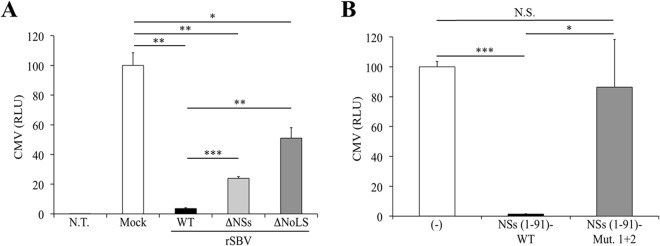
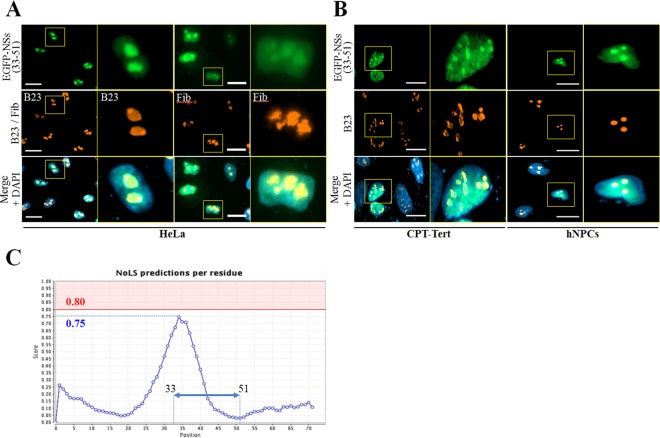
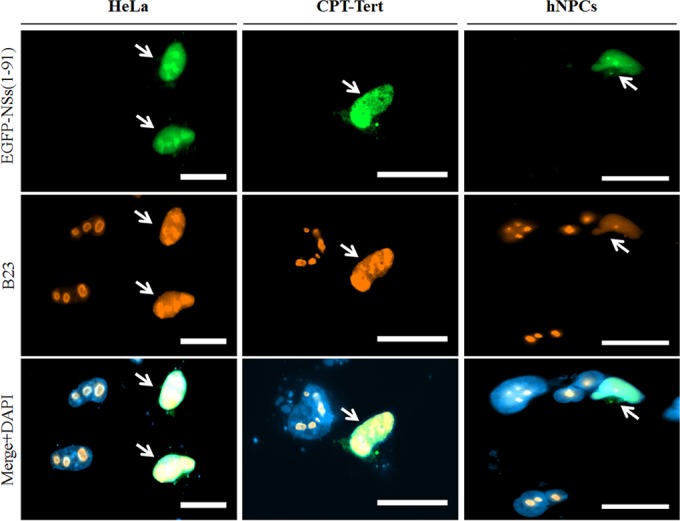
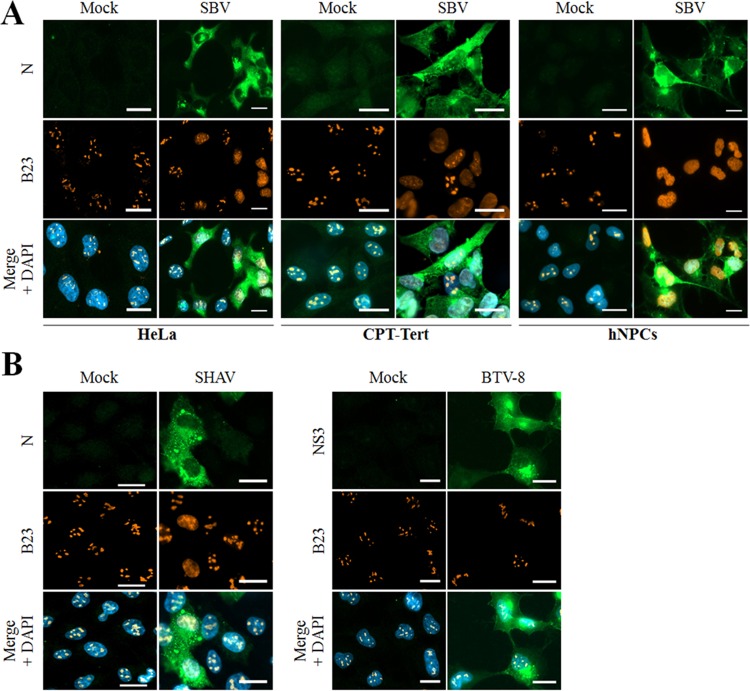
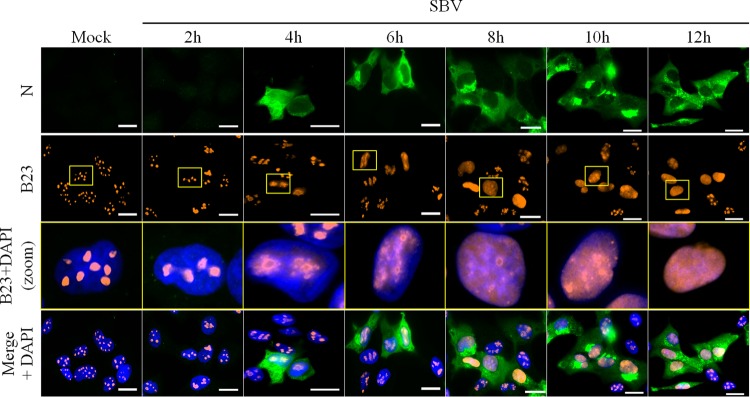
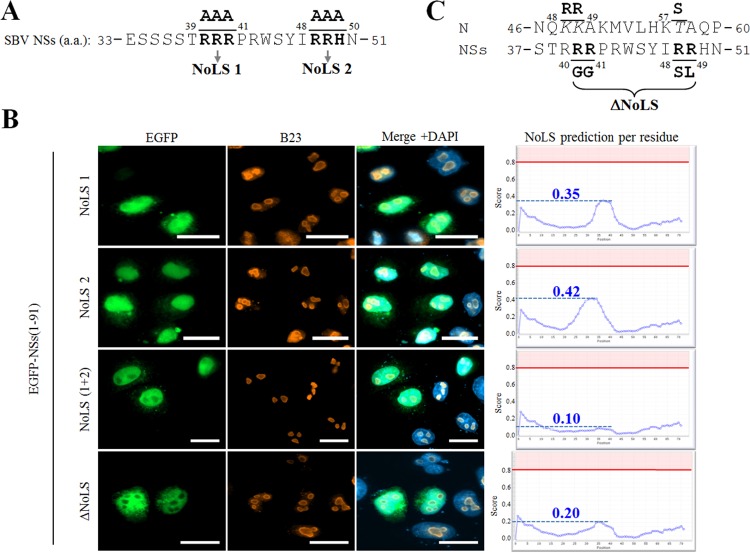
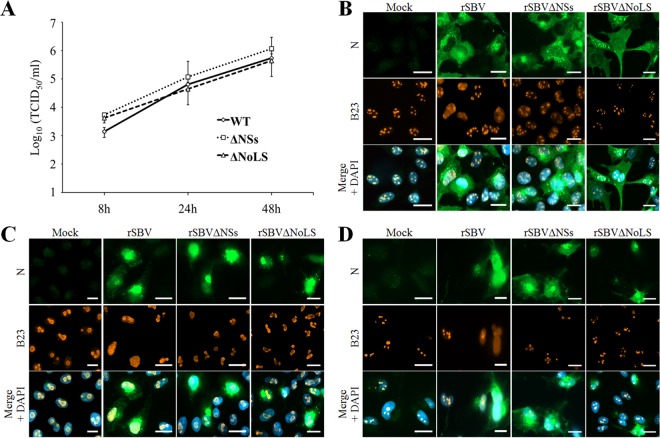
Schmallenberg virus (SBV) was discovered in Germany in late 2011 and then spread rapidly to many European countries. SBV is an orthobunyavirus that causes abortion and congenital abnormalities in ruminants. A virus-encoded nonstructural protein, termed NSs, is a major virulence factor of SBV, and it is known to promote the degradation of Rpb1, a subunit of the RNA polymerase II (Pol II) complex, and therefore hampers global cellular transcription. In this study, we found that NSs is mainly localized in the nucleus of infected cells and specifically appears to target the nucleolus through a nucleolar localization signal (NoLS) localized between residues 33 and 51 of the protein. NSs colocalizes with nucleolar markers such as B23 (nucleophosmin) and fibrillarin. We observed that in SBV-infected cells, B23 undergoes a nucleolus-to-nucleoplasm redistribution, evocative of virus-induced nucleolar disruption. In contrast, the nucleolar pattern of B23 was unchanged upon infection with an SBV recombinant mutant with NSs lacking the NoLS motif (SBVΔNoLS). Interestingly, unlike wild-type SBV, the inhibitory activity of SBVΔNoLS toward RNA Pol II transcription is impaired. Overall, our results suggest that a putative link exists between NSs-induced nucleolar disruption and its inhibitory function on cellular transcription, which consequently precludes the cellular antiviral response and/or induces cell death.
Schmallenberg virus (SBV) is an emerging arbovirus of ruminants that spread in Europe between 2011 and 2013. SBV induces fetal abnormalities during gestation, with the central nervous system being one of the most affected organs. The virus-encoded NSs protein acts as a virulence factor by impairing host cell transcription. Here, we show that NSs contains a nucleolar localization signal (NoLS) and induces disorganization of the nucleolus. The NoLS motif in the SBV NSs is absolutely necessary for virus-induced inhibition of cellular transcription. To our knowledge, this is the first report of nucleolar functions for NSs within the Bunyaviridae family.
施马伦贝格病毒(SBV)于2011年末在德国被发现,随后迅速传播至许多欧洲国家。SBV是一种正布尼亚病毒,可导致反刍动物流产和先天性异常。一种病毒编码的非结构蛋白,称为NSs,是SBV的主要毒力因子,已知它会促进RNA聚合酶II(Pol II)复合物的一个亚基Rpb1的降解,从而阻碍整体细胞转录。在本研究中,我们发现NSs主要定位于受感染细胞的细胞核中,并且似乎通过位于该蛋白第33至51位残基之间的核仁定位信号(NoLS)特异性靶向核仁。NSs与核仁标志物如B23(核磷蛋白)和纤维蛋白原共定位。我们观察到,在SBV感染的细胞中,B23经历了从核仁到核质的重新分布,这让人联想到病毒诱导的核仁破坏。相比之下,用缺乏NoLS基序的NSs的SBV重组突变体(SBVΔNoLS)感染后,B23的核仁模式没有改变。有趣的是,与野生型SBV不同,SBVΔNoLS对RNA Pol II转录的抑制活性受损。总体而言,我们的结果表明,NSs诱导的核仁破坏与其对细胞转录的抑制功能之间存在一种假定的联系,这进而排除了细胞抗病毒反应和/或诱导细胞死亡。
施马伦贝格病毒(SBV)是一种新出现的反刍动物虫媒病毒,于2011年至2013年在欧洲传播。SBV在妊娠期间诱导胎儿异常,中枢神经系统是受影响最严重的器官之一。病毒编码的NSs蛋白通过损害宿主细胞转录发挥毒力因子的作用。在此,我们表明NSs含有核仁定位信号(NoLS)并诱导核仁紊乱。SBV NSs中的NoLS基序对于病毒诱导的细胞转录抑制绝对必要。据我们所知,这是布尼亚病毒科内NSs核仁功能的首次报道。