• 文献检索
  • 文档翻译
  • 深度研究
  • 学术资讯
  • Suppr Zotero 插件Zotero 插件
  • 邀请有礼
  • 套餐&价格
  • 历史记录
应用&插件
Suppr Zotero 插件Zotero 插件浏览器插件Mac 客户端Windows 客户端微信小程序
定价
高级版会员购买积分包购买API积分包
服务
文献检索文档翻译深度研究API 文档MCP 服务
关于我们
关于 Suppr公司介绍联系我们用户协议隐私条款
关注我们

Suppr 超能文献

核心技术专利:CN118964589B侵权必究
粤ICP备2023148730 号-1Suppr @ 2026

文献检索

告别复杂PubMed语法,用中文像聊天一样搜索,搜遍4000万医学文献。AI智能推荐,让科研检索更轻松。

立即免费搜索

文件翻译

保留排版,准确专业,支持PDF/Word/PPT等文件格式,支持 12+语言互译。

免费翻译文档

深度研究

AI帮你快速写综述,25分钟生成高质量综述,智能提取关键信息,辅助科研写作。

立即免费体验

心理声学耳鸣响度和耳鸣相关困扰与脑振荡活动的关联不同。

Psychoacoustic tinnitus loudness and tinnitus-related distress show different associations with oscillatory brain activity.

机构信息

Department of Phoniatrics and Audiology, Medical Faculty Mannheim, Heidelberg University, Mannheim, Germany.

出版信息

PLoS One. 2013;8(1):e53180. doi: 10.1371/journal.pone.0053180. Epub 2013 Jan 10.

DOI:10.1371/journal.pone.0053180
PMID:23326394
原文链接:https://pmc.ncbi.nlm.nih.gov/articles/PMC3542397/
Abstract

BACKGROUND

The phantom auditory perception of subjective tinnitus is associated with aberrant brain activity as evidenced by magneto- and electroencephalographic studies. We tested the hypotheses (1) that psychoacoustically measured tinnitus loudness is related to gamma oscillatory band power, and (2) that tinnitus loudness and tinnitus-related distress are related to distinct brain activity patterns as suggested by the distinction between loudness and distress experienced by tinnitus patients. Furthermore, we explored (3) how hearing impairment, minimum masking level, and (4) psychological comorbidities are related to spontaneous oscillatory brain activity in tinnitus patients.

METHODS AND FINDINGS

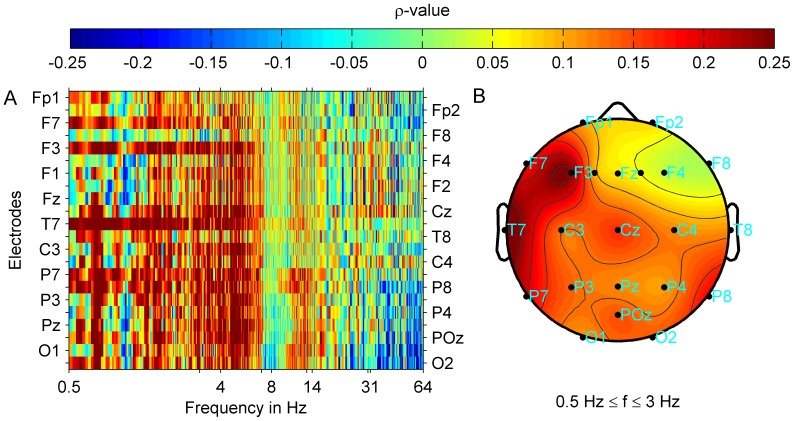
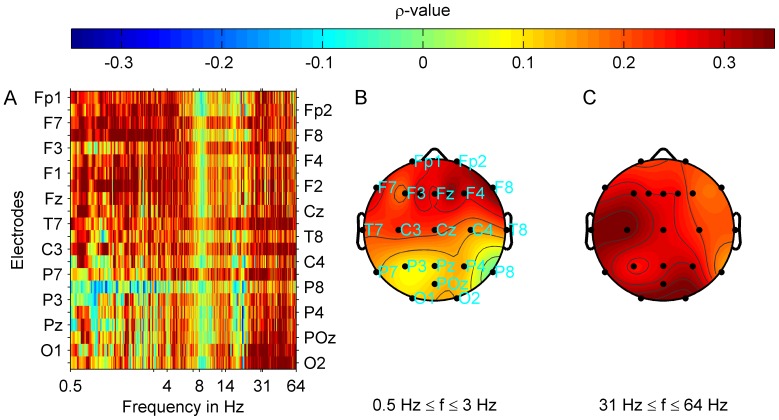
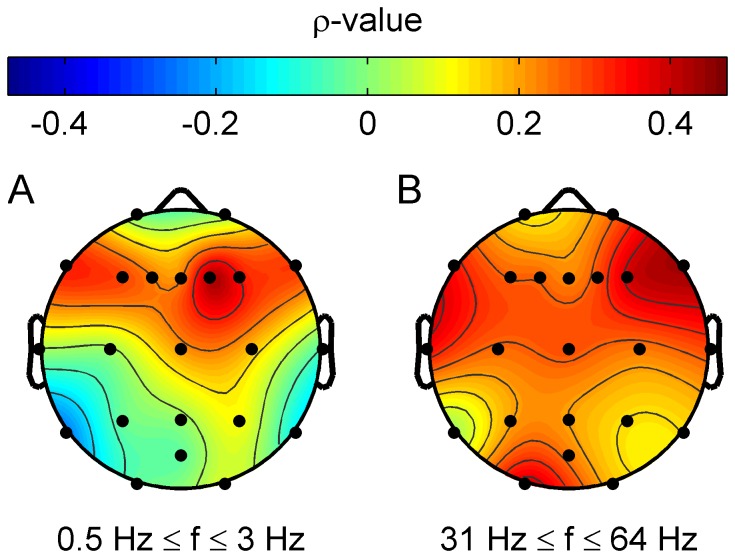
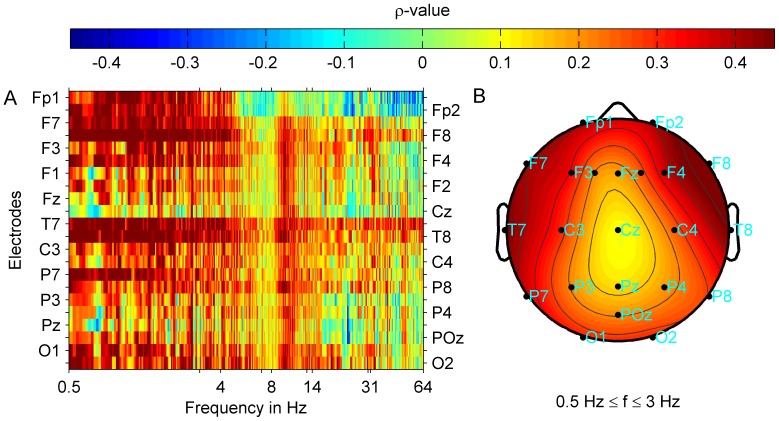
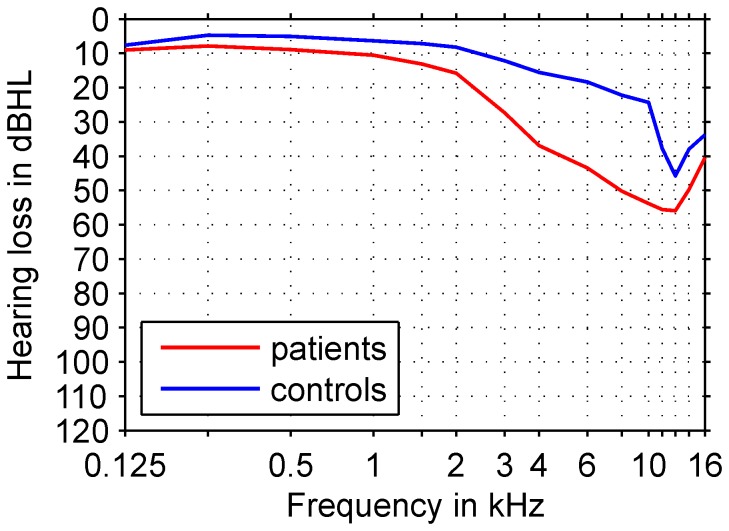
Resting state oscillatory brain activity recorded electroencephalographically from 46 male tinnitus patients showed a positive correlation between gamma band oscillations and psychoacoustic tinnitus loudness determined with the reconstructed tinnitus sound, but not with the other psychoacoustic loudness measures that were used. Tinnitus-related distress did also correlate with delta band activity, but at electrode positions different from those associated with tinnitus loudness. Furthermore, highly distressed tinnitus patients exhibited a higher level of theta band activity. Moreover, mean hearing loss between 0.125 kHz and 16 kHz was associated with a decrease in gamma activity, whereas minimum masking levels correlated positively with delta band power. In contrast, psychological comorbidities did not express significant correlations with oscillatory brain activity.

CONCLUSION

Different clinically relevant tinnitus characteristics show distinctive associations with spontaneous brain oscillatory power. Results support hypothesis (1), but exclusively for the tinnitus loudness derived from matching to the reconstructed tinnitus sound. This suggests to preferably use the reconstructed tinnitus spectrum to determine psychoacoustic tinnitus loudness. Results also support hypothesis (2). Moreover, hearing loss and minimum masking level correlate with oscillatory power in distinctive frequency bands. The lack of an association between psychological comorbidities and oscillatory power may be attributed to the overall low level of mental health problems in the present sample.

摘要

背景

主观耳鸣的幻听知觉与异常的大脑活动有关,这已被脑磁图和脑电图研究证明。我们检验了以下假设:(1)心理声学测量的耳鸣响度与伽马振荡频段功率有关;(2)耳鸣响度和与耳鸣相关的苦恼与耳鸣患者所经历的响度和苦恼之间的区别所暗示的不同大脑活动模式有关。此外,我们还探讨了(3)听力损伤、最小掩蔽级和(4)心理共病如何与耳鸣患者的自发性振荡大脑活动有关。

方法和发现

从 46 名男性耳鸣患者记录的静息状态振荡脑活动显示,伽马波段振荡与用重建的耳鸣声音确定的心理声学耳鸣响度之间存在正相关,但与用于其他心理声学响度测量的参数无关。与耳鸣相关的苦恼也与 delta 波段活动相关,但在与耳鸣响度相关的电极位置不同。此外,高度苦恼的耳鸣患者表现出更高的 theta 波段活动。此外,0.125 kHz 至 16 kHz 之间的平均听力损失与伽马活动减少有关,而最小掩蔽级与 delta 波段功率呈正相关。相比之下,心理共病与振荡大脑活动没有显著相关性。

结论

不同的临床相关耳鸣特征与自发性大脑振荡功率有不同的关联。结果支持假设 1,但仅限于与重建的耳鸣声音匹配的耳鸣响度。这表明最好使用重建的耳鸣频谱来确定心理声学耳鸣响度。结果也支持假设 2。此外,听力损失和最小掩蔽级与特定频段的振荡功率相关。在本样本中,心理健康问题的总体水平较低,这可能导致心理共病与振荡功率之间没有关联。
https://cdn.ncbi.nlm.nih.gov/pmc/blobs/a0d1/3542397/907f995dea32/pone.0053180.g005.jpg
https://cdn.ncbi.nlm.nih.gov/pmc/blobs/a0d1/3542397/56ff8de827ae/pone.0053180.g001.jpg
https://cdn.ncbi.nlm.nih.gov/pmc/blobs/a0d1/3542397/36a2d2c78546/pone.0053180.g002.jpg
https://cdn.ncbi.nlm.nih.gov/pmc/blobs/a0d1/3542397/0ed5f8f90f06/pone.0053180.g003.jpg
https://cdn.ncbi.nlm.nih.gov/pmc/blobs/a0d1/3542397/808ad06f1808/pone.0053180.g004.jpg
https://cdn.ncbi.nlm.nih.gov/pmc/blobs/a0d1/3542397/907f995dea32/pone.0053180.g005.jpg
https://cdn.ncbi.nlm.nih.gov/pmc/blobs/a0d1/3542397/56ff8de827ae/pone.0053180.g001.jpg
https://cdn.ncbi.nlm.nih.gov/pmc/blobs/a0d1/3542397/36a2d2c78546/pone.0053180.g002.jpg
https://cdn.ncbi.nlm.nih.gov/pmc/blobs/a0d1/3542397/0ed5f8f90f06/pone.0053180.g003.jpg
https://cdn.ncbi.nlm.nih.gov/pmc/blobs/a0d1/3542397/808ad06f1808/pone.0053180.g004.jpg
https://cdn.ncbi.nlm.nih.gov/pmc/blobs/a0d1/3542397/907f995dea32/pone.0053180.g005.jpg

相似文献

1
Psychoacoustic tinnitus loudness and tinnitus-related distress show different associations with oscillatory brain activity.心理声学耳鸣响度和耳鸣相关困扰与脑振荡活动的关联不同。
PLoS One. 2013;8(1):e53180. doi: 10.1371/journal.pone.0053180. Epub 2013 Jan 10.
2
Neuromagnetic indicators of tinnitus and tinnitus masking in patients with and without hearing loss.耳鸣和耳鸣掩蔽患者的神经磁学指标,无论是否有听力损失。
J Assoc Res Otolaryngol. 2012 Oct;13(5):715-31. doi: 10.1007/s10162-012-0340-5. Epub 2012 Jul 12.
3
Relationship Between Tinnitus Loudness Measure by Visual Analogue Scale and Psychoacoustic Matching of Tinnitus Loudness.耳鸣响度的视觉模拟量表测量值与耳鸣响度的心理声学匹配之间的关系。
Otol Neurotol. 2019 Jan;40(1):16-21. doi: 10.1097/MAO.0000000000002070.
4
The neural correlates of subjectively perceived and passively matched loudness perception in auditory phantom perception.听觉幻听中主观感知和被动匹配响度感知的神经关联。
Brain Behav. 2015 May;5(5):e00331. doi: 10.1002/brb3.331. Epub 2015 Mar 19.
5
Amplification with hearing aids for patients with tinnitus and co-existing hearing loss.为耳鸣合并听力损失患者使用助听器进行放大。
Cochrane Database Syst Rev. 2014 Jan 31;2014(1):CD010151. doi: 10.1002/14651858.CD010151.pub2.
6
Evaluation of the mixing point in tinnitus sound therapy by a psychoacoustic matching protocol with a digital tinnitus evaluation system.使用数字耳鸣评估系统通过心理声学匹配方案评估耳鸣声音疗法中的混合点。
ORL J Otorhinolaryngol Relat Spec. 2006;68(2):110-4. doi: 10.1159/000091213. Epub 2006 Jan 27.
7
Active listening to tinnitus and its relation to resting state EEG activity.主动聆听耳鸣及其与静息态脑电图活动的关系。
Neurosci Lett. 2019 Feb 16;694:176-183. doi: 10.1016/j.neulet.2018.11.008. Epub 2018 Nov 28.
8
Computer-automated tinnitus assessment: noise-band matching, maskability, and residual inhibition.计算机自动耳鸣评估:噪声频段匹配、可掩蔽性和残余抑制。
J Am Acad Audiol. 2013 Jun;24(6):486-504. doi: 10.3766/jaaa.24.6.5.
9
Tinnitus loudness matchings in relation to annoyance and grading of severity.耳鸣响度匹配与烦恼及严重程度分级的关系。
Auris Nasus Larynx. 2003 May;30(2):129-33. doi: 10.1016/s0385-8146(03)00008-7.
10
Perception Versus Reaction: Comparison of Tinnitus Psychoacoustic Measures and Tinnitus Functional Index Scores.感知与反应:耳鸣心理声学测量与耳鸣功能指数评分的比较
Am J Audiol. 2019 Apr 22;28(1S):174-180. doi: 10.1044/2018_AJA-TTR17-18-0041.

引用本文的文献

1
Prediction of acoustic tinnitus suppression using resting-state EEG via explainable AI approach.通过可解释人工智能方法利用静息态脑电图预测耳鸣声抑制
Sci Rep. 2025 Mar 31;15(1):10968. doi: 10.1038/s41598-025-95351-w.
2
Reducing Tinnitus via Inhibitory Influence of the Sensorimotor System on Auditory Cortical Activity.通过感觉运动系统对听觉皮层活动的抑制作用来减轻耳鸣
J Neurosci. 2025 Apr 23;45(17):e0581242025. doi: 10.1523/JNEUROSCI.0581-24.2025.
3
Effect of sound therapy on whole scalp oscillatory brain activity and distress in chronic tinnitus patients.

本文引用的文献

1
Neuromagnetic indicators of tinnitus and tinnitus masking in patients with and without hearing loss.耳鸣和耳鸣掩蔽患者的神经磁学指标,无论是否有听力损失。
J Assoc Res Otolaryngol. 2012 Oct;13(5):715-31. doi: 10.1007/s10162-012-0340-5. Epub 2012 Jul 12.
2
Tinnitus: distinguishing between subjectively perceived loudness and tinnitus-related distress.耳鸣:区分主观感知的响度和与耳鸣相关的苦恼。
PLoS One. 2012;7(4):e34583. doi: 10.1371/journal.pone.0034583. Epub 2012 Apr 18.
3
Cortico-limbic morphology separates tinnitus from tinnitus distress.
声音疗法对慢性耳鸣患者全头皮振荡性脑活动及痛苦的影响。
Front Neurosci. 2023 Aug 29;17:1212558. doi: 10.3389/fnins.2023.1212558. eCollection 2023.
4
Comparative analysis of acoustic therapies for tinnitus treatment based on auditory event-related potentials.基于听觉事件相关电位的耳鸣治疗声学疗法的比较分析。
Front Neurosci. 2023 Apr 4;17:1059096. doi: 10.3389/fnins.2023.1059096. eCollection 2023.
5
Tinnitus, sound intolerance, and mental health: the role of long-term occupational noise exposure.耳鸣、声音不耐受与心理健康:长期职业噪声暴露的作用。
Eur Arch Otorhinolaryngol. 2022 Nov;279(11):5161-5170. doi: 10.1007/s00405-022-07362-2. Epub 2022 Mar 31.
6
Heading for Personalized rTMS in Tinnitus: Reliability of Individualized Stimulation Protocols in Behavioral and Electrophysiological Responses.耳鸣个性化重复经颅磁刺激的研究方向:个体化刺激方案在行为学和电生理反应中的可靠性
J Pers Med. 2021 Jun 9;11(6):536. doi: 10.3390/jpm11060536.
7
Multidisciplinary Tinnitus Research: Challenges and Future Directions From the Perspective of Early Stage Researchers.多学科耳鸣研究:早期研究者视角下的挑战与未来方向
Front Aging Neurosci. 2021 Jun 11;13:647285. doi: 10.3389/fnagi.2021.647285. eCollection 2021.
8
Cochlear Implant and Hearing Aid: Objective Measures of Binaural Benefit.人工耳蜗与助听器:双耳获益的客观测量
Front Neurosci. 2020 Dec 14;14:586119. doi: 10.3389/fnins.2020.586119. eCollection 2020.
9
Electrophysiological correlates of focused attention on low- and high-distressed tinnitus.对低频和高频困扰性耳鸣集中注意力的电生理相关性
PLoS One. 2020 Aug 5;15(8):e0236521. doi: 10.1371/journal.pone.0236521. eCollection 2020.
10
Changes in Speech-Related Brain Activity During Adaptation to Electro-Acoustic Hearing.适应电声听力过程中与言语相关的大脑活动变化
Front Neurol. 2020 Mar 31;11:161. doi: 10.3389/fneur.2020.00161. eCollection 2020.
皮质-边缘形态将耳鸣与耳鸣困扰区分开来。
Front Syst Neurosci. 2012 Apr 5;6:21. doi: 10.3389/fnsys.2012.00021. eCollection 2012.
4
Prefrontal cortex based sex differences in tinnitus perception: same tinnitus intensity, same tinnitus distress, different mood.基于前额皮质的耳鸣感知的性别差异:相同的耳鸣强度,相同的耳鸣困扰,不同的情绪。
PLoS One. 2012;7(2):e31182. doi: 10.1371/journal.pone.0031182. Epub 2012 Feb 10.
5
Induced gamma activity in EEG represents cognitive control during detecting emotional expressions.脑电图中的诱发伽马活动代表了在检测情绪表达时的认知控制。
Annu Int Conf IEEE Eng Med Biol Soc. 2011;2011:1717-20. doi: 10.1109/IEMBS.2011.6090492.
6
Phase re-setting of gamma neural oscillations during novelty processing in an appetitive context.在奖赏性情境中对新奇性处理的γ神经振荡的相位重置。
Biol Psychol. 2012 Mar;89(3):545-52. doi: 10.1016/j.biopsycho.2011.12.014. Epub 2011 Dec 31.
7
The tinnitus functional index: development of a new clinical measure for chronic, intrusive tinnitus.耳鸣功能指数:一种用于慢性、侵入性耳鸣的新临床测量方法的开发。
Ear Hear. 2012 Mar-Apr;33(2):153-76. doi: 10.1097/AUD.0b013e31822f67c0.
8
Age-related changes in the guinea pig auditory cortex: relationship with brainstem changes and comparison with tone-induced hearing loss.豚鼠听觉皮层的年龄相关性变化:与脑干变化的关系及与音调诱导性听力损失的比较。
Eur J Neurosci. 2011 Dec;34(12):1953-65. doi: 10.1111/j.1460-9568.2011.07905.x. Epub 2011 Nov 17.
9
The distressed brain: a group blind source separation analysis on tinnitus.痛苦的大脑:耳鸣的组盲源分离分析。
PLoS One. 2011;6(10):e24273. doi: 10.1371/journal.pone.0024273. Epub 2011 Oct 6.
10
Contralateral parahippocampal gamma-band activity determines noise-like tinnitus laterality: a region of interest analysis.对侧海马旁回γ 带活动决定了类似噪声的耳鸣侧别:一个感兴趣区域分析。
Neuroscience. 2011 Dec 29;199:481-90. doi: 10.1016/j.neuroscience.2011.07.067. Epub 2011 Aug 30.