Department of Chemical Engineering and Applied Chemistry, University of Toronto, 200 College Street, Toronto, ON, M5S 3E5, Canada.
BMC Biotechnol. 2013 Feb 6;13:8. doi: 10.1186/1472-6750-13-8.
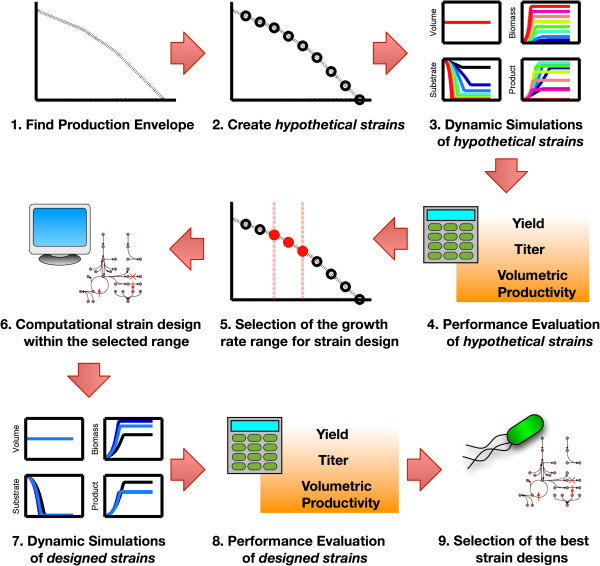
In recent years, constraint-based metabolic models have emerged as an important tool for metabolic engineering; a number of computational algorithms have been developed for identifying metabolic engineering strategies where the production of the desired chemical is coupled with the growth of the organism. A caveat of the existing algorithms is that they do not take the bioprocess into consideration; as a result, while the product yield can be optimized using these algorithms, the product titer and productivity cannot be optimized. In order to address this issue, we developed the Dynamic Strain Scanning Optimization (DySScO) strategy, which integrates the Dynamic Flux Balance Analysis (dFBA) method with existing strain algorithms.
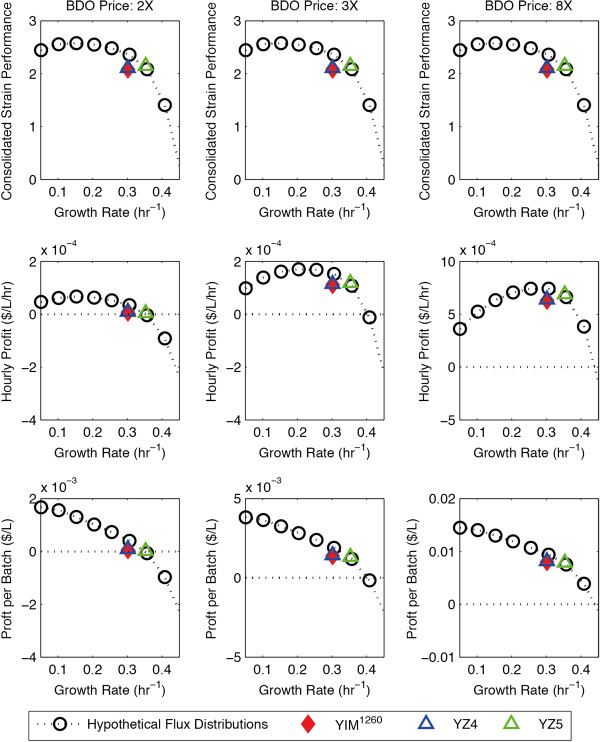
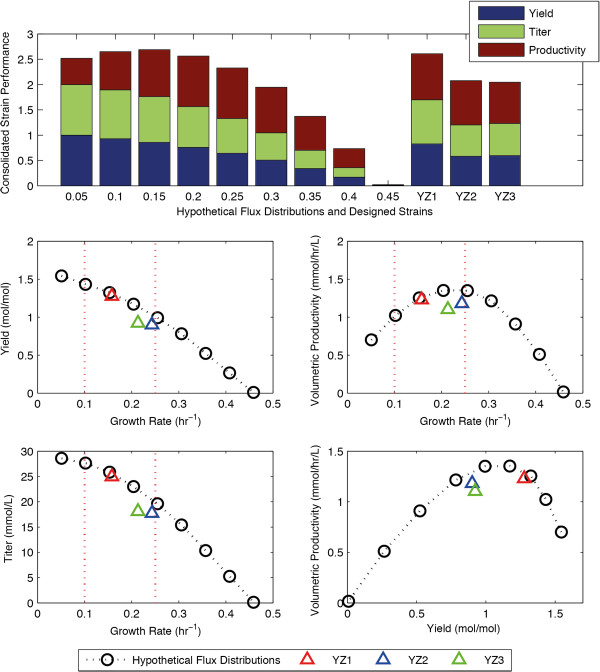
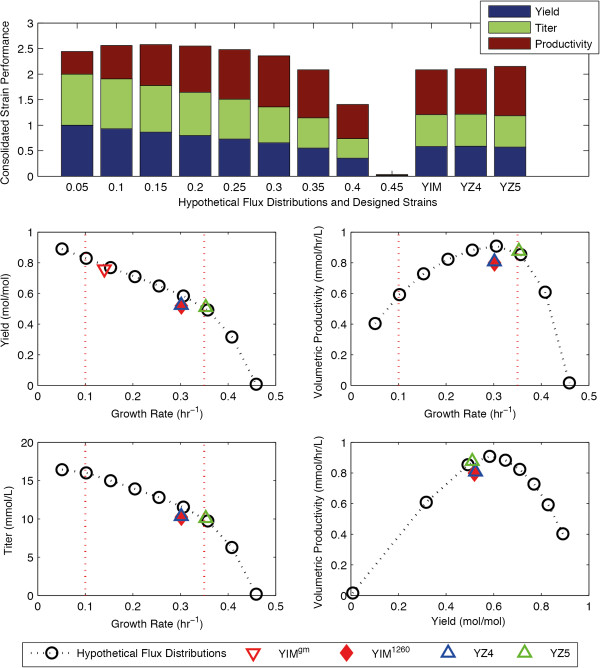
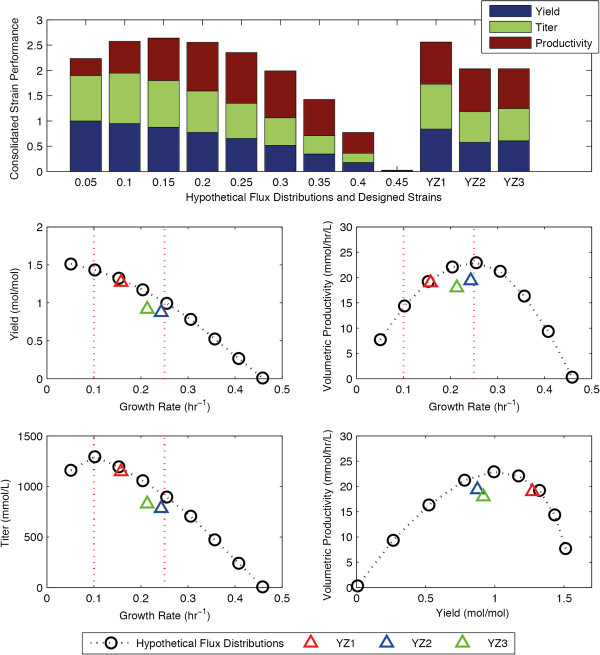
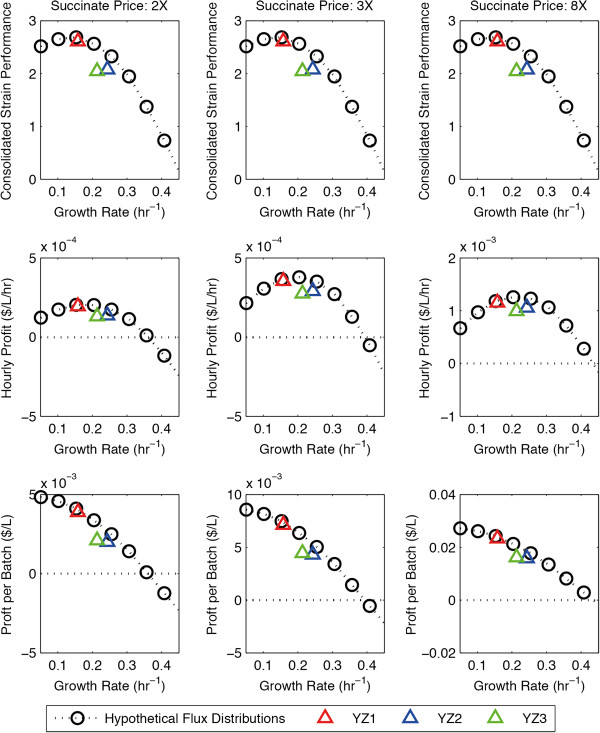
In order to demonstrate the effective of the DySScO strategy, we applied this strategy to the design of Escherichia coli strains targeted for succinate and 1,4-butanediol production respectively. We evaluated consequences of the tradeoff between growth yield and product yield with respect to titer and productivity, and showed that the DySScO strategy is capable of producing strains that balance the product yield, titer, and productivity. In addition, we evaluated the economic viability of the designed strain, and showed that the economic performance of a strain can be strongly affected by the price difference between the product and the feedstock.
Our study demonstrated that the DySScO strategy is a useful computational tool for designing microbial strains with balanced yield, titer, and productivity, and has potential applications in evaluating the economic performance of the design strains.
近年来,基于约束的代谢模型已成为代谢工程的重要工具;已经开发了许多计算算法来确定代谢工程策略,其中期望化学物质的生产与生物体的生长相耦合。现有算法的一个警告是它们没有考虑生物过程;因此,虽然可以使用这些算法优化产物得率,但不能优化产物滴度和生产率。为了解决这个问题,我们开发了动态应变扫描优化(DySScO)策略,该策略将动态通量平衡分析(dFBA)方法与现有菌株算法集成在一起。
为了证明 DySScO 策略的有效性,我们分别将该策略应用于设计产琥珀酸和 1,4-丁二醇的大肠杆菌菌株。我们评估了生长产率与产物产率之间的权衡对滴度和生产率的影响,并表明 DySScO 策略能够产生平衡产物产率、滴度和生产率的菌株。此外,我们评估了设计菌株的经济可行性,并表明菌株的经济性能可能会受到产物和原料之间的价格差异的强烈影响。
我们的研究表明,DySScO 策略是一种用于设计具有平衡产率、滴度和生产率的微生物菌株的有用计算工具,并且在评估设计菌株的经济性能方面具有潜在的应用。