Terry Fox Laboratory, British Columbia Cancer Agency, Vancouver, British Columbia, Canada.
Nat Methods. 2013 Mar;10(3):228-38. doi: 10.1038/nmeth.2365. Epub 2013 Feb 10.
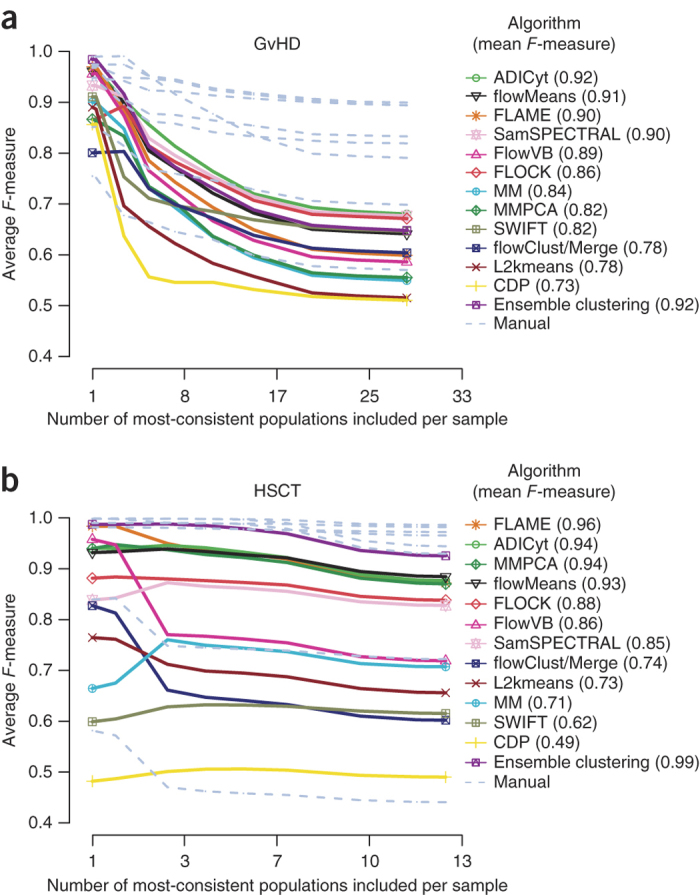
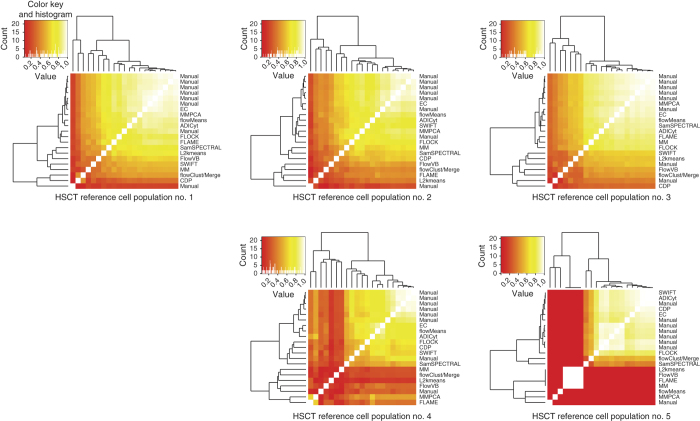
Traditional methods for flow cytometry (FCM) data processing rely on subjective manual gating. Recently, several groups have developed computational methods for identifying cell populations in multidimensional FCM data. The Flow Cytometry: Critical Assessment of Population Identification Methods (FlowCAP) challenges were established to compare the performance of these methods on two tasks: (i) mammalian cell population identification, to determine whether automated algorithms can reproduce expert manual gating and (ii) sample classification, to determine whether analysis pipelines can identify characteristics that correlate with external variables (such as clinical outcome). This analysis presents the results of the first FlowCAP challenges. Several methods performed well as compared to manual gating or external variables using statistical performance measures, which suggests that automated methods have reached a sufficient level of maturity and accuracy for reliable use in FCM data analysis.
传统的流式细胞术(FCM)数据处理方法依赖于主观的手动门控。最近,有几个小组开发了用于识别多维 FCM 数据中细胞群体的计算方法。流式细胞术:群体识别方法的关键评估(FlowCAP)挑战旨在比较这些方法在两个任务上的性能:(i)哺乳动物细胞群体识别,以确定自动化算法是否可以重现专家手动门控,以及(ii)样品分类,以确定分析流程是否可以识别与外部变量(如临床结果)相关的特征。本分析介绍了第一次 FlowCAP 挑战的结果。与手动门控或使用统计性能指标的外部变量相比,几种方法的性能都很好,这表明自动化方法已经达到了足够的成熟度和准确性,可以可靠地用于 FCM 数据分析。