Khan Haseeb A, Alhomida Abdullah S, Sobki Samia H
Department of Biochemistry, College of Science, King Saud University, Riyadh, Saudi Arabia.
Biomark Insights. 2013;8:1-7. doi: 10.4137/BMI.S11015. Epub 2013 Jan 24.
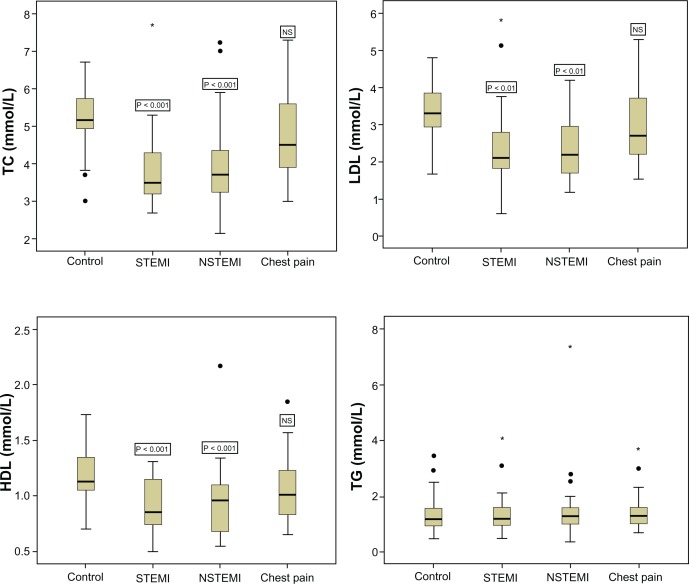
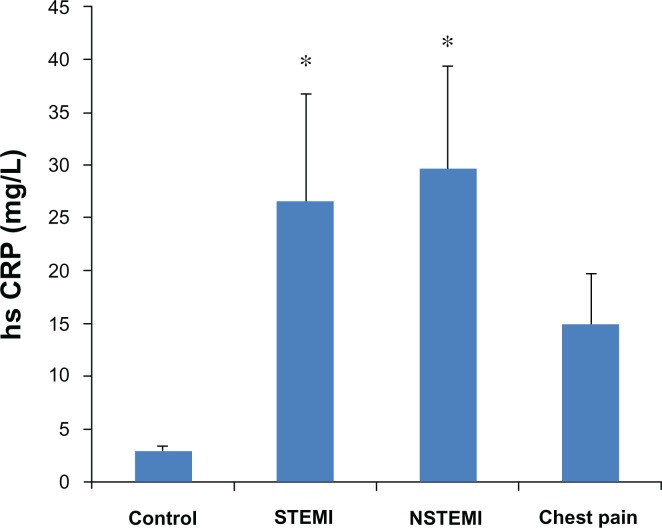
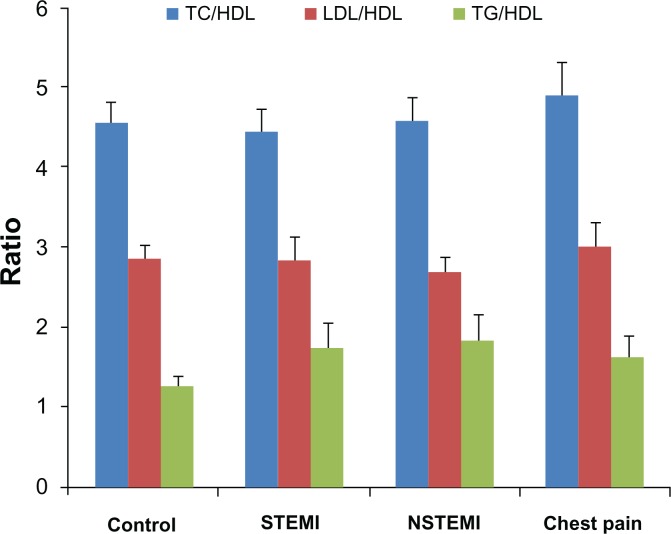
The biomarker potential of using various lipids fractions for predicting risk of acute myocardial infarction (AMI) is controversial. We therefore compared the lipid profiles, including serum total cholesterol (TC), low-density lipoprotein cholesterol (LDL), high-density lipoprotein cholesterol (HDL) and triglycerides (TG), in 67 AMI patients. Patients included 28 STEMI (ST-elevated myocardial infarction) patients, 39 NSTEMI (non-ST-elevated myocardial infarction) patients and 25 patients with chest pain. Control group included 54 age- and gender-matched normal subjects. We also studied the correlation between lipid profile and systemic inflammation in these subjects. There were significant decreases in TC, LDL and HDL levels in both STEMI and NSTEMI patients as compared to normal subjects; however, patients with chest pain did not show any significant change in these lipids. Serum TG levels did not differ significantly among the study groups. There were significant increases in serum high-sensitive C-reactive protein (hs-CRP) levels in STEMI and NSTEMI patients, as compared to control group. Serum hs-CRP showed significant inverse correlation with HDL; however, hs-CRP was not correlated with TC, LDL, and TG. In conclusion, our findings suggest that reduction in serum TC does not prevent the risk of AMI, whereas a decrease in serum HDL and increase in hs-CRP strongly predisposes the risky individuals to an AMI event. We emphasize the importance of HDL and CRP measurements for the assessment of a combined lipid-inflammation risk factor that could be a useful predictor of high risk individuals, as well as a prognostic marker in AMI patients.
利用各种脂质组分预测急性心肌梗死(AMI)风险的生物标志物潜力存在争议。因此,我们比较了67例AMI患者的血脂谱,包括血清总胆固醇(TC)、低密度脂蛋白胆固醇(LDL)、高密度脂蛋白胆固醇(HDL)和甘油三酯(TG)。患者包括28例ST段抬高型心肌梗死(STEMI)患者、39例非ST段抬高型心肌梗死(NSTEMI)患者和25例胸痛患者。对照组包括54例年龄和性别匹配的正常受试者。我们还研究了这些受试者血脂谱与全身炎症之间的相关性。与正常受试者相比,STEMI和NSTEMI患者的TC、LDL和HDL水平均显著降低;然而,胸痛患者的这些血脂指标没有任何显著变化。各研究组之间血清TG水平无显著差异。与对照组相比,STEMI和NSTEMI患者的血清高敏C反应蛋白(hs-CRP)水平显著升高。血清hs-CRP与HDL呈显著负相关;然而,hs-CRP与TC、LDL和TG无相关性。总之,我们的研究结果表明,血清TC降低并不能预防AMI风险,而血清HDL降低和hs-CRP升高强烈使高危个体易发生AMI事件。我们强调HDL和CRP测量对于评估脂质-炎症综合风险因素的重要性,该因素可能是高危个体的有用预测指标,也是AMI患者的预后标志物。