Department of Biology, Université Djillali Liabes, Sidi Bel Abbes, Algeria.
Nutr Cancer. 2013;65(2):227-33. doi: 10.1080/01635581.2013.749291.
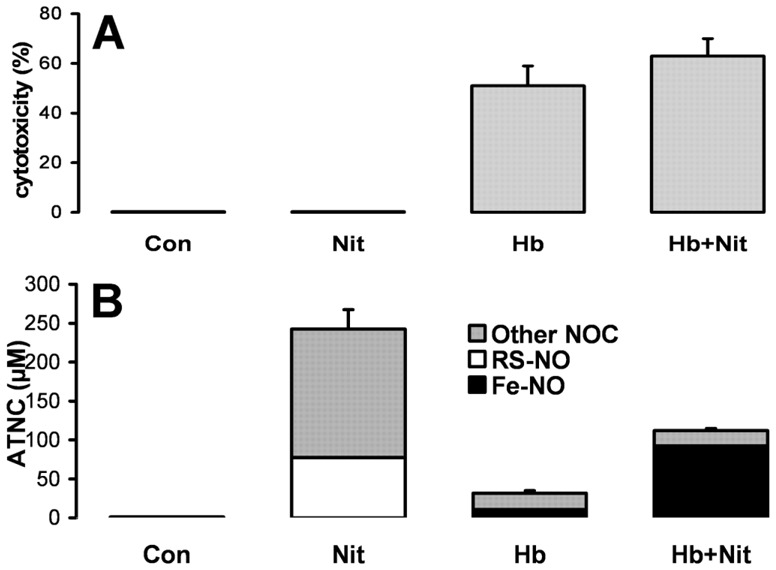
Red and processed meat consumption is associated with the risk of colorectal cancer. Three hypotheses are proposed to explain this association, via heme-induced oxidation of fat, heterocyclic amines, or N-nitroso compounds. Rats have often been used to study these hypotheses, but the lack of enterosalivary cycle of nitrate in rats casts doubt on the relevance of this animal model to predict nitroso- and heme-associated human colon carcinogenesis. The present study was thus designed to clarify whether a nitrite intake that mimics the enterosalivary cycle can modulate heme-induced nitrosation and fat peroxidation. This study shows that, in contrast with the starting hypothesis, drinking water added with nitrite to mimic the salivary nitrite content did not change the effect of hemoglobin on biochemical markers linked to colon carcinogenesis, notably lipid peroxidation and cytotoxic activity in the colon of rat. However, ingested sodium nitrite increased fecal nitroso-compounds level, but their fecal concentration and their nature (iron-nitrosyl) would probably not be associated with an increased risk of cancer. We thus suggest that the rat model could be relevant for study the effect of red meat on colon carcinogenesis, in spite of the lack of nitrite in the saliva of rats.
食用红色肉类和加工肉类与结直肠癌的风险有关。有三个假说可以解释这种关联,即通过血红素诱导的脂肪氧化、杂环胺或 N-亚硝基化合物。大鼠常用于研究这些假说,但大鼠缺乏硝酸盐的肠唾液循环,这使得该动物模型预测与亚硝基和血红素相关的人类结肠癌发生的相关性值得怀疑。因此,本研究旨在阐明是否可以通过模拟肠唾液循环的亚硝酸盐摄入来调节血红素诱导的亚硝化和脂肪过氧化。本研究表明,与最初的假设相反,饮用水中添加亚硝酸盐以模拟唾液中亚硝酸盐的含量并没有改变血红蛋白对与结肠癌发生相关的生化标志物的影响,特别是大鼠结肠中的脂质过氧化和细胞毒性活性。然而,摄入的亚硝酸钠增加了粪便中硝基化合物的水平,但它们的粪便浓度和性质(铁-亚硝酰基)可能与癌症风险的增加无关。因此,我们建议,尽管大鼠的唾液中没有硝酸盐,但大鼠模型可能与研究红色肉类对结肠癌发生的影响有关。