Marian Viorica, Shook Anthony
Cerebrum. 2012 Sep;2012:13. Epub 2012 Oct 31.
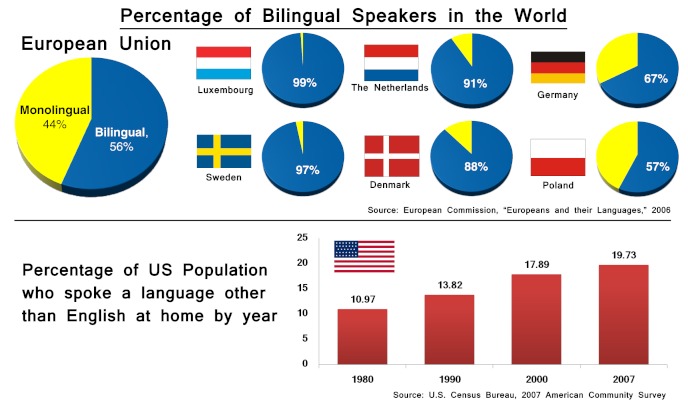
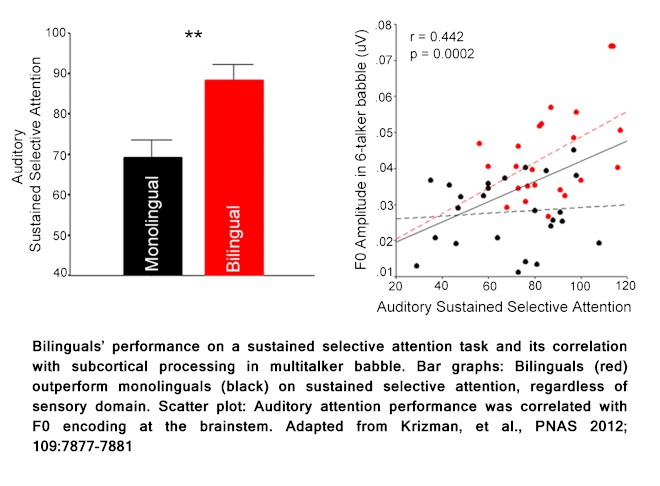
Today, more of the world's population is bilingual or multilingual than monolingual. In addition to facilitating cross-cultural communication, this trend also positively affects cognitive abilities. Researchers have shown that the bilingual brain can have better attention and task-switching capacities than the monolingual brain, thanks to its developed ability to inhibit one language while using another. In addition, bilingualism has positive effects at both ends of the age spectrum: Bilingual children as young as seven months can better adjust to environmental changes, while bilingual seniors can experience less cognitive decline.
如今,世界上双语或多语的人口比单语人口更多。除了促进跨文化交流外,这一趋势还对认知能力产生积极影响。研究人员表明,由于双语大脑在使用一种语言时抑制另一种语言的能力得到了发展,它在注意力和任务切换能力方面比单语大脑更好。此外,双语在年龄谱的两端都有积极影响:七个月大的双语儿童能更好地适应环境变化,而双语老年人认知能力的衰退则会减缓。