Department of Chemical and Biological Engineering, the BioFrontiers Institute, and the Howard Hughes Medical Institute, University of Colorado at Boulder, Boulder, Colorado 80309, USA.
Biomacromolecules. 2013 Apr 8;14(4):949-53. doi: 10.1021/bm4000508. Epub 2013 Mar 8.
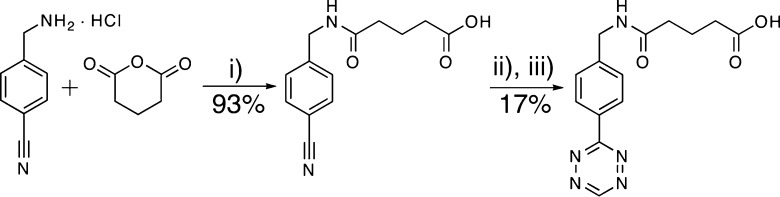
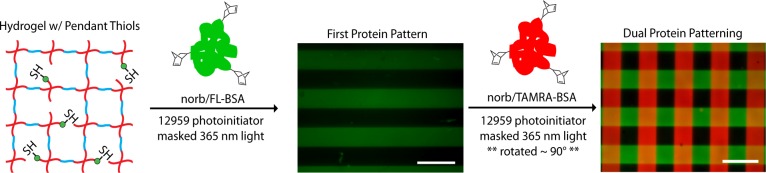
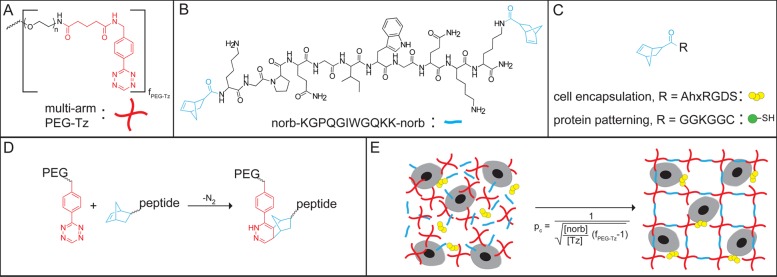
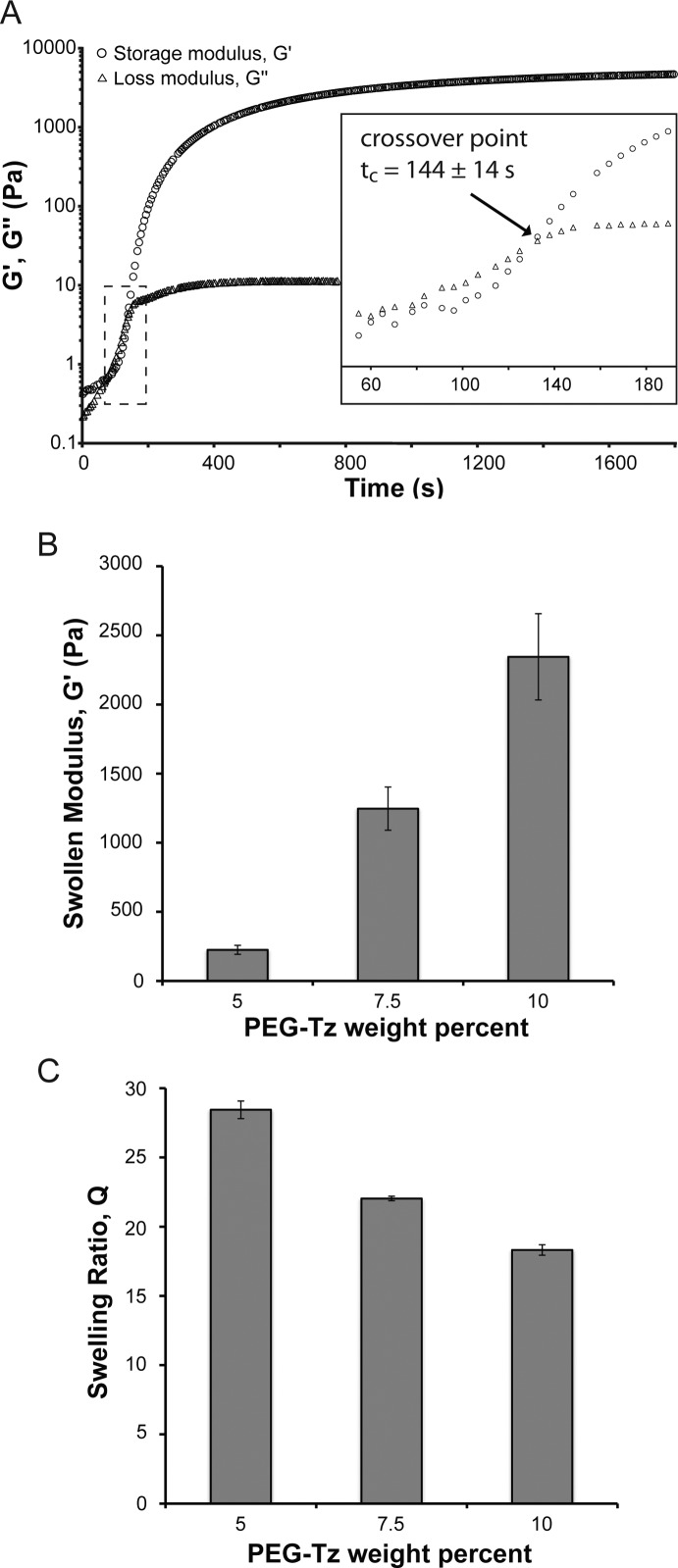
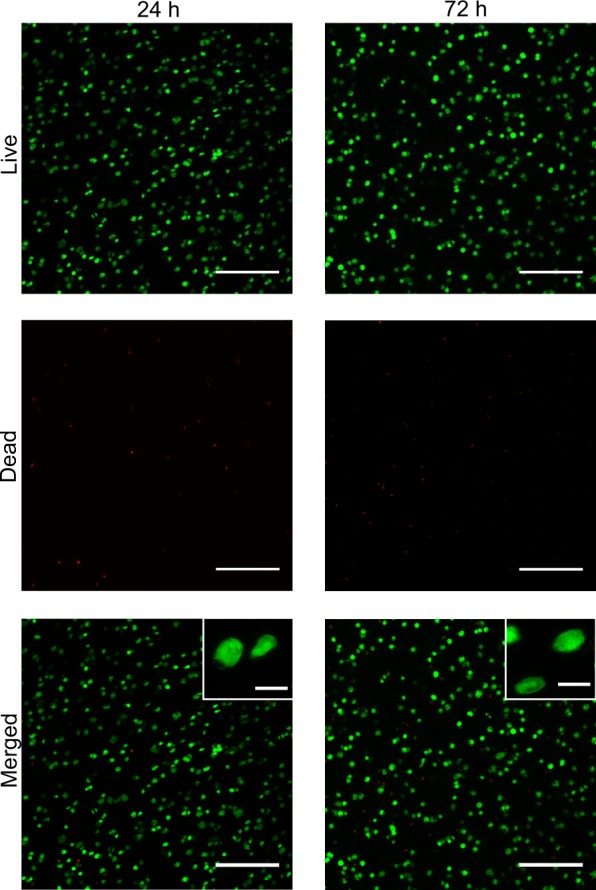
The implementation of bio-orthogonal click chemistries is a topic of growing importance in the field of biomaterials, as it is enabling the development of increasingly complex hydrogel materials capable of providing dynamic, cell-instructive microenvironments. Here, we introduce the tetrazine-norbornene inverse electron demand Diels-Alder reaction as a new cross-linking chemistry for the formation of cell laden hydrogels. The fast reaction rate and irreversible nature of this click reaction allowed for hydrogel formation within minutes when a multifunctional PEG-tetrazine macromer was reacted with a dinorbornene peptide. In addition, the cytocompatibility of the polymerization led to high postencapsulation viability of human mesenchymal stem cells, and the specificity of the tetrazine-norbornene reaction was exploited for sequential modification of the network via thiol-ene photochemistry. These advantages, combined with the synthetic accessibility of the tetrazine molecule compared to other bio-orthogonal click reagents, make this cross-linking chemistry an interesting and powerful new tool for the development of cell-instructive hydrogels for tissue engineering applications.
生物正交点击化学的实施是生物材料领域中一个日益重要的课题,因为它能够开发出越来越复杂的水凝胶材料,为提供具有动态、细胞指令性的微环境提供了可能。在这里,我们引入四嗪-降冰片烯逆电子需求 Diels-Alder 反应作为形成负载细胞水凝胶的新交联化学。当多功能 PEG-四嗪大分子单体与二降冰片烯肽反应时,这种点击反应具有快速的反应速率和不可逆的性质,几分钟内即可形成水凝胶。此外,聚合反应的细胞相容性导致人骨髓间充质干细胞的封装后高存活率,并且四嗪-降冰片烯反应的特异性通过硫醇-烯光化学被用来对网络进行顺序修饰。这些优点,结合与其他生物正交点击试剂相比,四嗪分子的合成可及性,使这种交联化学成为用于组织工程应用的细胞指令性水凝胶开发的一种有趣且强大的新工具。