School of Life Sciences, University of Nevada, Las Vegas, Nevada, United States of America.
PLoS One. 2013;8(3):e59927. doi: 10.1371/journal.pone.0059927. Epub 2013 Mar 29.
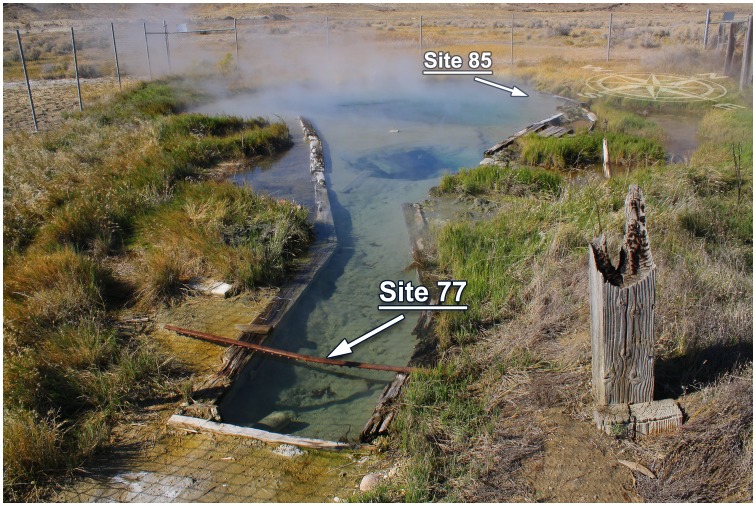
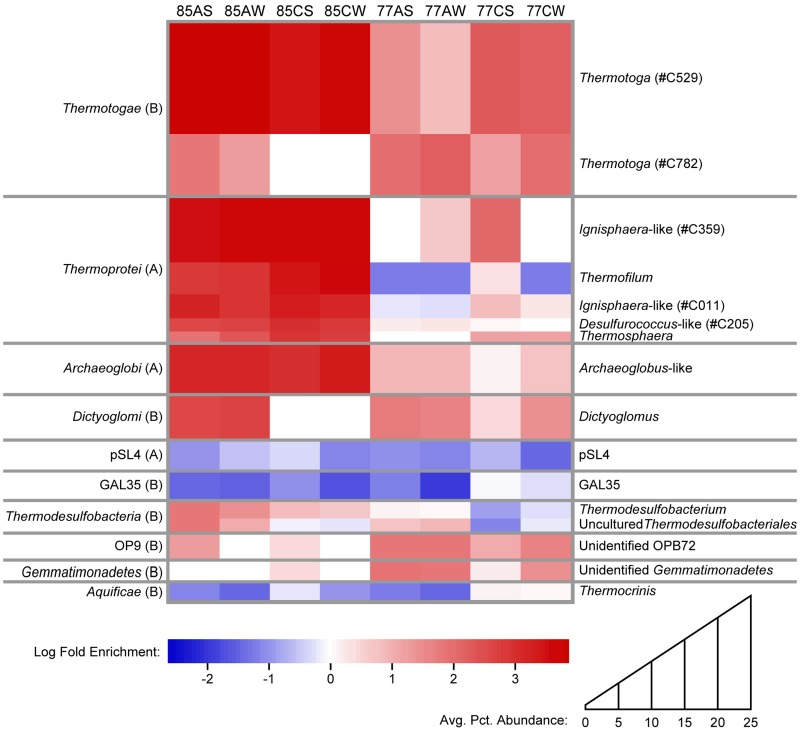
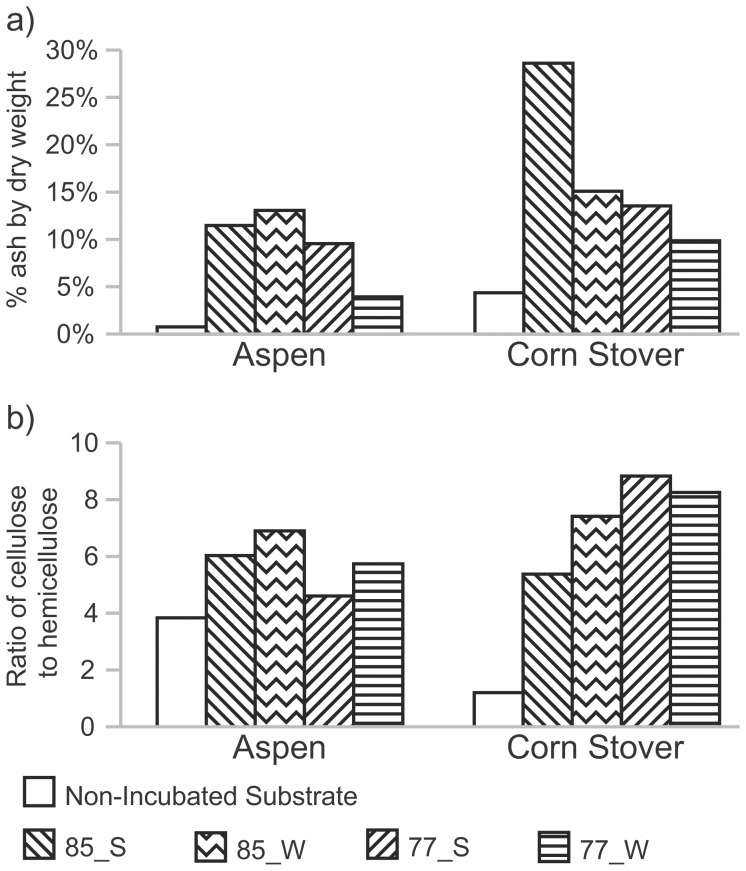
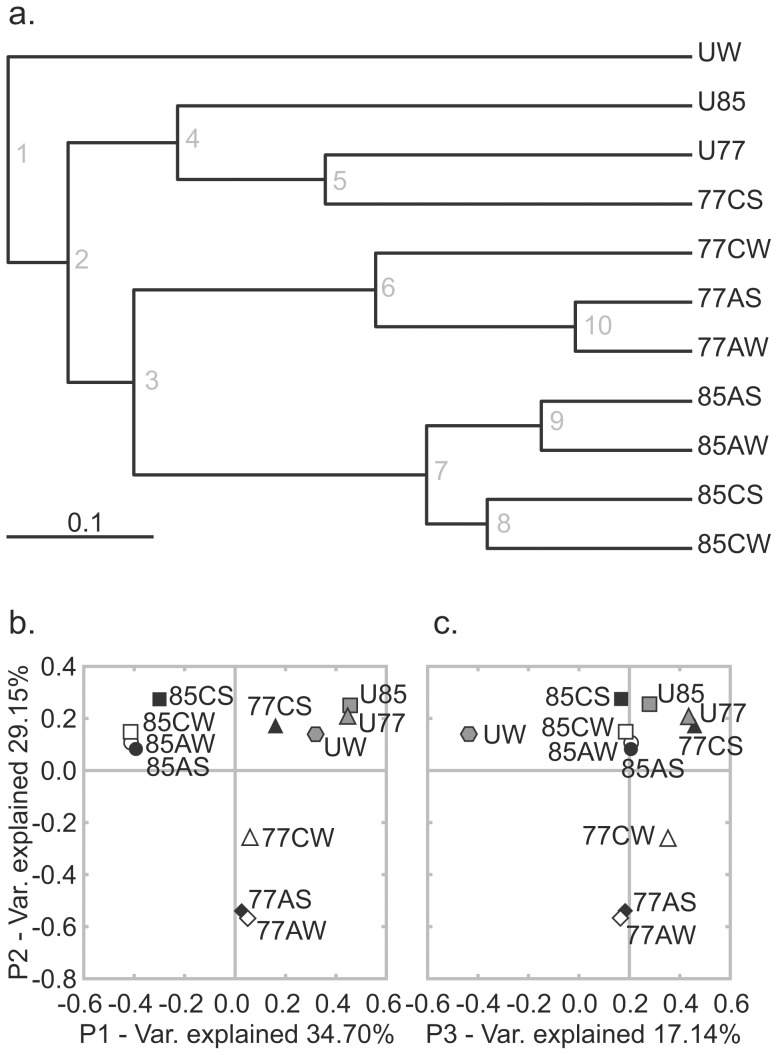
To characterize high-temperature cellulolytic microbial communities, two lignocellulosic substrates, ammonia fiber-explosion-treated corn stover and aspen shavings, were incubated at average temperatures of 77 and 85°C in the sediment and water column of Great Boiling Spring, Nevada. Comparison of 109,941 quality-filtered 16S rRNA gene pyrosequences (pyrotags) from eight enrichments to 37,057 quality-filtered pyrotags from corresponding natural samples revealed distinct enriched communities dominated by phylotypes related to cellulolytic and hemicellulolytic Thermotoga and Dictyoglomus, cellulolytic and sugar-fermenting Desulfurococcales, and sugar-fermenting and hydrogenotrophic Archaeoglobales. Minor enriched populations included close relatives of hydrogenotrophic Thermodesulfobacteria, the candidate bacterial phylum OP9, and candidate archaeal groups C2 and DHVE3. Enrichment temperature was the major factor influencing community composition, with a negative correlation between temperature and richness, followed by lignocellulosic substrate composition. This study establishes the importance of these groups in the natural degradation of lignocellulose at high temperatures and suggests that a substantial portion of the diversity of thermophiles contributing to consortial cellulolysis may be contained within lineages that have representatives in pure culture.
为了描述高温纤维素分解微生物群落,我们用氨纤维爆炸处理过的玉米秸秆和白杨木屑作为木质纤维素基质,在 Nevada 的大沸腾泉的沉积物和水柱中,以 77°C 和 85°C 的平均温度进行培养。将 8 个培养物中过滤质量后的 109941 个 16S rRNA 基因焦磷酸测序(pyrotags)与对应自然样本中过滤质量后的 37057 个 pyrotags 进行比较,结果显示,富集的群落主要由与纤维素和半纤维素分解的 Thermotoga 和 Dictyoglomus、纤维素和糖发酵的 Desulfurococcales 以及糖发酵和产氢的 Archaeoglobales 相关的生物型组成。少数富集的种群包括产氢 Thermodesulfobacteria 的近亲、候选细菌门 OP9 以及候选古菌群 C2 和 DHVE3。富集温度是影响群落组成的主要因素,温度与丰富度呈负相关,其次是木质纤维素基质的组成。本研究确立了这些菌群在高温下木质纤维素自然降解中的重要性,并表明可能有相当一部分对共栖纤维素分解有贡献的嗜热菌多样性包含在纯培养物中有代表的谱系中。