Center for Complex Network Research and Department of Physics, Biology and Computer Science, Northeastern University, Boston, MA, USA.
PLoS One. 2013;8(3):e60069. doi: 10.1371/journal.pone.0060069. Epub 2013 Mar 28.
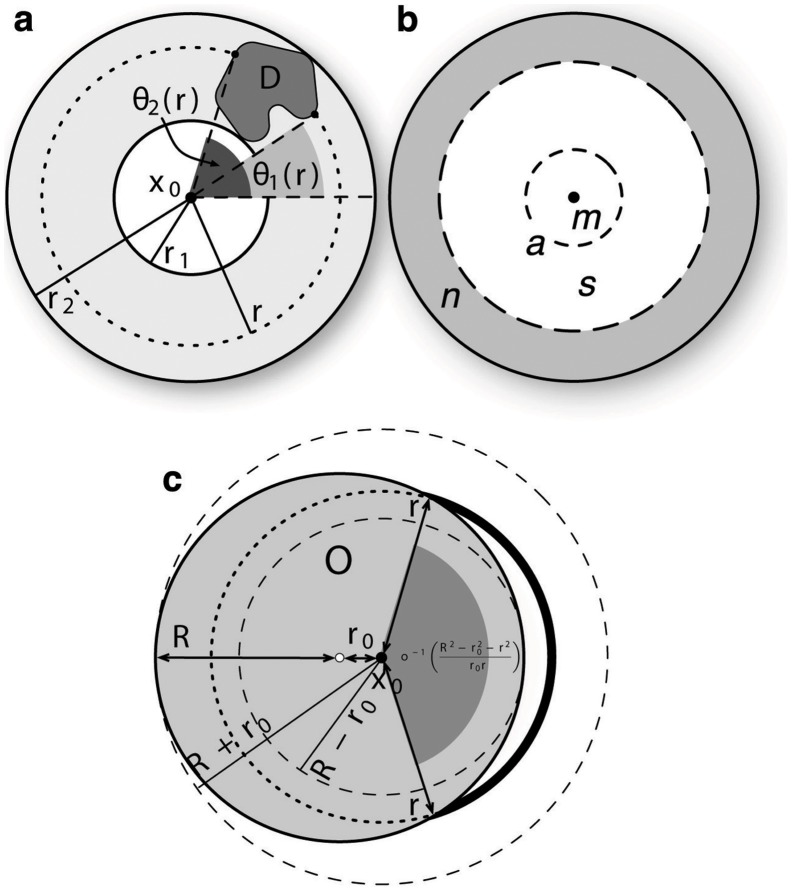
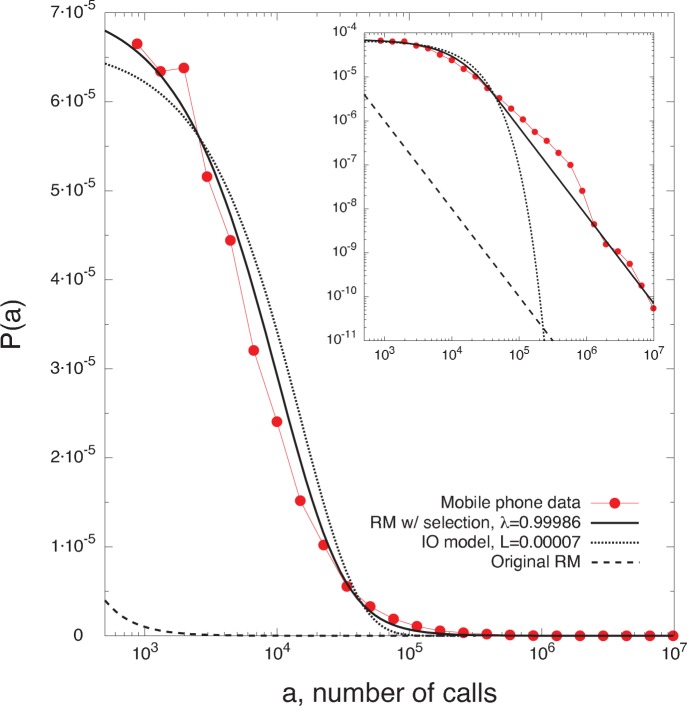
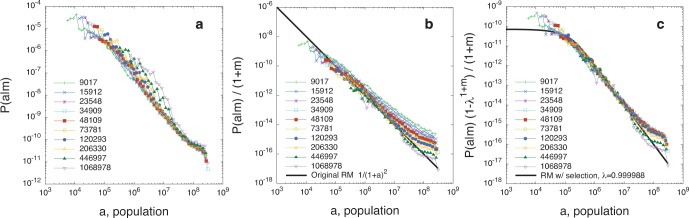
Human mobility is investigated using a continuum approach that allows to calculate the probability to observe a trip to any arbitrary region, and the fluxes between any two regions. The considered description offers a general and unified framework, in which previously proposed mobility models like the gravity model, the intervening opportunities model, and the recently introduced radiation model are naturally resulting as special cases. A new form of radiation model is derived and its validity is investigated using observational data offered by commuting trips obtained from the United States census data set, and the mobility fluxes extracted from mobile phone data collected in a western European country. The new modeling paradigm offered by this description suggests that the complex topological features observed in large mobility and transportation networks may be the result of a simple stochastic process taking place on an inhomogeneous landscape.
利用连续统方法研究了人类的移动性,该方法可以计算观察到任何任意区域的出行的概率,以及任意两个区域之间的通量。所考虑的描述提供了一个通用且统一的框架,其中先前提出的诸如重力模型、机会介入模型以及最近引入的辐射模型等移动性模型自然而然地成为了特例。推导出了一种新形式的辐射模型,并使用从美国人口普查数据集获得的通勤出行以及从西欧国家收集的移动电话数据中提取的移动通量所提供的观测数据来验证其有效性。该描述提供的新建模范例表明,在大规模移动和交通网络中观察到的复杂拓扑特征可能是在非均匀景观上发生的简单随机过程的结果。