Shirsand Sb, Para Ms, Nagendrakumar D, Kanani Km, Keerthy D
Department of Pharmaceutical Technology, H.K.E. Society's College of Pharmacy, Gulbarga, India.
Int J Pharm Investig. 2012 Oct;2(4):201-7. doi: 10.4103/2230-973X.107002.
Niosomes play an increasingly important role in drug delivery as they can reduce toxicity and modify pharmacokinetic and bio-availability. Topically applied niosomes can increase the residence time of drugs in the stratum corneum and epidermis, while reducing the systemic absorption of the drug. It can act as drug containing reservoirs and the modification of the vesicular compositions or surface properties can adjust the drug release rate and the affinity for the target site. Ketoconazole is a broad spectrum Imidazole derivative useful in the treatment of superficial and systemic fungal infections.
In order to improve the low skin penetration and to minimize the side effects associated with topical conventional drug administration, Ketoconazole niosomes were prepared by a thin film hydration method using different ratios of non-ionic surfactants (Span 40, 60 and Tween 60) along with cholesterol (CHO). The formulations were evaluated for size, shape, entrapment efficiency and in vitro drug release.
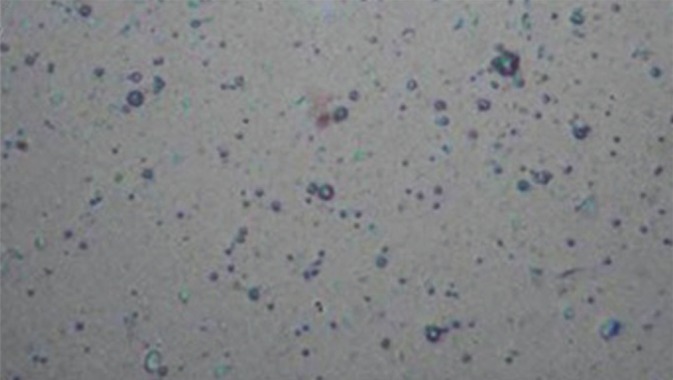
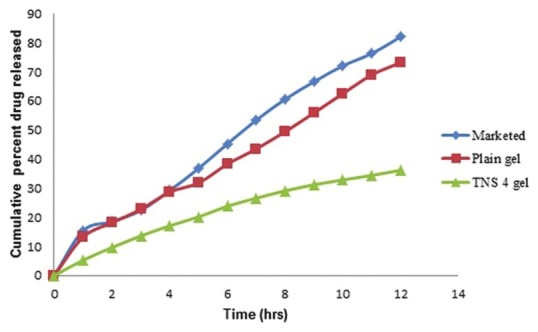
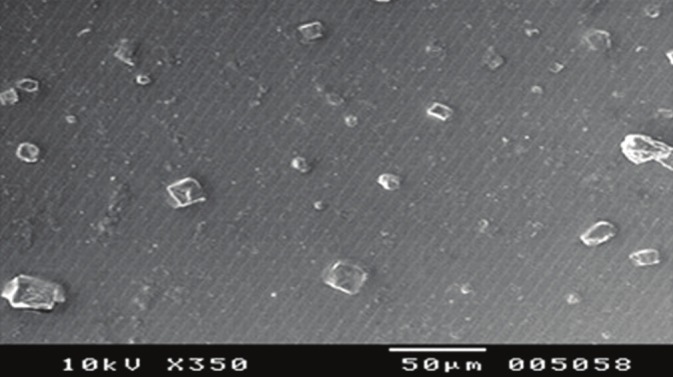
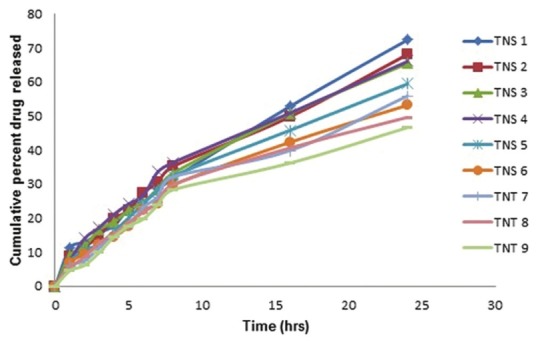
Niosomes appeared spherical in shape and size range was found to be 4.86 ± 1.24-7.38 ± 3.64 μm. The entrapment efficiency was found in the range of 55.14 ± 2.29-78.63 ± 0.91% and in vitro drug release in the range of 46.63 ± 0.95-72.37 ± 0.59% in 24 h. Ketoconazole niosomes formulated with Span 60 and CHO in the ratio of 1:0.2 were found to be promising and were incorporated into 1% Carbopol gel. The formulated gel was evaluated for various physicochemical parameters and antifungal activity. The in vitro drug release study was carried out using phosphate buffer saline pH 7.4 and was found to be 36.18 ± 1.50% in 12 h.
Gel formulation containing niosomes loaded with Ketoconazole showed prolonged action than formulations containing Ketoconazole in non-niosomal form and it can be developed successfully to improve the antifungal activity.
非离子表面活性剂囊泡在药物递送中发挥着越来越重要的作用,因为它们可以降低毒性并改变药代动力学和生物利用度。局部应用的非离子表面活性剂囊泡可以增加药物在角质层和表皮中的停留时间,同时减少药物的全身吸收。它可以作为含药储库,并且改变囊泡组成或表面性质可以调节药物释放速率和对靶部位的亲和力。酮康唑是一种广谱咪唑衍生物,可用于治疗浅表和全身性真菌感染。
为了改善皮肤低渗透性并使与局部传统药物给药相关的副作用最小化,采用薄膜水化法,使用不同比例的非离子表面活性剂(司盘40、60和吐温60)以及胆固醇(CHO)制备酮康唑非离子表面活性剂囊泡。对制剂进行大小、形状、包封率和体外药物释放评估。
非离子表面活性剂囊泡呈球形,大小范围为4.86±1.24 - 7.38±3.64μm。包封率在55.14±2.29 - 78.63±0.91%范围内,24小时内体外药物释放率在46.63±0.95 - 72.37±0.59%范围内。发现以司盘60和CHO比例为1:0.2配制的酮康唑非离子表面活性剂囊泡很有前景,并将其掺入1%卡波姆凝胶中。对配制的凝胶进行各种理化参数和抗真菌活性评估。使用pH 7.4的磷酸盐缓冲盐水进行体外药物释放研究,发现12小时内药物释放率为36.18±1.50%。
含有负载酮康唑的非离子表面活性剂囊泡的凝胶制剂比含有非囊泡形式酮康唑的制剂显示出更长的作用时间,并且可以成功开发以提高抗真菌活性。