Lewis Sigler Institute for Integrative Genomics, Princeton University, Princeton, NJ, USA.
Mol Syst Biol. 2013 May 14;9:665. doi: 10.1038/msb.2013.21.
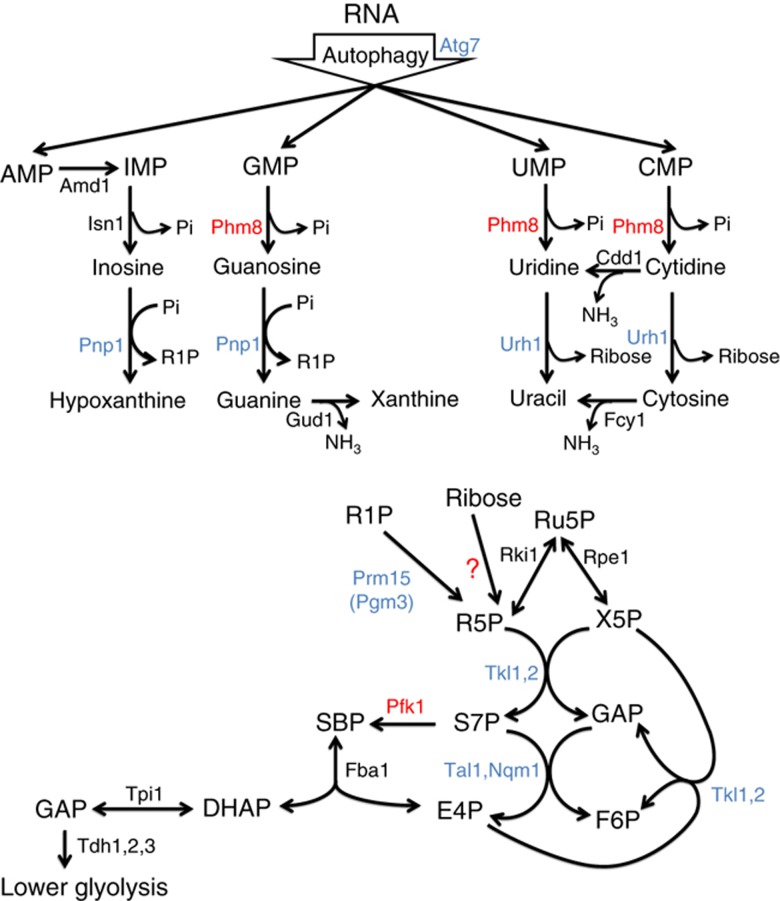
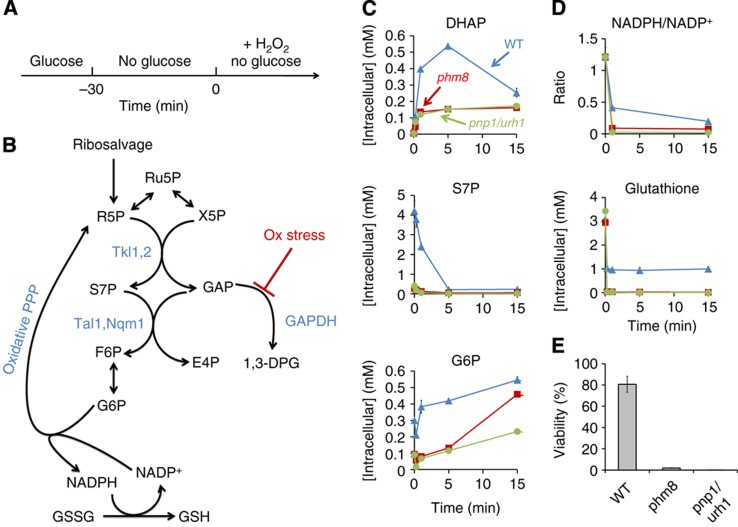
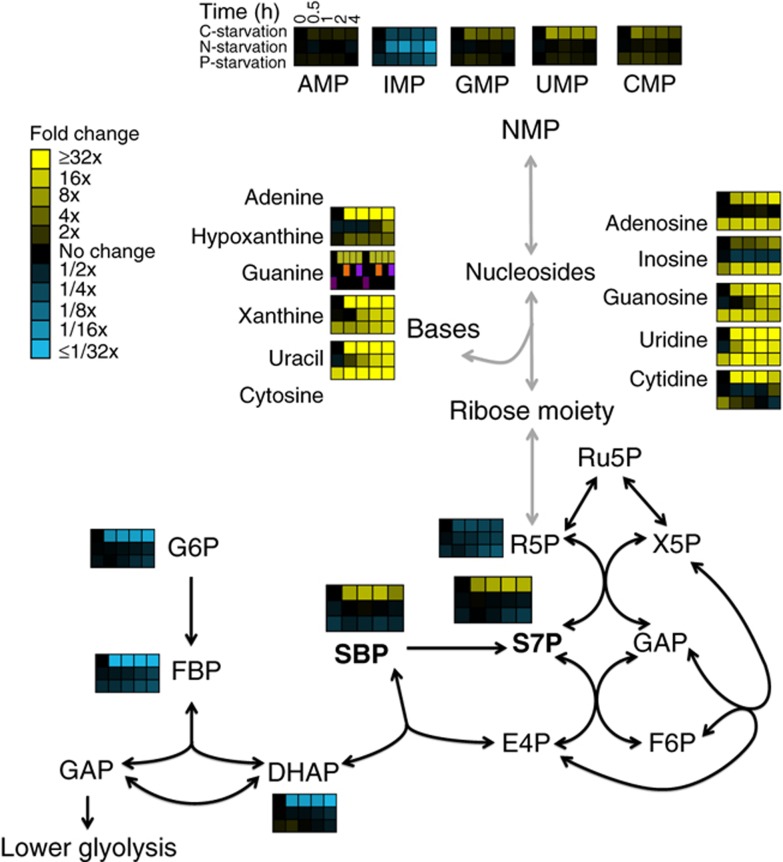
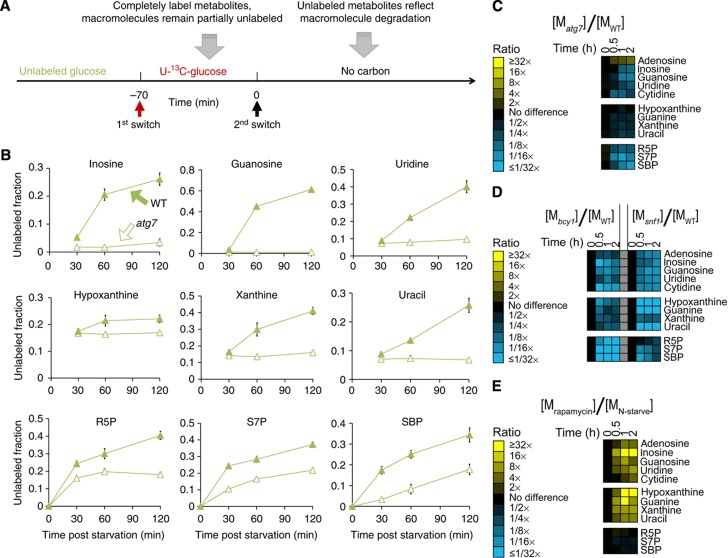
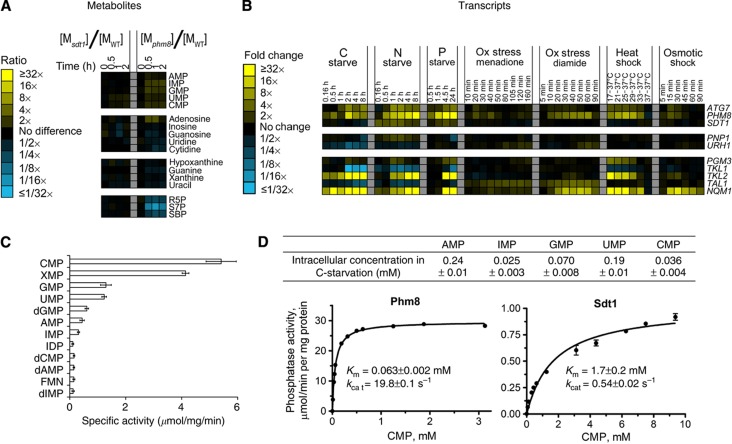
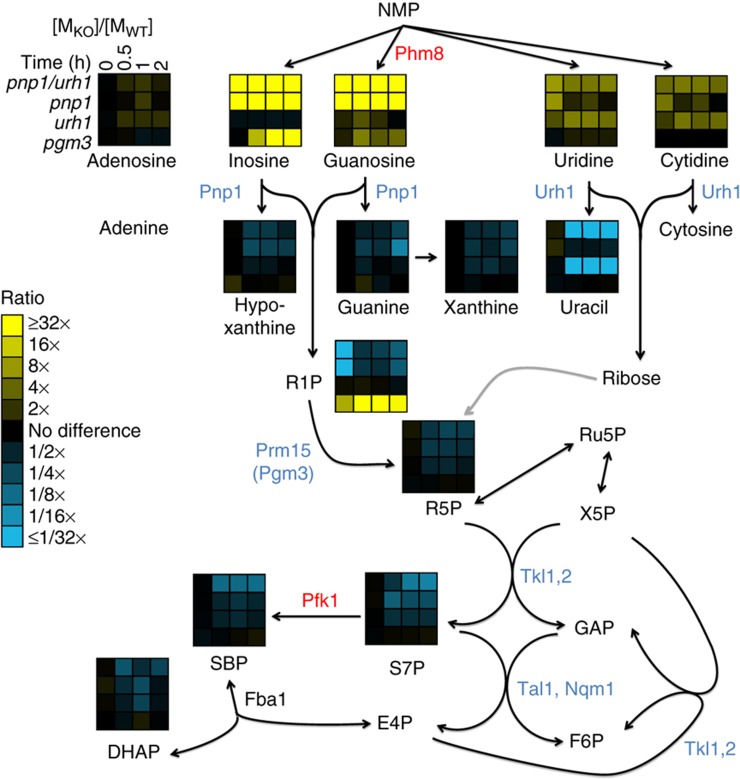
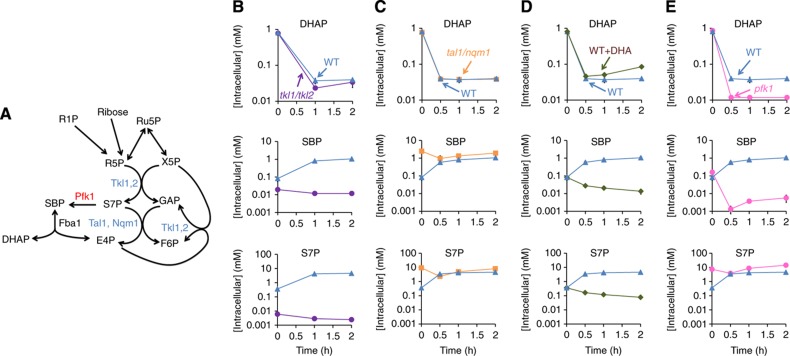
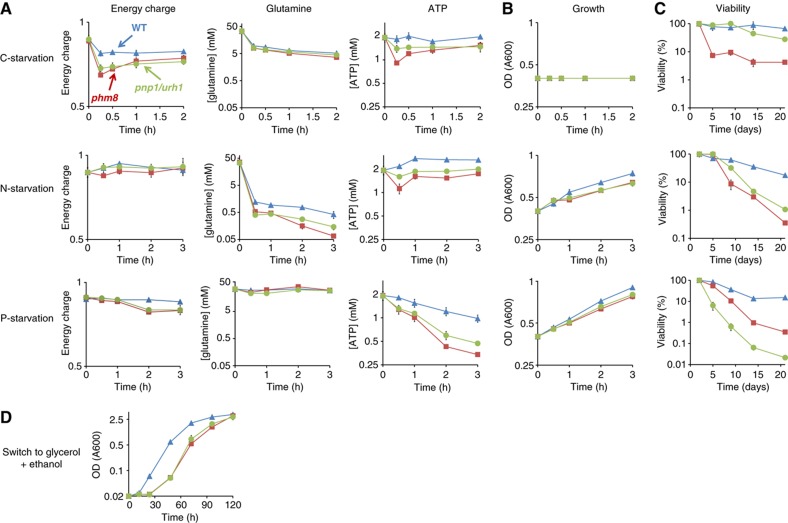
Nucleotide degradation is a universal metabolic capability. Here we combine metabolomics, genetics and biochemistry to characterize the yeast pathway. Nutrient starvation, via PKA, AMPK/SNF1, and TOR, triggers autophagic breakdown of ribosomes into nucleotides. A protein not previously associated with nucleotide degradation, Phm8, converts nucleotide monophosphates into nucleosides. Downstream steps, which involve the purine nucleoside phosphorylase, Pnp1, and pyrimidine nucleoside hydrolase, Urh1, funnel ribose into the nonoxidative pentose phosphate pathway. During carbon starvation, the ribose-derived carbon accumulates as sedoheptulose-7-phosphate, whose consumption by transaldolase is impaired due to depletion of transaldolase's other substrate, glyceraldehyde-3-phosphate. Oxidative stress increases glyceraldehyde-3-phosphate, resulting in rapid consumption of sedoheptulose-7-phosphate to make NADPH for antioxidant defense. Ablation of Phm8 or double deletion of Pnp1 and Urh1 prevent effective nucleotide salvage, resulting in metabolite depletion and impaired survival of starving yeast. Thus, ribose salvage provides means of surviving nutrient starvation and oxidative stress.
核苷酸降解是一种普遍的代谢能力。在这里,我们结合代谢组学、遗传学和生物化学来描述酵母途径。营养饥饿通过 PKA、AMPK/SNF1 和 TOR 触发核糖体自噬分解为核苷酸。一种以前与核苷酸降解无关的蛋白质 Phm8 将核苷酸单磷酸转化为核苷。下游步骤涉及嘌呤核苷磷酸化酶 Pnp1 和嘧啶核苷水解酶 Urh1,将核糖导入非氧化戊糖磷酸途径。在碳饥饿期间,核糖衍生的碳积累为 sedoheptulose-7-磷酸,由于其另一种底物甘油醛-3-磷酸的耗尽,转醛醇酶的消耗受到 sedoheptulose-7-磷酸的影响。氧化应激增加了甘油醛-3-磷酸,导致 sedoheptulose-7-磷酸迅速消耗以产生 NADPH 用于抗氧化防御。Phm8 的缺失或 Pnp1 和 Urh1 的双缺失阻止了有效的核苷酸回收,导致代谢物耗尽和饥饿酵母的生存能力受损。因此,核糖回收为应对营养饥饿和氧化应激提供了生存手段。