Schott Susanne, Hahn Josef, Kurbacher Christian, Moka Detlef
Department of Nuclear Medicine, University of Cologne, Cologne, Germany;
Int J Biomed Sci. 2012 Dec;8(4):258-63.
Using (31)P and (1)H magnetic resonance spectroscopy to measure phosphorus- and hydrogen-containing metabolites, this study aimes to investigate whether or not women with preeclampsia have detectable systemic abnormalities concerning certain components of the blood plasma.
PLASMA WAS OBTAINED FROM TWO GROUPS OF WOMEN: Group 1 with preeclampsia (n=10) and Group 2, as a control group with no complications during pregnancy (n=10). Plasma analysis were performed using in-vitro (31)P and (1)H nuclear magnetic resonance spectroscopy.
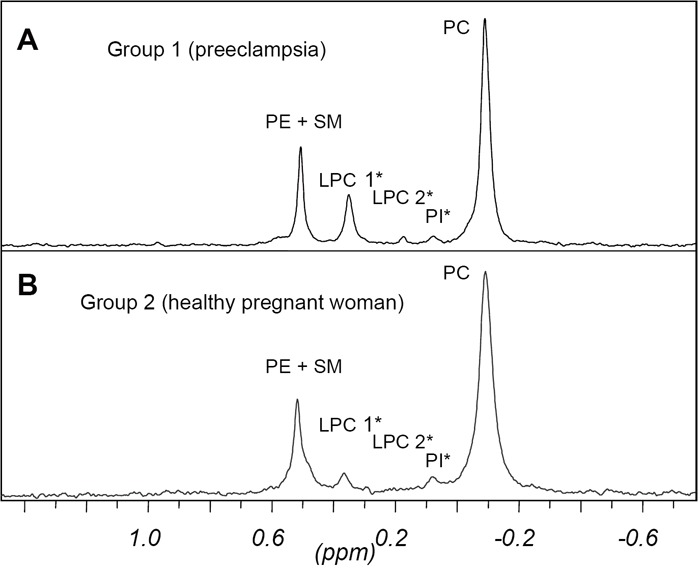
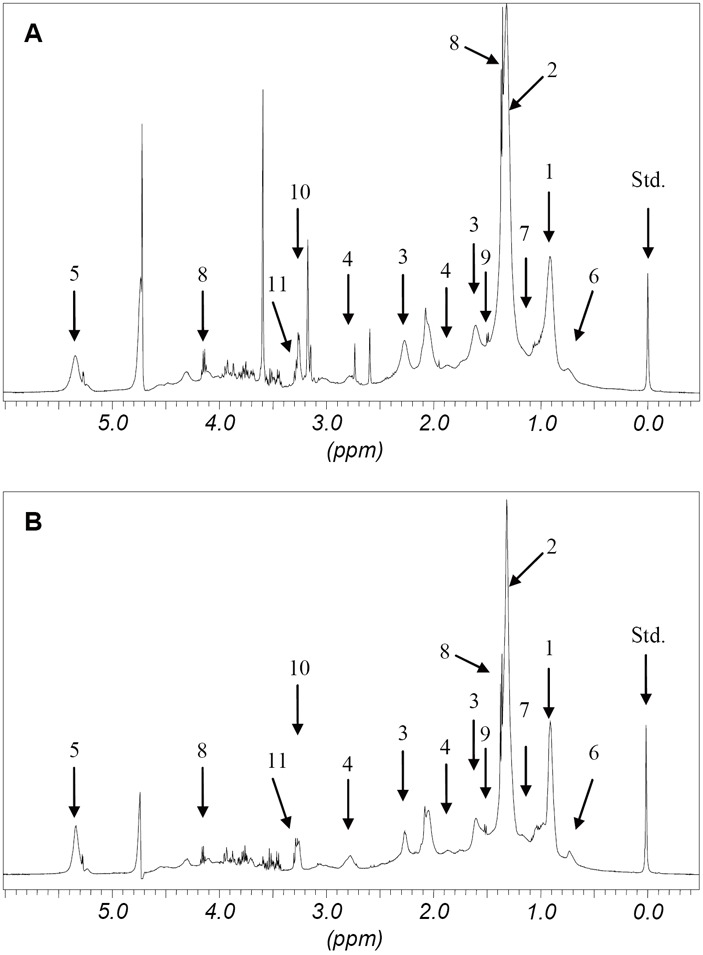
(31)P nuclear magnetic resonance (NMR) spectra showed significantly higher levels of lysophosphatidylcholine 1 in the plasma of the patients in Group 1, along with significantly decreased levels of lysophosphatidylcholine 2 and phosphatidylinositol. However, the total amount of phospholipids did not differ significantly between the groups. In addition, the (1)H NMR spectra showed a significantly lower level of HDL in samples from Group 1, and a trend towards higher plasma levels of VLDL 2 and LDL 2 in the same group.
This study supports the theory that preeclampsia is a disorder in phospholipid metabolism in which malfunctioning of cellular membranes seems to play a major pathogenic role.
本研究旨在通过使用磷(³¹P)和氢(¹H)磁共振波谱来测量含磷和含氢的代谢物,调查先兆子痫女性的血浆某些成分是否存在可检测到的全身异常。
从两组女性中获取血浆:第1组为先兆子痫患者(n = 10),第2组为孕期无并发症的对照组(n = 10)。使用体外³¹P和¹H核磁共振波谱进行血浆分析。
³¹P核磁共振(NMR)光谱显示,第1组患者血浆中的溶血磷脂酰胆碱1水平显著升高,同时溶血磷脂酰胆碱2和磷脂酰肌醇水平显著降低。然而,两组之间磷脂总量无显著差异。此外,¹H NMR光谱显示,第1组样本中的高密度脂蛋白(HDL)水平显著降低,且同一组中极低密度脂蛋白2(VLDL 2)和低密度脂蛋白2(LDL 2)的血浆水平有升高趋势。
本研究支持以下理论,即先兆子痫是一种磷脂代谢紊乱疾病,其中细胞膜功能异常似乎起主要致病作用。