Kaushik A, Reddy S S, Umesh L, Devi B K Y, Santana N, Rakesh N
Departments of Oral Medicine, Diagnosis and Radiology, SGT Dental College and Hospital, Gurgaon, Haryana, India.
Indian J Nephrol. 2013 Mar;23(2):125-9. doi: 10.4103/0971-4065.109421.
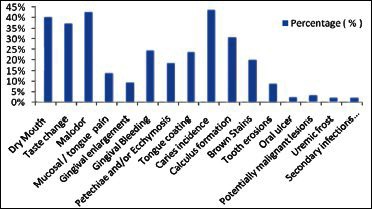
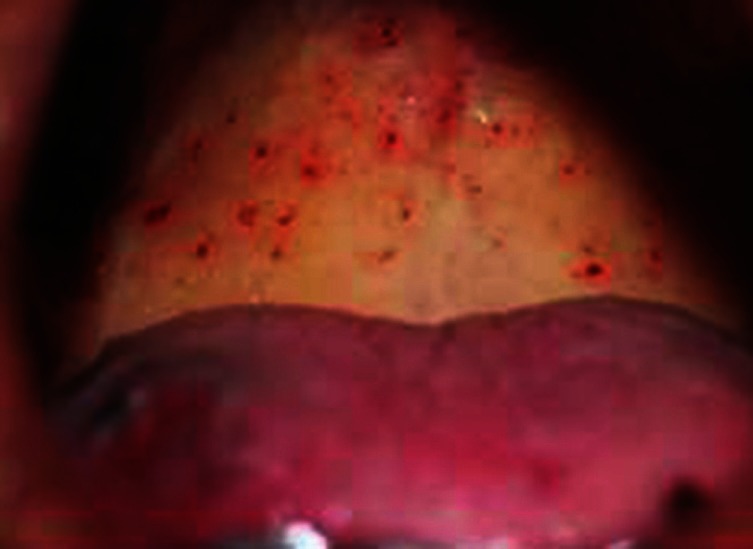
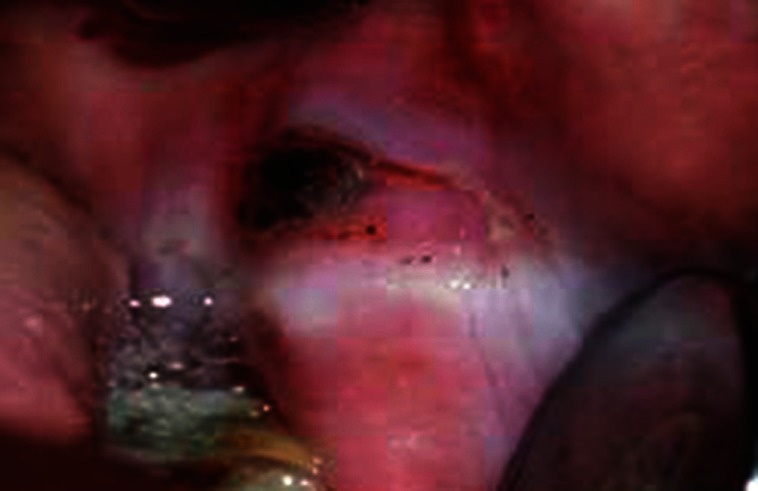
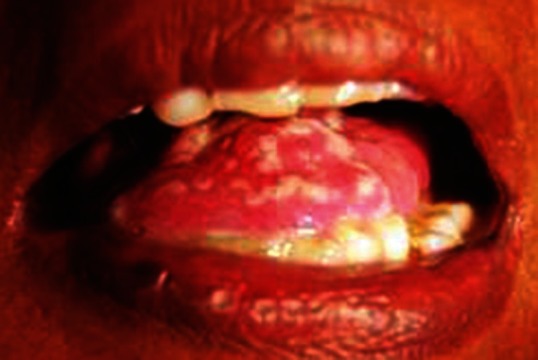
We wanted to assess oral and salivary changes in end stage renal disease (ESRD) patients undergoing hemodialysis (HD) and to understand the correlation of such changes with renal insufficiency. The cross-sectional study was performed among 100 ESRD patients undergoing HD. Among these, 25 patients were randomly selected to assess the salivary changes and compared with 25 apparently healthy individuals who formed the control group. Total duration of the study was 15 months. Oral malodor, dry mouth, taste change, increased caries incidence, calculus formation, and gingival bleeding were the common oral manifestations. The flow rates of both unstimulated as well as stimulated whole saliva were decreased in the study group. The pH and buffer capacity of unstimulated whole saliva was increased in the study group, but stimulated whole saliva did not show any difference. ESRD patients undergoing HD require special considerations during dental treatment because of the various conditions inherent to the disease, their multiple oral manifestations and the treatment side-effects.
我们想要评估接受血液透析(HD)的终末期肾病(ESRD)患者的口腔和唾液变化,并了解这些变化与肾功能不全的相关性。这项横断面研究在100名接受HD的ESRD患者中进行。其中,随机选择25名患者评估唾液变化,并与25名构成对照组的明显健康个体进行比较。研究总时长为15个月。口腔异味、口干、味觉改变、龋齿发病率增加、牙结石形成和牙龈出血是常见的口腔表现。研究组中未刺激和刺激后的全唾液流速均降低。研究组中未刺激全唾液的pH值和缓冲能力增加,但刺激后的全唾液未显示出任何差异。由于该疾病固有的各种状况、其多种口腔表现以及治疗副作用,接受HD的ESRD患者在牙科治疗期间需要特别考虑。