Department of Land Resources and Environmental Sciences, Montana State University Bozeman, MT, USA ; Thermal Biology Institute, Montana State University Bozeman, MT, USA.
Front Microbiol. 2013 May 15;4:95. doi: 10.3389/fmicb.2013.00095. eCollection 2013.
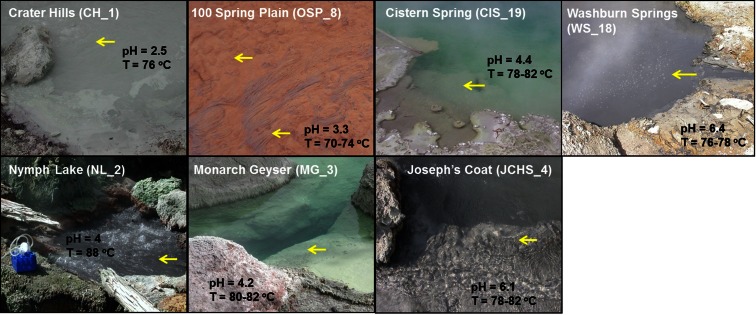
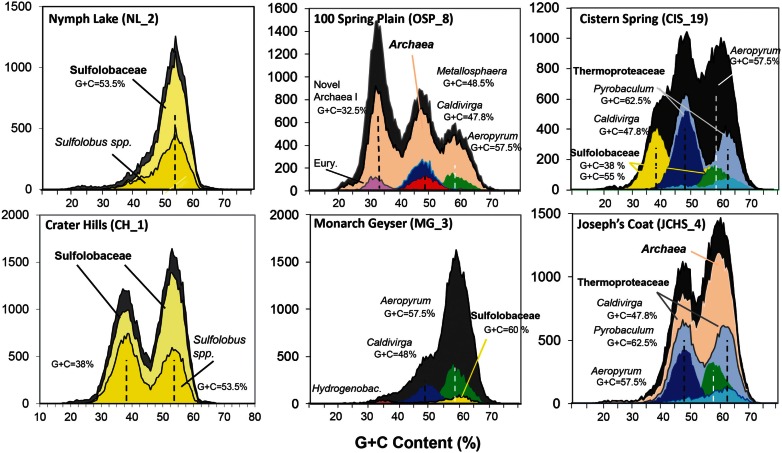
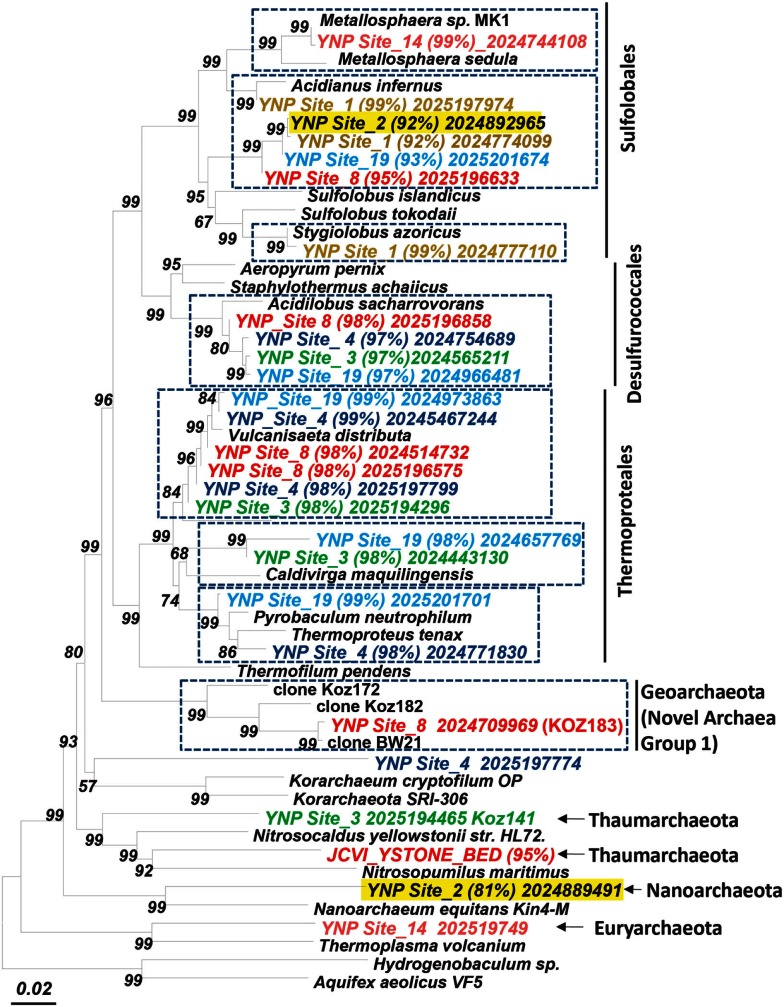
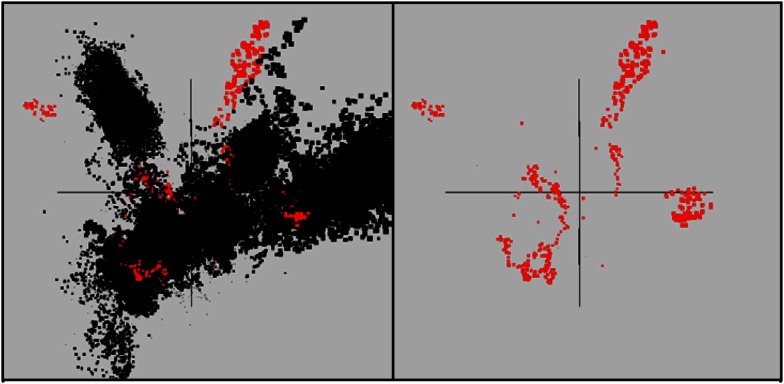
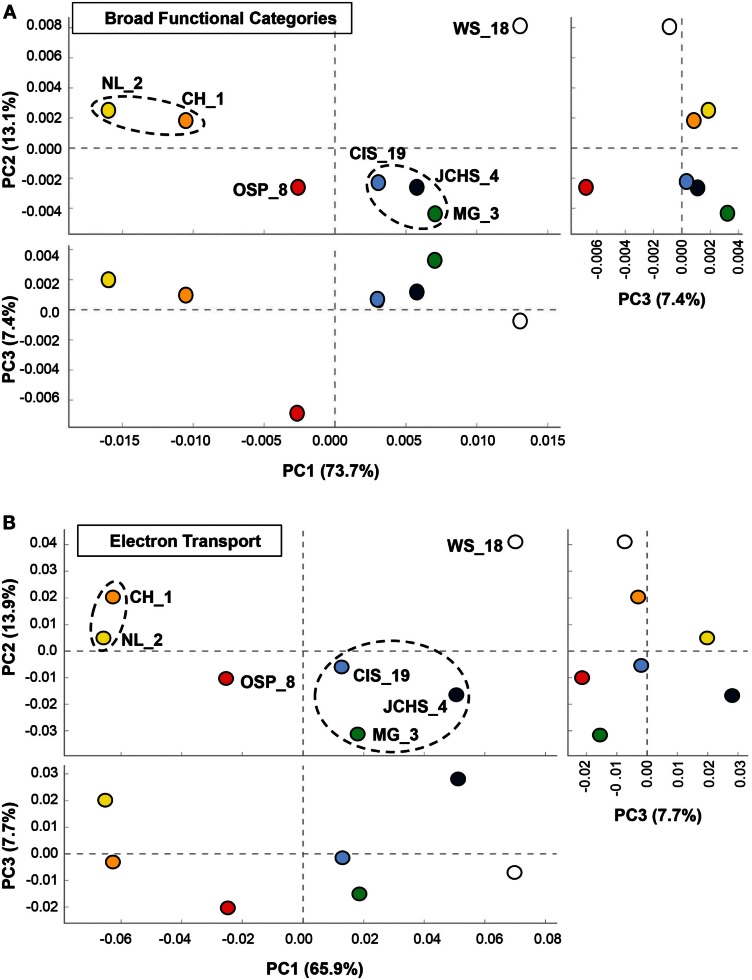
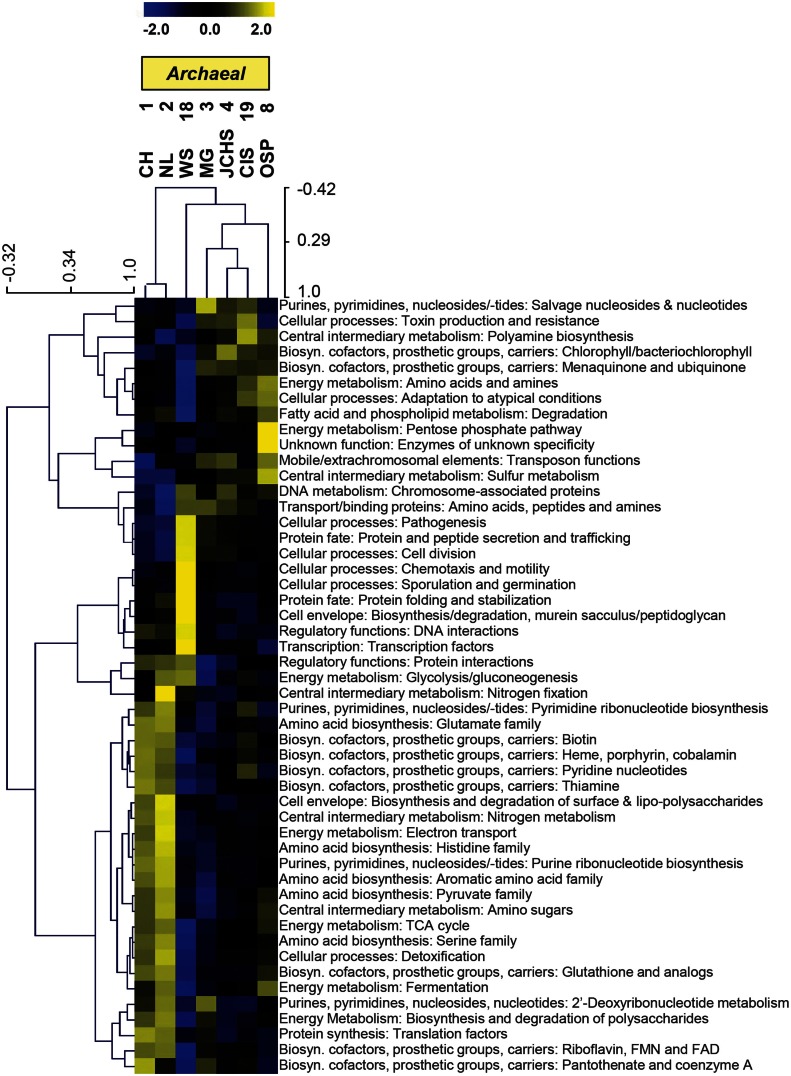
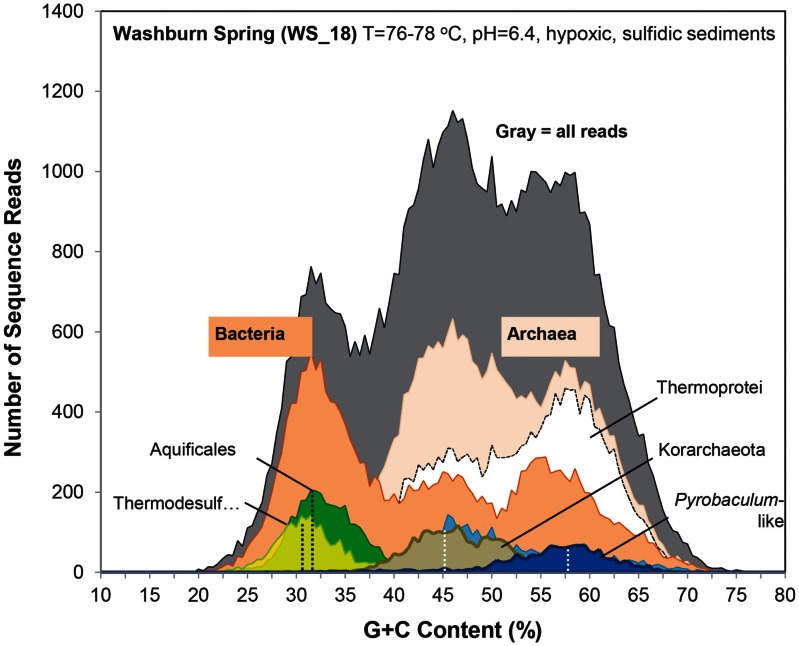
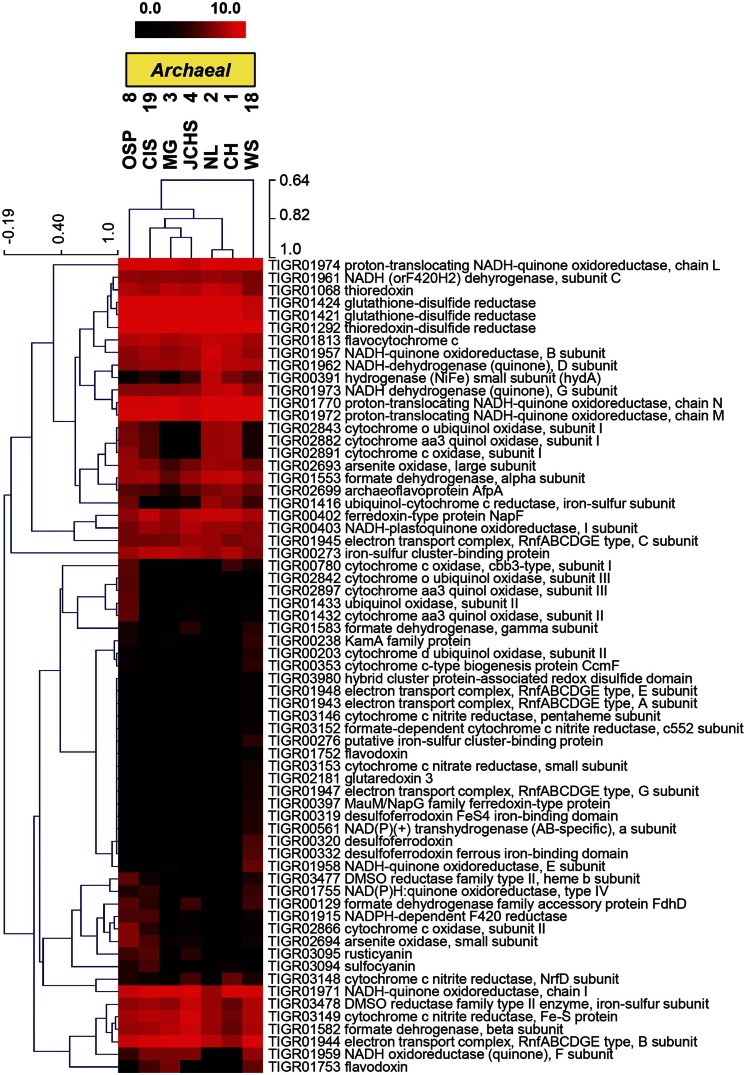
Geothermal habitats in Yellowstone National Park (YNP) provide an unparalleled opportunity to understand the environmental factors that control the distribution of archaea in thermal habitats. Here we describe, analyze, and synthesize metagenomic and geochemical data collected from seven high-temperature sites that contain microbial communities dominated by archaea relative to bacteria. The specific objectives of the study were to use metagenome sequencing to determine the structure and functional capacity of thermophilic archaeal-dominated microbial communities across a pH range from 2.5 to 6.4 and to discuss specific examples where the metabolic potential correlated with measured environmental parameters and geochemical processes occurring in situ. Random shotgun metagenome sequence (∼40-45 Mb Sanger sequencing per site) was obtained from environmental DNA extracted from high-temperature sediments and/or microbial mats and subjected to numerous phylogenetic and functional analyses. Analysis of individual sequences (e.g., MEGAN and G + C content) and assemblies from each habitat type revealed the presence of dominant archaeal populations in all environments, 10 of whose genomes were largely reconstructed from the sequence data. Analysis of protein family occurrence, particularly of those involved in energy conservation, electron transport, and autotrophic metabolism, revealed significant differences in metabolic strategies across sites consistent with differences in major geochemical attributes (e.g., sulfide, oxygen, pH). These observations provide an ecological basis for understanding the distribution of indigenous archaeal lineages across high-temperature systems of YNP.
黄石国家公园(YNP)的地热栖息地为了解控制热生境中古菌分布的环境因素提供了无与伦比的机会。在这里,我们描述、分析和综合了从七个高温地点收集的宏基因组和地球化学数据,这些地点的微生物群落主要由古菌而不是细菌主导。该研究的具体目标是使用宏基因组测序来确定 pH 值范围从 2.5 到 6.4 的嗜热古菌主导的微生物群落的结构和功能能力,并讨论代谢潜力与原位发生的测量环境参数和地球化学过程相关的具体例子。从高温沉积物和/或微生物垫中提取的环境 DNA 获得随机鸟枪法宏基因组序列(每个地点约 40-45 Mb Sanger 测序),并进行了许多系统发育和功能分析。对每个栖息地类型的单个序列(例如,MEGAN 和 G+C 含量)和组装体的分析表明,所有环境中都存在优势古菌种群,其中 10 个种群的基因组主要是从序列数据中重建的。对蛋白家族出现的分析,特别是涉及能量守恒、电子传递和自养代谢的蛋白家族出现的分析,揭示了不同地点之间代谢策略的显著差异,这些差异与主要地球化学属性(如硫化物、氧气、pH 值)一致。这些观察结果为理解 YNP 高温系统中土著古菌谱系的分布提供了生态基础。