Nestlé Research Center, Vers chez les Blanc, 1000 Lausanne 26, Switzerland ; Chalmers University of Technology, 412 96 Gothenburg, Sweden.
Int J Endocrinol. 2013;2013:585876. doi: 10.1155/2013/585876. Epub 2013 May 16.
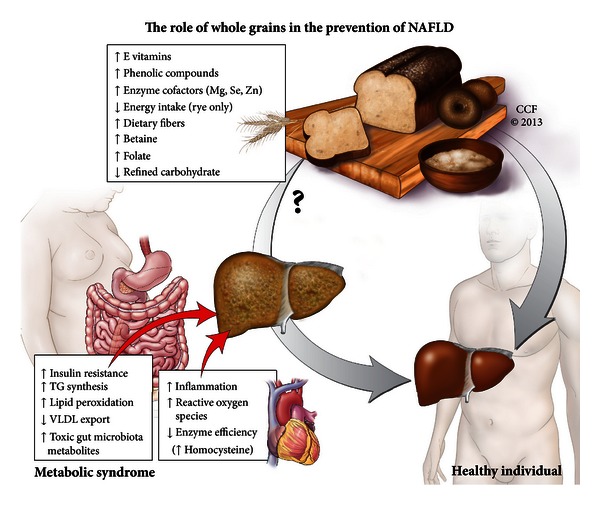
In conjunction with the rise in rates of obesity, there has been an increase in the rate of nonalcoholic fatty liver disease (NAFLD). While NAFLD at least partially originates from poor diet, there is a lack of nutritional recommendations for patients with suspected or confirmed diagnosis of NAFLD, beyond eating a healthy diet, increasing physical activity, and emphasising weight loss. The limited current literature suggests that there may be opportunities to provide more tailored dietary advice for people diagnosed with or at risk of NAFLD. Epidemiological studies consistently find associations between whole grain intake and a reduced risk of obesity and related diseases, yet no work has been done on the potential of whole grains to prevent and/or be a part of the treatment for fatty liver diseases. In this review, we examine the potential and the current evidence for whole grains having an impact on NAFLD. Due to their nutrient and phytochemical composition, switching from consuming mainly refined grains to whole grains should be considered as part of the nutritional guidelines for patients diagnosed with or at risk for fatty liver disease.
随着肥胖率的上升,非酒精性脂肪性肝病(NAFLD)的发病率也有所上升。虽然 NAFLD 至少部分源于不良饮食,但对于疑似或确诊为 NAFLD 的患者,除了健康饮食、增加身体活动和强调减肥之外,缺乏针对 NAFLD 的营养建议。目前有限的文献表明,对于确诊或有患 NAFLD 风险的人,可能有机会提供更具针对性的饮食建议。流行病学研究一致发现,全谷物摄入量与肥胖和相关疾病风险降低之间存在关联,但尚未有关于全谷物预防和/或作为治疗脂肪性肝病的一部分的潜力的研究。在这篇综述中,我们探讨了全谷物对 NAFLD 的潜在影响和现有证据。由于其营养成分和植物化学物质组成,从主要食用精制谷物改为全谷物应被视为确诊或有患脂肪性肝病风险的患者营养指南的一部分。