Royal Melbourne Hospital, Parkville, Victoria,Australia.
Emerg Infect Dis. 2013 Jul;19(7):1049-73. doi: 10.3201/eid1907.121573.
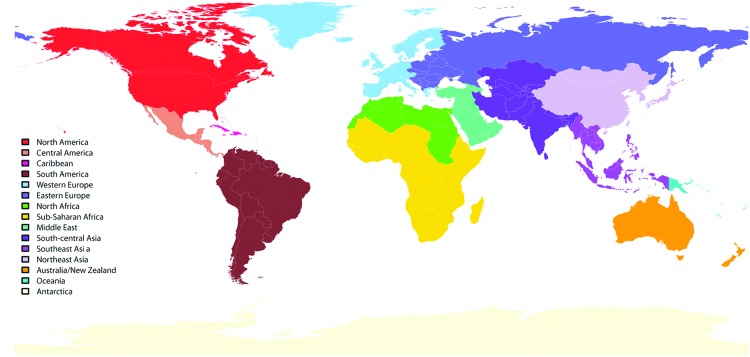
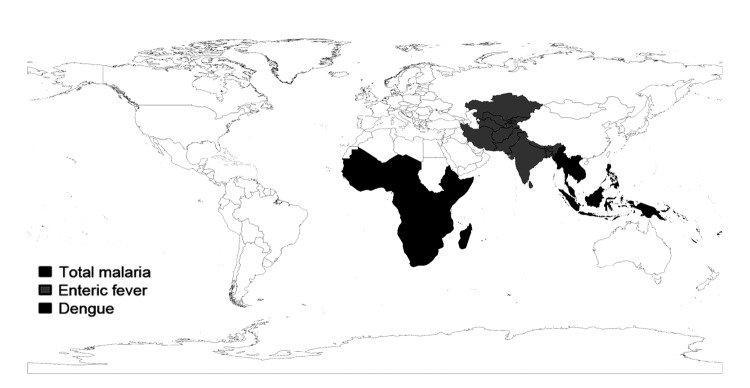
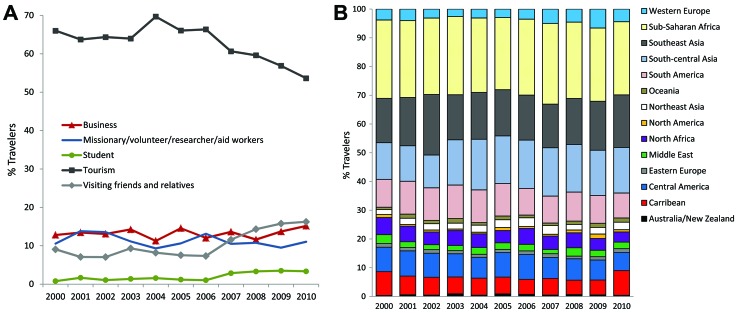
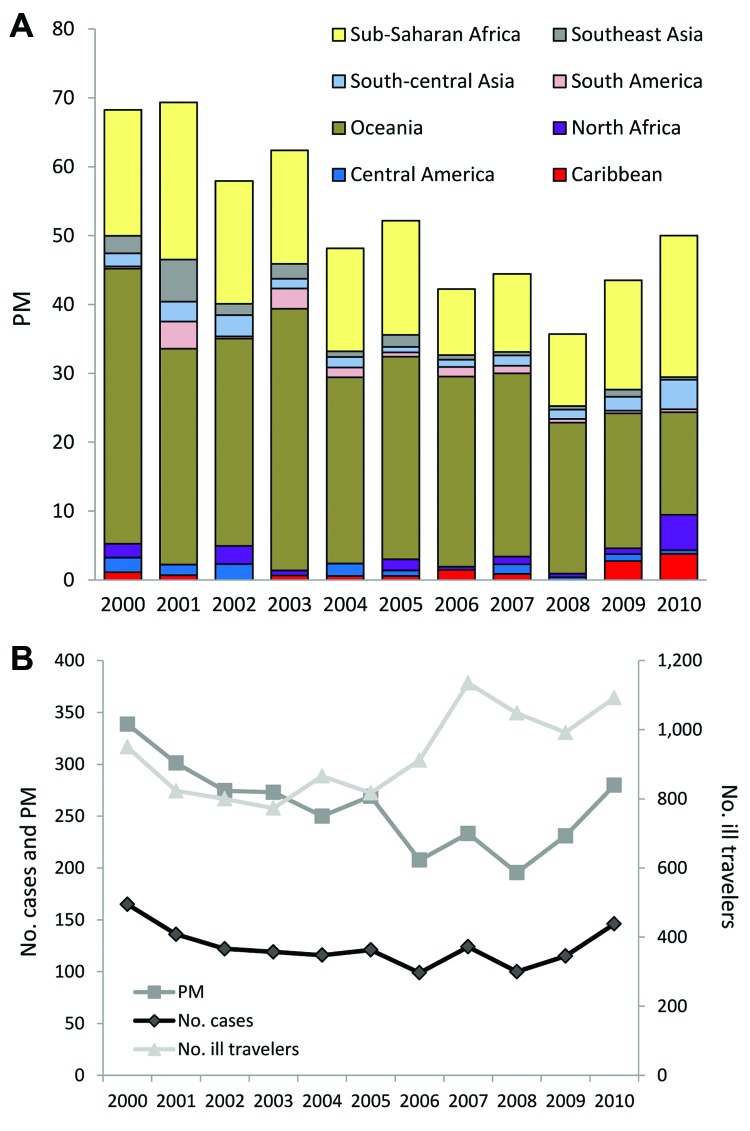
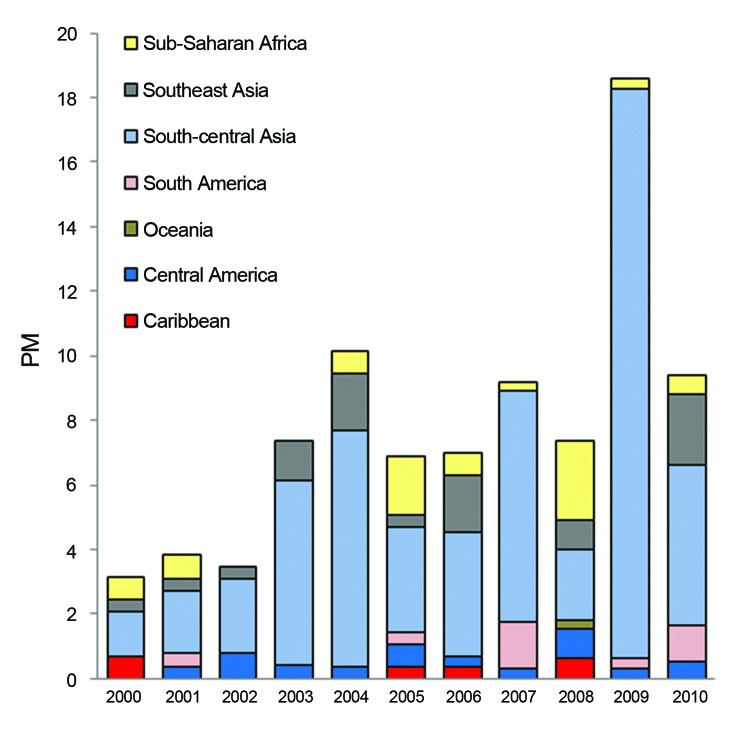
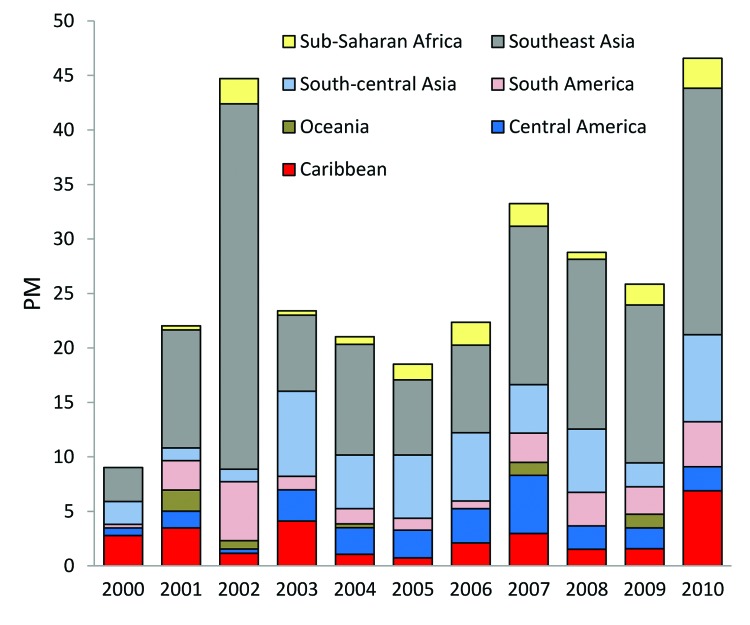
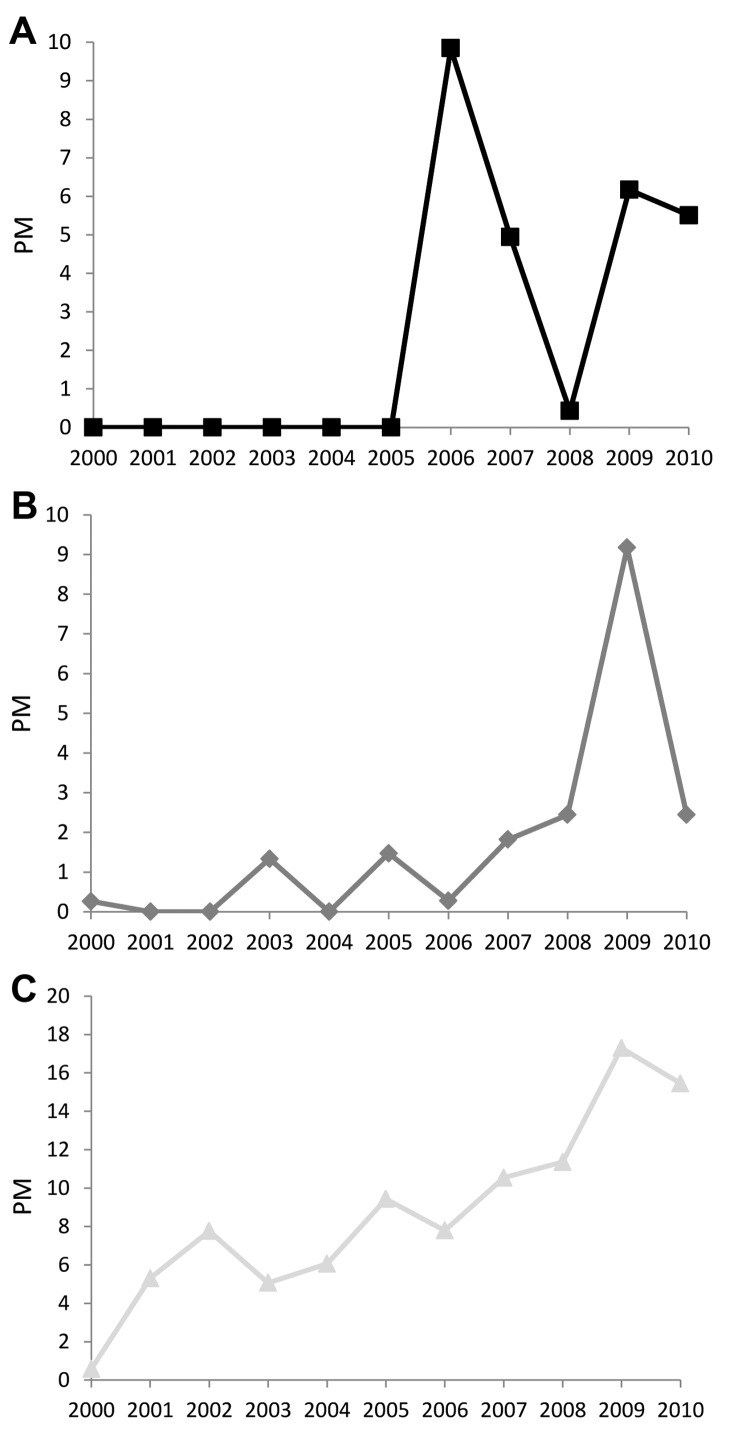
Longitudinal data examining travel-associated illness patterns are lacking. To address this need and determine trends and clusters in travel-related illness, we examined data for 2000-2010, prospectively collected for 42,223 ill travelers by 18 GeoSentinel sites. The most common destinations from which ill travelers returned were sub-Saharan Africa (26%), Southeast Asia (17%), south-central Asia (15%), and South America (10%). The proportion who traveled for tourism decreased significantly, and the proportion who traveled to visit friends and relatives increased. Among travelers returning from malaria-endemic regions, the proportionate morbidity (PM) for malaria decreased; in contrast, the PM trends for enteric fever and dengue (excluding a 2002 peak) increased. Case clustering was detected for malaria (Africa 2000, 2007), dengue (Thailand 2002, India 2003), and enteric fever (Nepal 2009). This multisite longitudinal analysis highlights the utility of sentinel surveillance of travelers for contributing information on disease activity trends and an evidence base for travel medicine recommendations.
缺乏关于旅行相关疾病模式的纵向数据。为了解决这一需求,并确定与旅行相关的疾病的趋势和聚类,我们对 2000 年至 2010 年的数据进行了检查,这些数据是由 18 个 GeoSentinel 站点前瞻性收集的 42223 名患病旅行者的数据。患病旅行者返回的最常见目的地是撒哈拉以南非洲(26%)、东南亚(17%)、中南部亚洲(15%)和南美洲(10%)。旅行目的为旅游的比例显著下降,而旅行探亲访友的比例增加。在从疟疾流行地区返回的旅行者中,疟疾的发病率比例(PM)下降;相比之下,肠热病和登革热(不包括 2002 年的高峰)的 PM 趋势上升。疟疾(2000 年非洲、2007 年非洲)、登革热(2002 年泰国、2003 年印度)和肠热病(2009 年尼泊尔)出现了病例聚类。这项多地点纵向分析突出了旅行者哨点监测对提供疾病活动趋势信息和旅行医学建议的证据基础的效用。