Department of Plastic and Reconstructive Surgery, Shanghai 9th People's Hospital, Shanghai Jiao Tong University School of Medicine, Shanghai Key Laboratory of Tissue Engineering, National Tissue Engineering Center of China, Shanghai, People's Republic of China.
Int J Nanomedicine. 2013;8:2077-84. doi: 10.2147/IJN.S42384. Epub 2013 Jun 5.
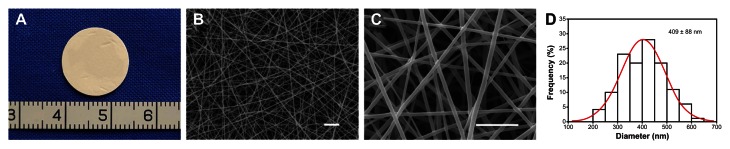
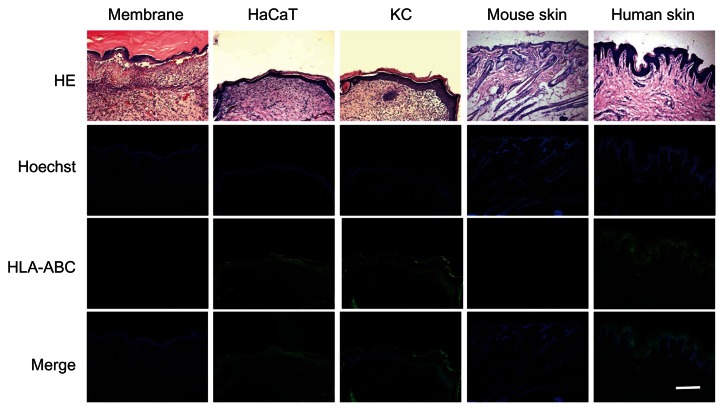
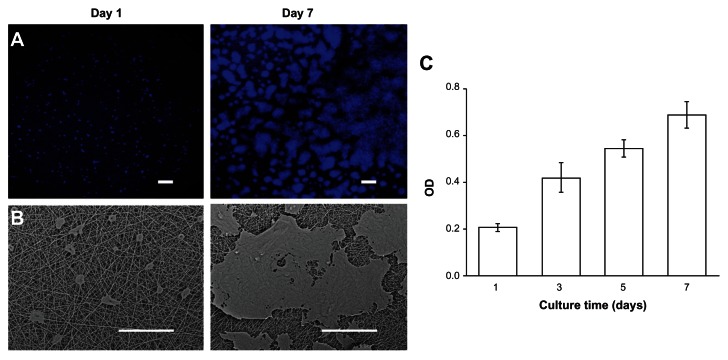
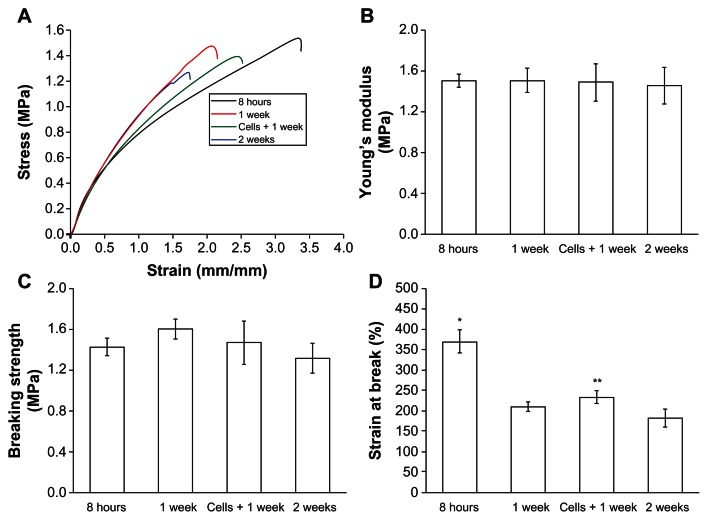
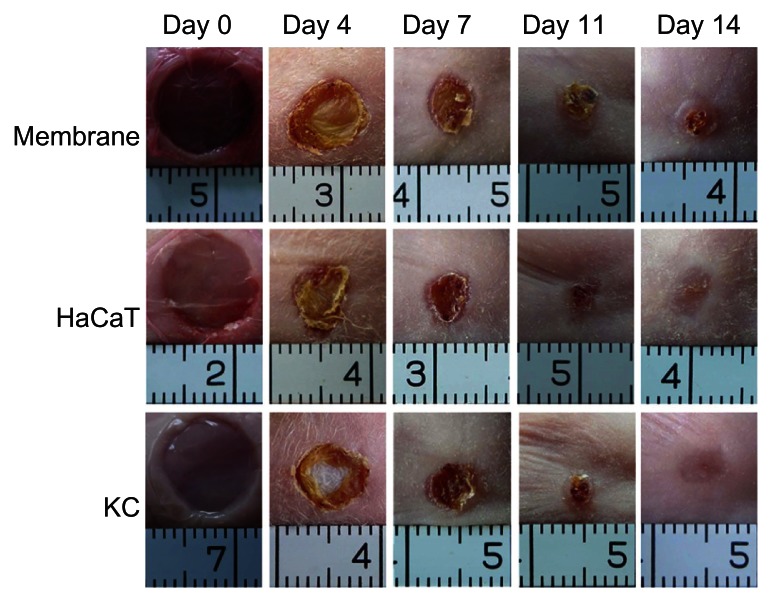
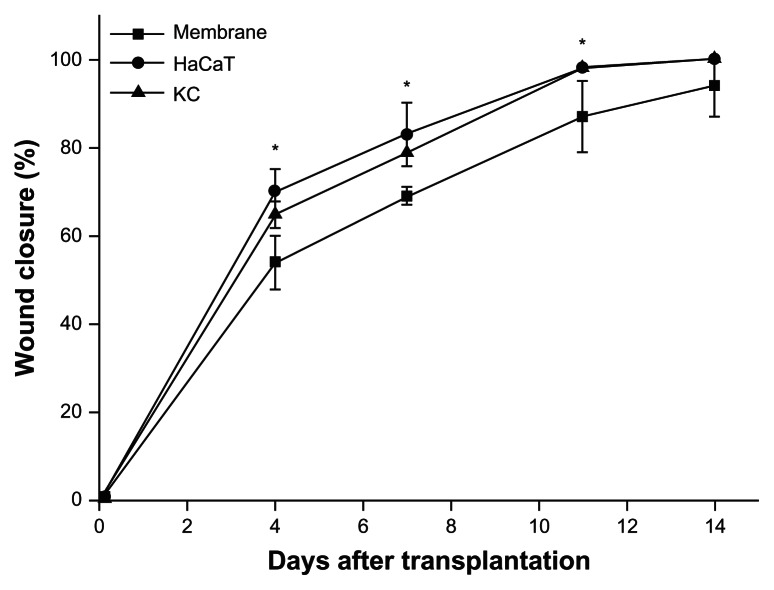
Skin engineering provides a new strategy for treating a wide variety of skin defects. In particular, electrospun nanofibrous membranes have been used as carriers for epidermis engineering. The aim of this study was to investigate the feasibility of a modified gelatin and polycaprolactone (GT/PCL) electrospun membrane for epidermis engineering. The biocompatibility of the membranes was evaluated by seeding HaCaT cells (human keratinocyte cell line) on the membrane and the mechanical properties of the membranes were determined with and without cells after culture. A cell proliferation assay showing that HaCaT cells attached and proliferated well on the membranes demonstrated that the membranes possess good biocompatibility. Mechanical tests showed that the membranes are strong enough to be handled during transplantation. Further in vivo transplantation studies revealed that epidermises engineered with GT/PCL membranes were able to repair skin defects in the nude mouse. These results demonstrate that GT/PCL electrospun membranes could be suitable scaffolds for skin engineering.
皮肤工程为治疗各种皮肤缺陷提供了一种新策略。特别是,静电纺纳米纤维膜已被用作表皮工程的载体。本研究旨在探讨改良明胶和聚己内酯(GT/PCL)静电纺膜用于表皮工程的可行性。通过将 HaCaT 细胞(人角质形成细胞系)接种在膜上,评估了膜的生物相容性,并在培养后有无细胞的情况下测定了膜的机械性能。细胞增殖试验表明,HaCaT 细胞在膜上附着和增殖良好,表明膜具有良好的生物相容性。力学试验表明,该膜足够坚固,在移植过程中可以处理。进一步的体内移植研究表明,GT/PCL 膜构建的表皮能够修复裸鼠的皮肤缺陷。这些结果表明,GT/PCL 静电纺膜可以作为皮肤工程的合适支架。