Department of Occupational and Environmental Medicine, Sahlgrenska Academy, Gothenburg University, Gothenburg, Sweden.
BMJ Open. 2013 May 28;3(5):e002408. doi: 10.1136/bmjopen-2012-002408.
The aim of the study was to explore and describe the reliability and validity of an instrument to measure preschool children's reactions to and coping with indoor noise at preschools or day care centres.
Data were derived from an acoustical before and after intervention study providing repeated measurements.
The study was performed at seven preschools in Mölndal, Sweden.
Children were recruited from these preschools and the final sample comprised 61 and 59 preschool children aged 4-5 years, with a response rate of 98% and 48% girls and 52% boys. Two children were excluded from analysis because they fell outside the age range.
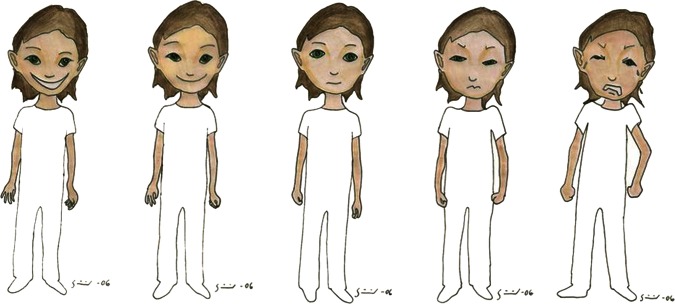
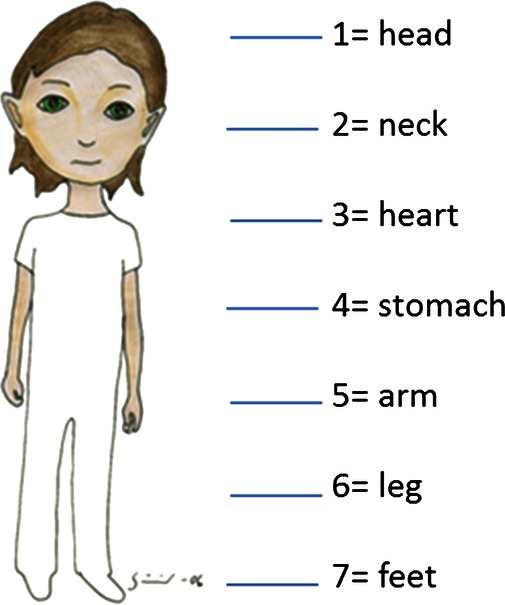
The instrument was developed based on a qualitative study performed in Swedish preschools. Questions pertained to preschool children's perception of noise when at school, their bodily and emotional reactions to it, non-specific symptoms and the coping strategies used by them to diminish the detrimental effects of the noise.
Confirmative factor analysis yielded a three-factor model fitted to 10 items pertaining to angry reactions, symptoms and coping. The model fit was moderate to good (standardised root mean square residual=0.08, 0.12; adjusted goodness of fit=0.97/0.91) in the before and after conditions, respectively. The scales showed moderate to good reliability in terms of internal consistency, with an α ranging between 0.52 and 0.67, and was stronger in the before condition. Concurrent validity was strongest for symptoms by comparing groups based on bodily reaction (general and sound specific).
Young children's emotional and bodily reactions to coping with noise can be reliably measured with this instrument. Like adults and older children, young children are able to distinguish between emotional reactions, bodily reactions, coping and unwell-being. Future research on larger groups of preschool children is needed to further refine the questions, in particular the questions pertaining to well-being.
本研究旨在探索和描述一种测量学龄前儿童在幼儿园或日托中心对室内噪声的反应和应对能力的工具的信度和效度。
数据来自于一项声学干预前后研究,提供了重复测量。
该研究在瑞典莫尔恩达尔的七所幼儿园进行。
从这些幼儿园招募儿童,最终样本包括 61 名和 59 名 4-5 岁的学龄前儿童,女孩的应答率为 98%,男孩为 48%,女孩为 52%。有 2 名儿童因年龄不在范围内而被排除在分析之外。
该工具是基于在瑞典幼儿园进行的定性研究开发的。问题涉及学龄前儿童在学校时对噪声的感知、他们对噪声的身体和情绪反应、非特异性症状以及他们用来减轻噪声不利影响的应对策略。
验证性因子分析得出了一个适合 10 个项目的三因素模型,这些项目涉及愤怒反应、症状和应对策略。该模型在干预前后的拟合度分别为中等至良好(标准化均方根残差分别为 0.08 和 0.12;调整后的拟合优度分别为 0.97/0.91)。在内部一致性方面,量表的信度在中等至良好范围内,α 值在 0.52 至 0.67 之间,且在干预前条件下更强。在基于身体反应(一般和声音特异性)比较组时,症状的同时效度最强。
该工具可以可靠地测量幼儿对噪声的情绪和身体反应。与成人和年龄较大的儿童一样,幼儿能够区分情绪反应、身体反应、应对策略和不适。需要对更大样本的学龄前儿童进行进一步研究,以进一步完善问题,特别是与幸福感相关的问题。