The Hakubi Center for Advanced Research, Kyoto University, Kyoto, Japan.
Mol Autism. 2013 Jun 24;4(1):20. doi: 10.1186/2040-2392-4-20.
The objective of this study was to examine differences in episodic memory retrieval between individuals with autism spectrum disorder (ASD) and typically developing (TD) individuals. Previous studies have shown that personality similarities between readers and characters facilitated reading comprehension. Highly extraverted participants read stories featuring extraverted protagonists more easily and judged the outcomes of such stories more rapidly than did less extraverted participants. Similarly, highly neurotic participants judged the outcomes of stories with neurotic protagonists more rapidly than did participants with low levels of neuroticism. However, the impact of the similarity effect on memory retrieval remains unclear. This study tested our 'similarity hypothesis', namely that memory retrieval is enhanced when readers with ASD and TD readers read stories featuring protagonists with ASD and with characteristics associated with TD individuals, respectively.
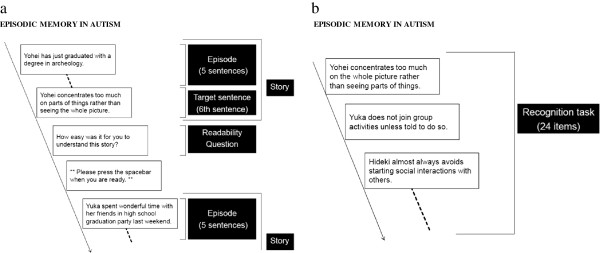
Eighteen Japanese individuals (one female) with high-functioning ASD (aged 17 to 40 years) and 17 age- and intelligence quotient (IQ)-matched Japanese (one female) TD participants (aged 22 to 40 years) read 24 stories; 12 stories featured protagonists with ASD characteristics, and the other 12 featured TD protagonists. Participants read a single sentence at a time and pressed a spacebar to advance to the next sentence. After reading all 24 stories, they were asked to complete a recognition task about the target sentence in each story.
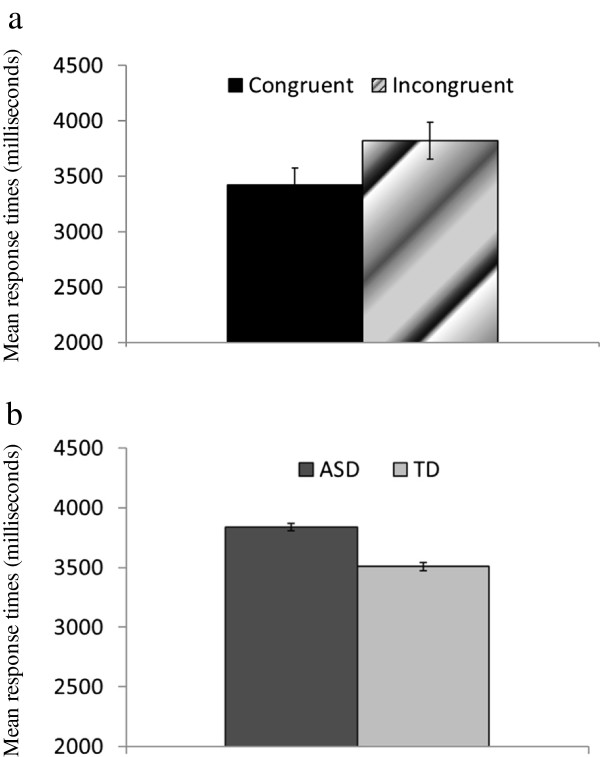
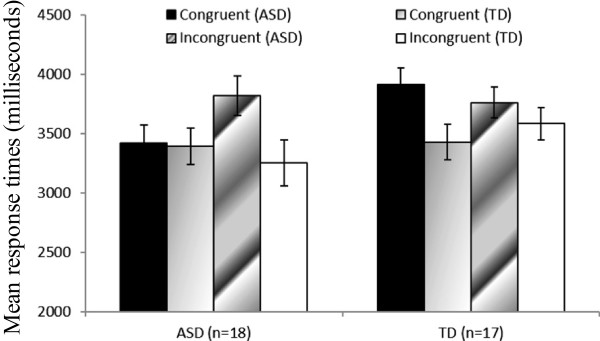
To investigate episodic memory in ASD, we analyzed encoding based on the reading times for and readability of the stories and retrieval processes based on the accuracy of and response times for sentence recognition. Although the results showed no differences between ASD and TD groups in encoding processes, they did reveal inter-group differences in memory retrieval. Although individuals with ASD demonstrated the same level of accuracy as did TD individuals, their patterns of memory retrieval differed with respect to response times.
Individuals with ASD more effectively retrieved ASD-congruent than ASD-incongruent sentences, and TD individuals retrieved stories with TD more effectively than stories with ASD protagonists. Thus, similarity between reader and story character had different effects on memory retrieval in the ASD and TD groups.
本研究旨在探讨自闭症谱系障碍(ASD)个体与典型发育(TD)个体在情景记忆检索方面的差异。先前的研究表明,读者与角色之间的人格相似性有助于阅读理解。高度外向的参与者更容易阅读以外向主角为特色的故事,并比不那么外向的参与者更快地判断此类故事的结果。同样,高度神经质的参与者比神经质水平较低的参与者更快地判断以神经质主角为特色的故事的结果。然而,相似性效应对记忆检索的影响尚不清楚。本研究检验了我们的“相似性假设”,即当 ASD 患者和 TD 患者阅读以 ASD 患者和与 TD 个体相关特征为特色的主角的故事时,记忆检索会增强。
18 名日本高功能 ASD 患者(1 名女性,年龄 17 至 40 岁)和 17 名年龄和智商(IQ)匹配的日本 TD 参与者(1 名女性,年龄 22 至 40 岁)阅读了 24 个故事;12 个故事的主角具有 ASD 特征,另外 12 个故事的主角具有 TD 特征。参与者逐句阅读,并按空格键进入下一句。阅读完所有 24 个故事后,他们被要求完成一个关于每个故事中目标句子的识别任务。
为了研究 ASD 中的情景记忆,我们根据故事的阅读时间和可读性分析了编码过程,并根据句子识别的准确性和反应时间分析了检索过程。尽管结果显示 ASD 和 TD 组在编码过程中没有差异,但它们确实揭示了记忆检索中的组间差异。尽管 ASD 患者的准确性与 TD 患者相同,但他们的记忆检索模式在反应时间方面存在差异。
ASD 患者更有效地检索与 ASD 一致的句子,而 TD 患者更有效地检索与 TD 一致的故事,而不是与 ASD 主角相关的故事。因此,读者与故事角色之间的相似性对 ASD 和 TD 组的记忆检索有不同的影响。