Department of Molecular Genetics, Weizmann Institute of Science, Rehovot, Israel.
PLoS Genet. 2013 Jun;9(6):e1003597. doi: 10.1371/journal.pgen.1003597. Epub 2013 Jun 27.
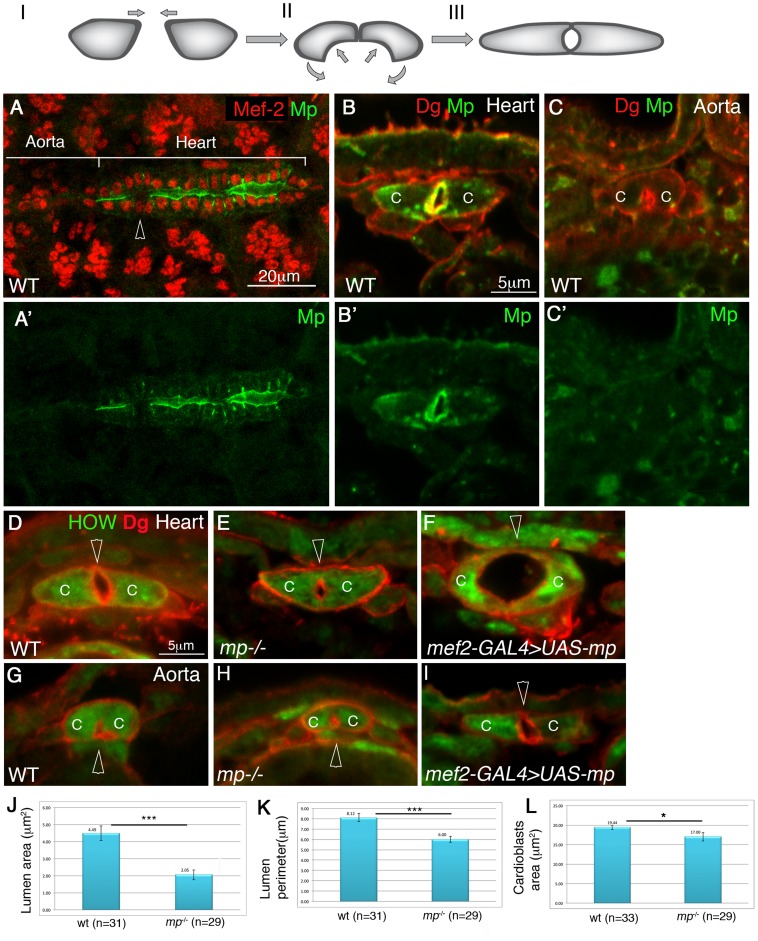
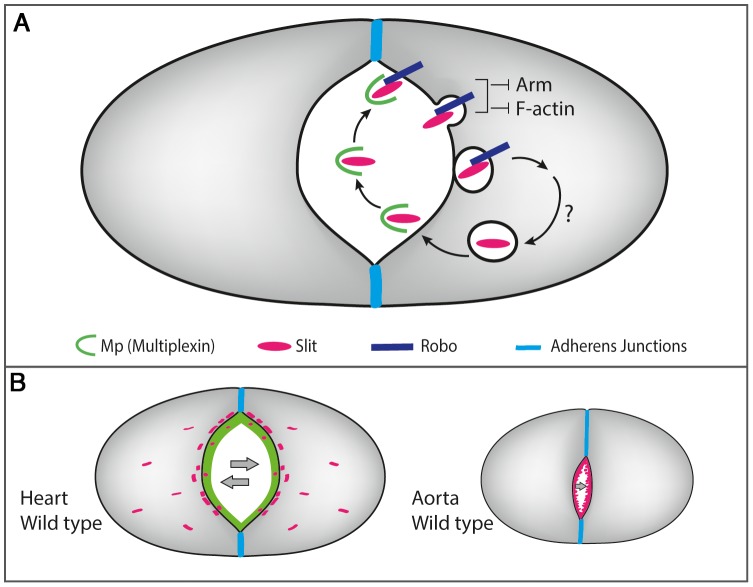
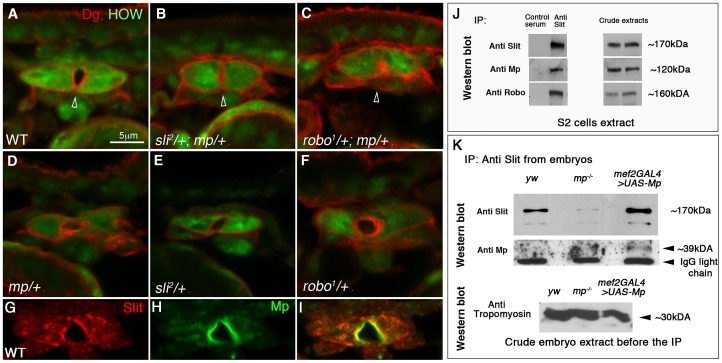
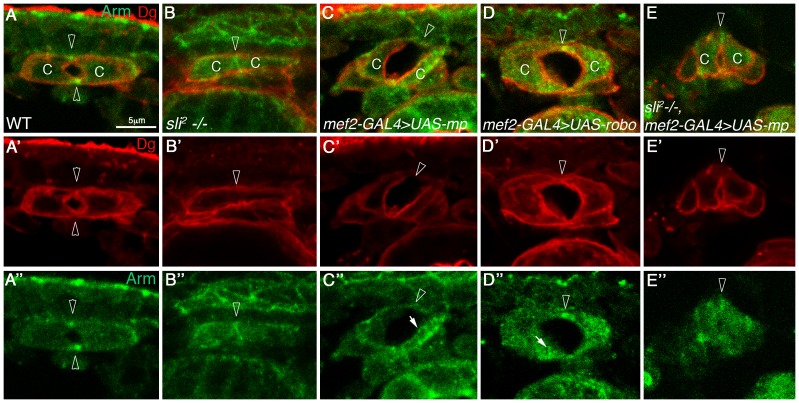
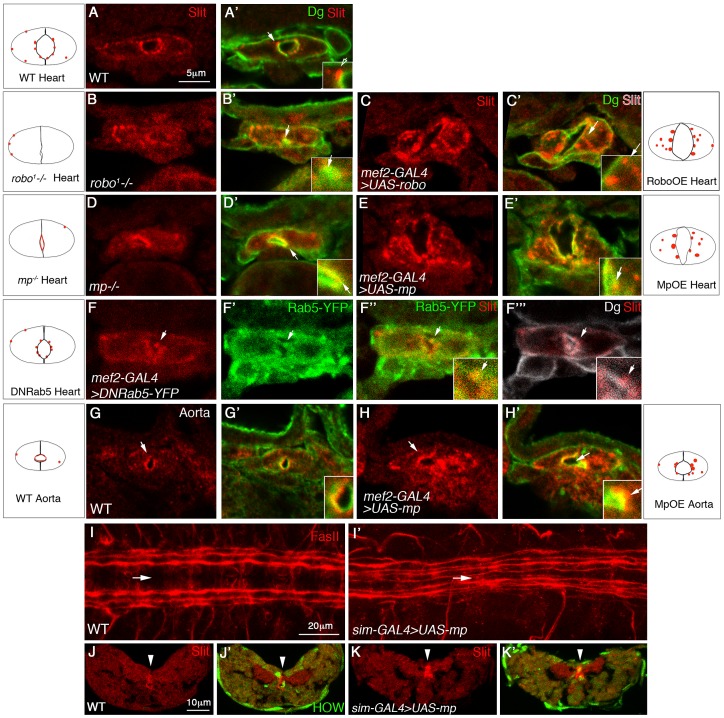
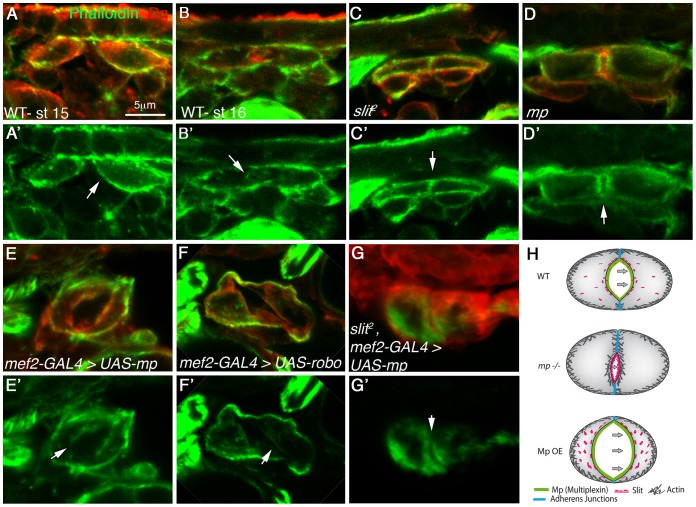
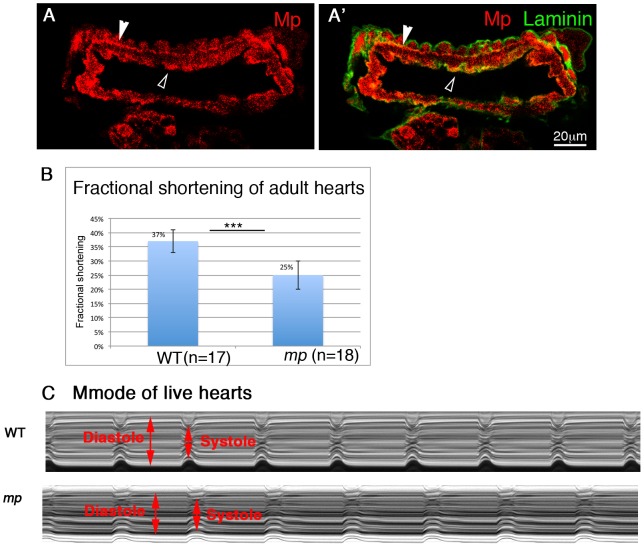
The Drosophila heart tube represents a structure that similarly to vertebrates' primary heart tube exhibits a large lumen; the mechanisms promoting heart tube morphology in both Drosophila and vertebrates are poorly understood. We identified Multiplexin (Mp), the Drosophila orthologue of mammalian Collagen-XV/XVIII, and the only structural heart-specific protein described so far in Drosophila, as necessary and sufficient for shaping the heart tube lumen, but not that of the aorta. Mp is expressed specifically at the stage of heart tube closure, in a polarized fashion, uniquely along the cardioblasts luminal membrane, and its absence results in an extremely small heart tube lumen. Importantly, Mp forms a protein complex with Slit, and interacts genetically with both slit and robo in the formation of the heart tube. Overexpression of Mp in cardioblasts promotes a large heart lumen in a Slit-dependent manner. Moreover, Mp alters Slit distribution, and promotes the formation of multiple Slit endocytic vesicles, similarly to the effect of overexpression of Robo in these cells. Our data are consistent with Mp-dependent enhancement of Slit/Robo activity and signaling, presumably by affecting Slit protein stabilization, specifically at the lumen side of the heart tube. This activity results with a Slit-dependent, local reduction of F-actin levels at the heart luminal membrane, necessary for forming the large heart tube lumen. Consequently, lack of Mp results in decreased diastolic capacity, leading to reduced heart contractility, as measured in live fly hearts. In summary, these findings show that the polarized localization of Mp controls the direction, timing, and presumably the extent of Slit/Robo activity and signaling at the luminal membrane of the heart cardioblasts. This regulation is essential for the morphogenetic changes that sculpt the heart tube in Drosophila, and possibly in forming the vertebrates primary heart tube.
果蝇的心脏管代表了一种与脊椎动物的初级心脏管类似的结构,具有较大的管腔;然而,促进果蝇和脊椎动物心脏管形态发生的机制尚未被很好地理解。我们鉴定出 Multiplexin(Mp),即果蝇同源物 Collagen-XV/XVIII,以及迄今为止在果蝇中描述的唯一结构心脏特异性蛋白,它是塑造心脏管腔所必需且充分的,但对主动脉腔没有影响。Mp 在心脏管闭合阶段以极化的方式特异性表达,仅沿着心肌细胞的腔膜表达,其缺失导致心脏管腔非常小。重要的是,Mp 与 Slit 形成蛋白复合物,并与 slit 和 robo 在心脏管形成过程中发生遗传相互作用。在心肌细胞中过表达 Mp 以 Slit 依赖性的方式促进大的心脏管腔。此外,Mp 改变了 Slit 的分布,并促进了多个 Slit 内吞小泡的形成,类似于在这些细胞中过表达 Robo 的效果。我们的数据表明,Mp 依赖性增强 Slit/Robo 活性和信号传导,可能通过影响 Slit 蛋白的稳定性来实现,特别是在心脏管腔侧。这种活性导致 Slit 依赖性、局部降低心脏管腔细胞膜处的 F-肌动蛋白水平,这对于形成大的心脏管腔是必要的。因此,Mp 的缺乏导致舒张能力降低,从而导致在活体果蝇心脏中测量到的心脏收缩性降低。总之,这些发现表明,Mp 的极化定位控制了 Slit/Robo 活性和信号在心脏心肌细胞腔膜上的方向、时间和可能的程度。这种调节对于塑造果蝇心脏管的形态发生变化以及可能形成脊椎动物初级心脏管是必不可少的。