Department of Cell Biology, University of Texas Southwestern Medical Center, Dallas, TX 75390, USA.
Viruses. 2013 Jul 18;5(7):1824-49. doi: 10.3390/v5071824.
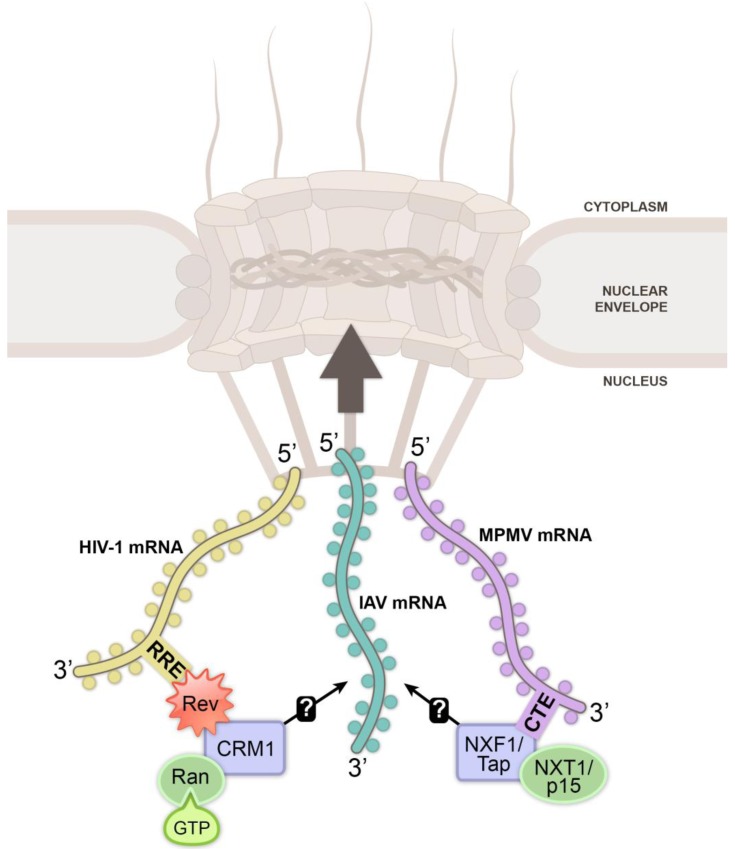
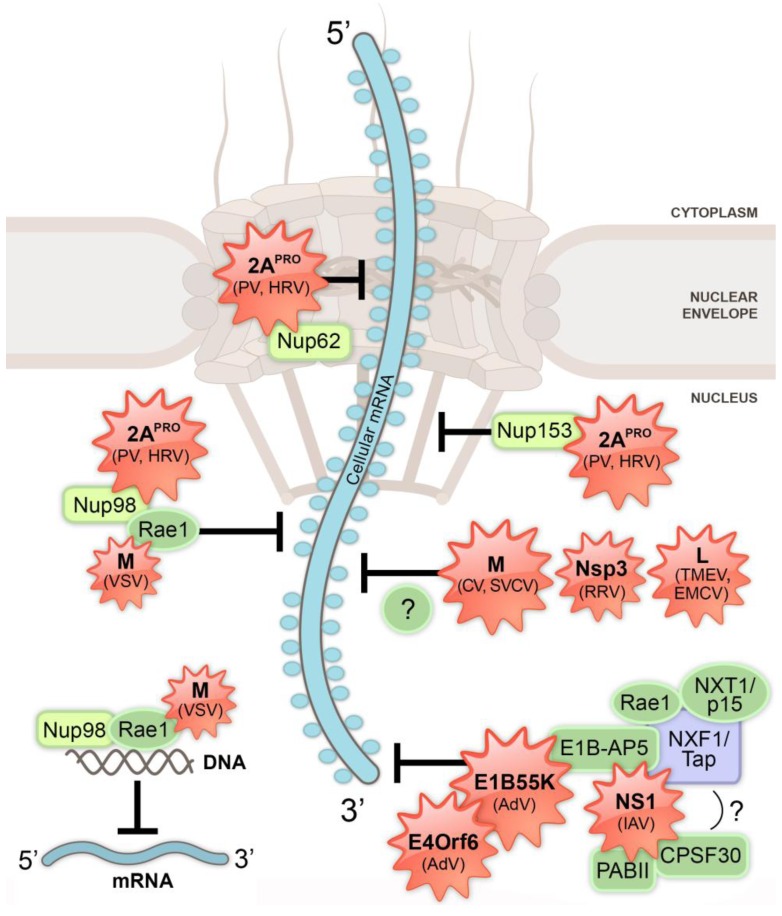
Viruses possess many strategies to impair host cellular responses to infection. Nuclear export of host messenger RNAs (mRNA) that encode antiviral factors is critical for antiviral protein production and control of viral infections. Several viruses have evolved sophisticated strategies to inhibit nuclear export of host mRNAs, including targeting mRNA export factors and nucleoporins to compromise their roles in nucleo-cytoplasmic trafficking of cellular mRNA. Here, we present a review of research focused on suppression of host mRNA nuclear export by viruses, including influenza A virus and vesicular stomatitis virus, and the impact of this viral suppression on host antiviral responses.
病毒拥有许多策略来削弱宿主细胞对感染的反应。编码抗病毒因子的宿主信使 RNA(mRNA)的核输出对于抗病毒蛋白的产生和控制病毒感染至关重要。几种病毒已经进化出复杂的策略来抑制宿主 mRNA 的核输出,包括靶向 mRNA 输出因子和核孔蛋白,以破坏它们在细胞 mRNA 核质运输中的作用。在这里,我们回顾了病毒抑制宿主 mRNA 核输出的研究,包括甲型流感病毒和水疱性口炎病毒,以及这种病毒抑制对宿主抗病毒反应的影响。