School of Pharmacy, The University of Queensland, Brisbane, QLD 4072, Australia.
Cancer Cell Int. 2013 Jul 29;13(1):76. doi: 10.1186/1475-2867-13-76.
Epithelial-mesenchymal transition (EMT) is a process implicated in cancer metastasis that involves the conversion of epithelial cells to a more mesenchymal and invasive cell phenotype. In breast cancer cells EMT is associated with altered store-operated calcium influx and changes in calcium signalling mediated by activation of cell surface purinergic receptors. In this study, we investigated whether MDA-MB-468 breast cancer cells induced to undergo EMT exhibit changes in mRNA levels of calcium channels, pumps and exchangers located on intracellular calcium storing organelles, including the Golgi, mitochondria and endoplasmic reticulum (ER).
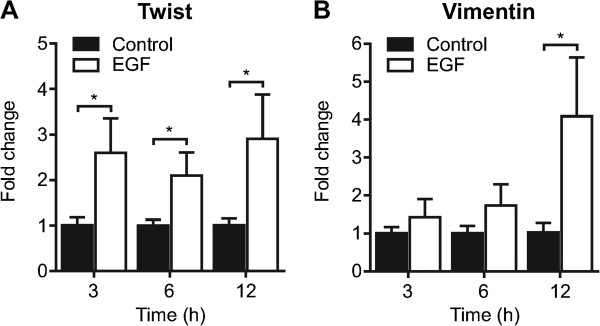
Epidermal growth factor (EGF) was used to induce EMT in MDA-MB-468 breast cancer cells. Serum-deprived cells were treated with EGF (50 ng/mL) for 12 h and gene expression was assessed using quantitative RT-PCR.
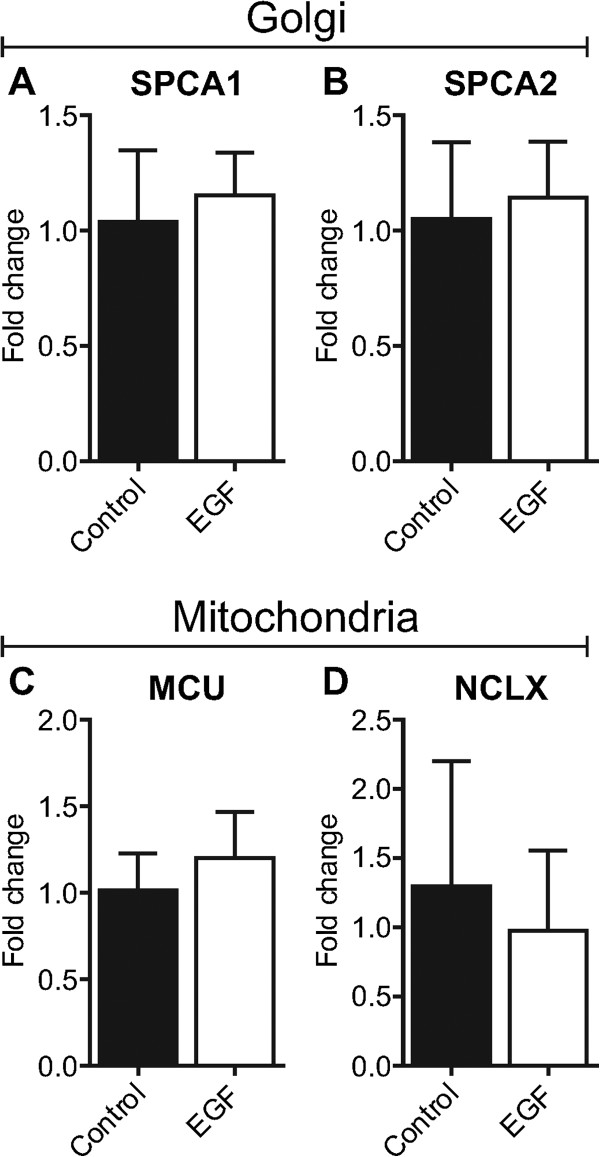
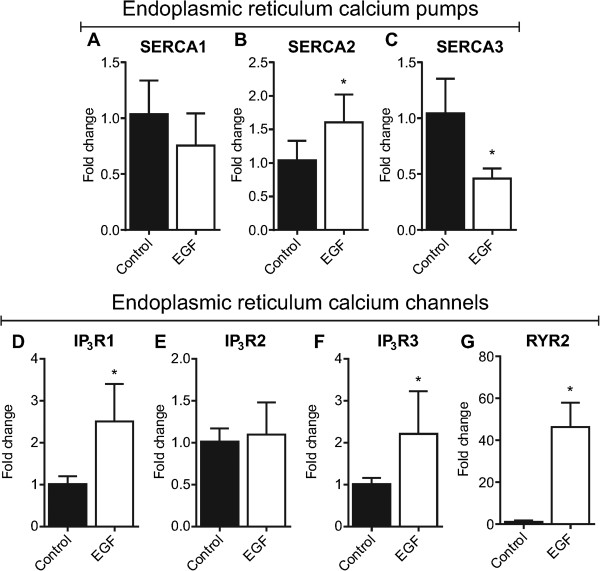
These data reveal no significant alterations in mRNA levels of the Golgi calcium pump secretory pathway calcium ATPases (SPCA1 and SPCA2), or the mitochondrial calcium uniporter (MCU) or Na+/Ca2+ exchanger (NCLX). However, EGF-induced EMT was associated with significant alterations in mRNA levels of specific ER calcium channels and pumps, including (sarco)-endoplasmic reticulum calcium ATPases (SERCAs), and inositol 1,4,5-trisphosphate receptor (IP3R) and ryanodine receptor (RYR) calcium channel isoforms. The most prominent change in gene expression between the epithelial and mesenchymal-like states was RYR2, which was enriched 45-fold in EGF-treated MDA-MB-468 cells. These findings indicate that EGF-induced EMT in breast cancer cells may be associated with major alterations in ER calcium homeostasis.
上皮-间质转化(EMT)是一种与癌症转移有关的过程,涉及上皮细胞向更具间质和侵袭性的细胞表型的转化。在乳腺癌细胞中,EMT 与改变的储存操作钙内流以及通过细胞表面嘌呤能受体的激活介导的钙信号变化有关。在这项研究中,我们研究了诱导 EMT 的 MDA-MB-468 乳腺癌细胞是否在位于细胞内钙储存细胞器(包括高尔基体、线粒体和内质网(ER))上的钙通道、泵和交换器的 mRNA 水平上发生变化。
表皮生长因子(EGF)用于诱导 MDA-MB-468 乳腺癌细胞发生 EMT。用 EGF(50ng/ml)处理无血清细胞 12 小时,并使用定量 RT-PCR 评估基因表达。
这些数据显示,高尔基钙泵分泌途径钙 ATP 酶(SPCA1 和 SPCA2)、线粒体钙单向转运体(MCU)或 Na+/Ca2+交换体(NCLX)的 mRNA 水平没有显著改变。然而,EGF 诱导的 EMT 与特定 ER 钙通道和泵,包括(肌浆网)内质网钙 ATP 酶(SERCA)和肌醇 1,4,5-三磷酸受体(IP3R)和 Ryanodine 受体(RYR)钙通道同工型的 mRNA 水平的显著改变有关。上皮和间充质样状态之间基因表达的最显著变化是 RYR2,其在 EGF 处理的 MDA-MB-468 细胞中富集了 45 倍。这些发现表明,乳腺癌细胞中 EGF 诱导的 EMT 可能与 ER 钙稳态的重大改变有关。