Department of Geography & Environmental Studies, Wilfrid Laurier University, Waterloo, Ontario, Canada.
PLoS One. 2013 Jul 22;8(7):e66168. doi: 10.1371/journal.pone.0066168. Print 2013.
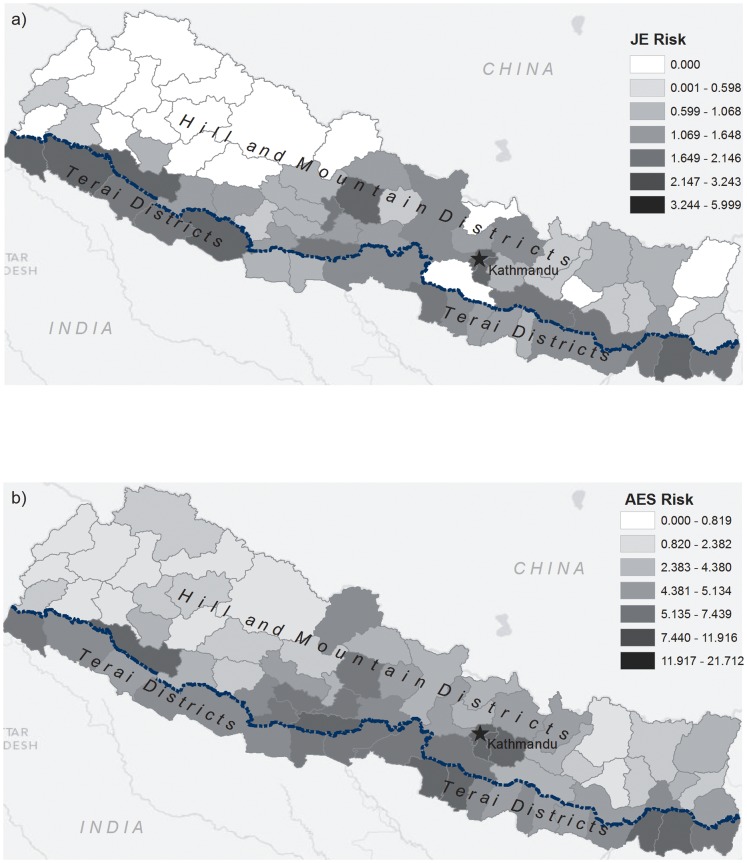
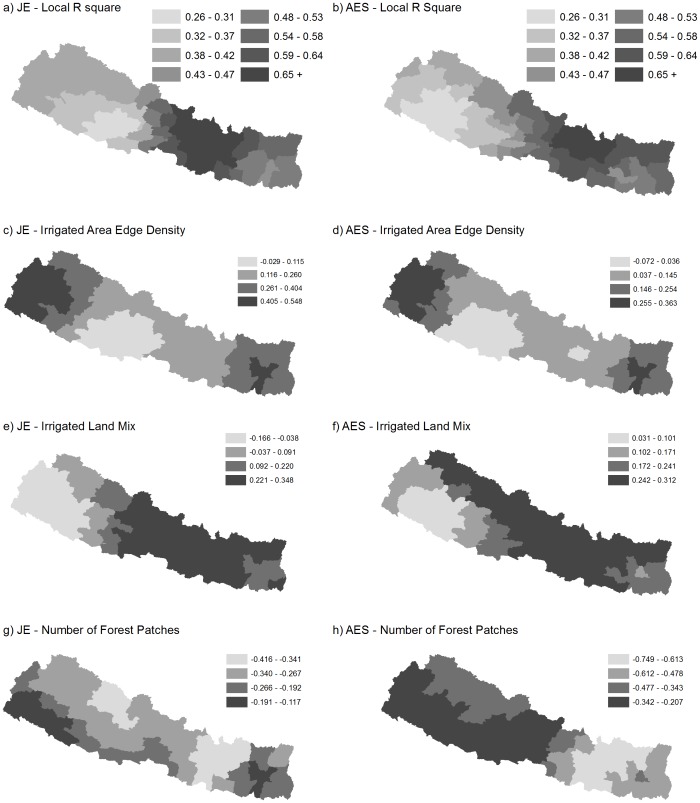
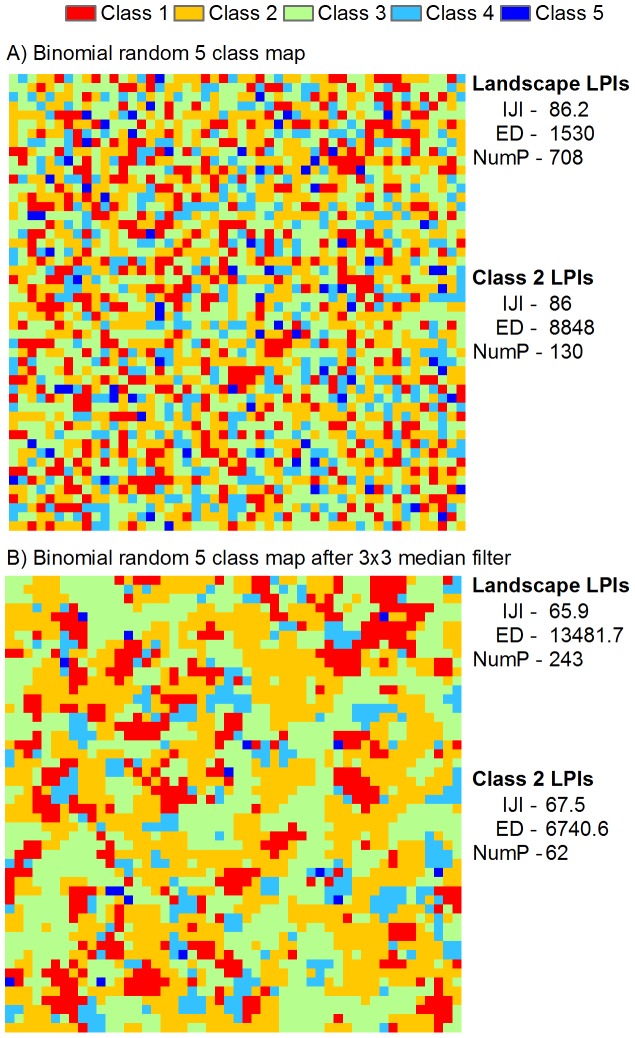
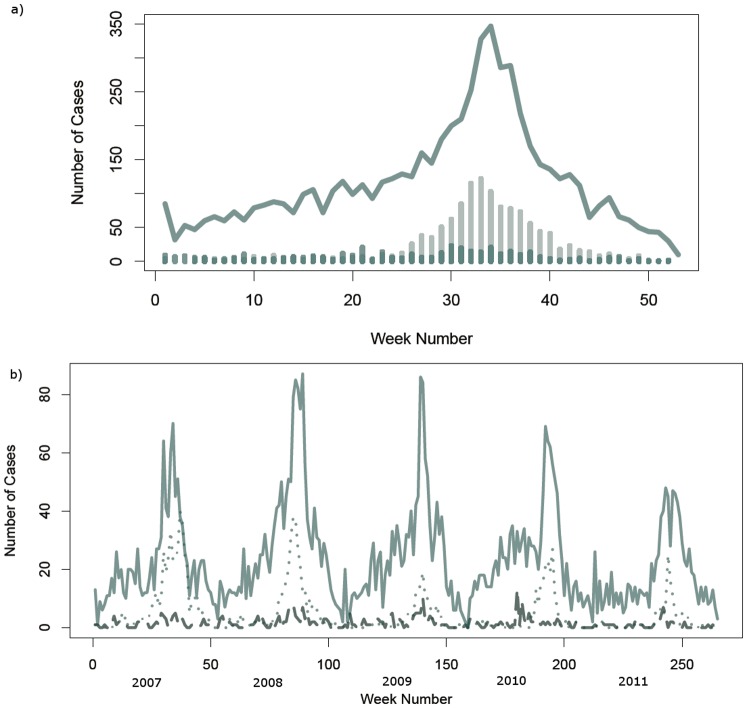
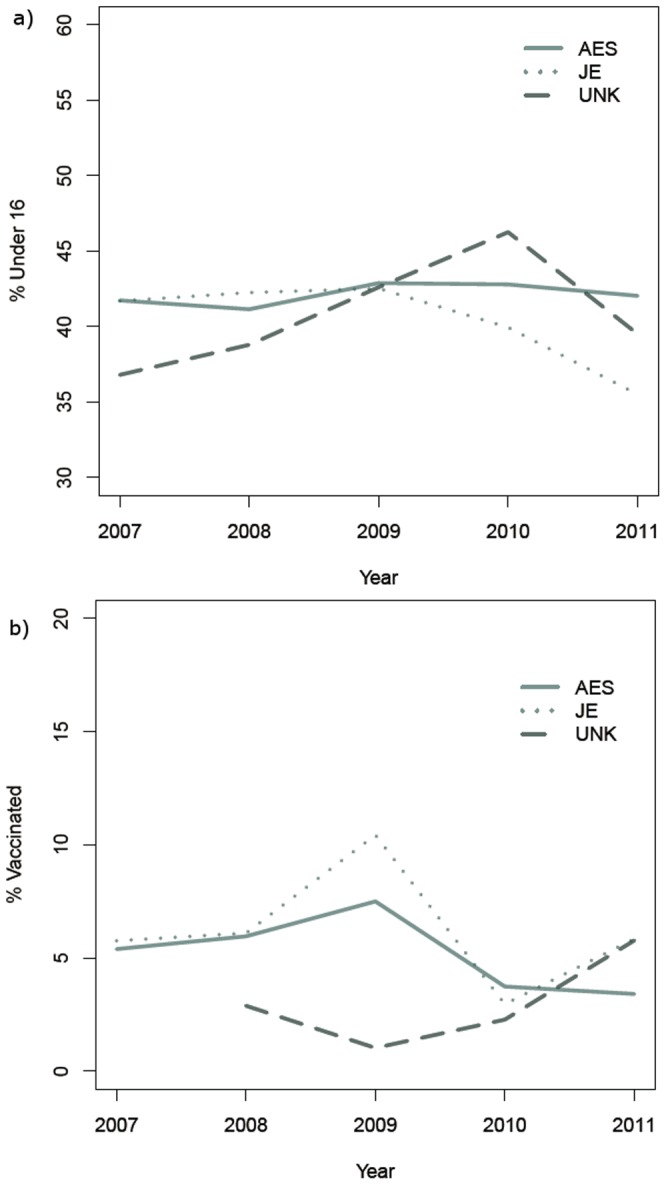
Japanese Encephalitis (JE) is a vector-borne disease of major importance in Asia. Recent increases in cases have spawned the development of more stringent JE surveillance. Due to the difficulty of making a clinical diagnosis, increased tracking of common symptoms associated with JE-generally classified as the umbrella term, acute encephalitis syndrome (AES) has been developed in many countries. In Nepal, there is some debate as to what AES cases are, and how JE risk factors relate to AES risk. Three parts of this analysis included investigating the temporal pattern of cases, examining the age and vaccination status patterns among AES surveillance data, and then focusing on spatial patterns of risk factors. AES and JE cases from 2007-2011 reported at a district level (n = 75) were examined in relation to landscape risk factors. Landscape pattern indices were used to quantify landscape patterns associated with JE risk. The relative spatial distribution of landscape risk factors were compared using geographically weighted regression. Pattern indices describing the amount of irrigated land edge density and the degree of landscape mixing for irrigated areas were positively associated with JE and AES, while fragmented forest measured by the number of forest patches were negatively associated with AES and JE. For both JE and AES, the local GWR models outperformed global models, indicating spatial heterogeneity in risks. Temporally, the patterns of JE and AES risk were almost identical; suggesting the relative higher caseload of AES compared to JE could provide a valuable early-warning signal for JE surveillance and reduce diagnostic testing costs. Overall, the landscape variables associated with a high degree of landscape mixing and small scale irrigated agriculture were positively linked to JE and AES risk, highlighting the importance of integrating land management policies, disease prevention strategies and promoting healthy sustainable livelihoods in both rural and urban-fringe developing areas.
日本脑炎(JE)是亚洲一种重要的虫媒疾病。最近病例的增加促使更严格的 JE 监测的发展。由于临床诊断困难,许多国家增加了与 JE 相关的常见症状的跟踪,通常被归类为急性脑炎综合征(AES)的总称。在尼泊尔,对于 AES 病例是什么,以及 JE 风险因素与 AES 风险的关系存在一些争议。该分析的三个部分包括调查病例的时间模式,检查 AES 监测数据中的年龄和疫苗接种状况模式,然后专注于风险因素的空间模式。以区县级(n=75)报告的 2007-2011 年 AES 和 JE 病例与景观风险因素有关。使用景观格局指数来量化与 JE 风险相关的景观格局。使用地理加权回归比较景观风险因素的相对空间分布。描述灌溉土地边缘密度和灌溉区景观混合程度的格局指数与 JE 和 AES 呈正相关,而森林斑块数量衡量的破碎化森林与 AES 和 JE 呈负相关。对于 JE 和 AES,局部 GWR 模型优于全局模型,表明风险存在空间异质性。在时间上,JE 和 AES 风险的模式几乎相同;这表明与 JE 相比,AES 的相对较高病例数可能为 JE 监测提供有价值的早期预警信号,并降低诊断测试成本。总的来说,与高度景观混合和小规模灌溉农业相关的景观变量与 JE 和 AES 风险呈正相关,这突出了在农村和城乡边缘发展地区整合土地管理政策、疾病预防策略和促进健康可持续生计的重要性。