International Vaccine Institute, Seoul, Republic of Korea.
PLoS One. 2013 Aug 2;8(8):e71173. doi: 10.1371/journal.pone.0071173. Print 2013.
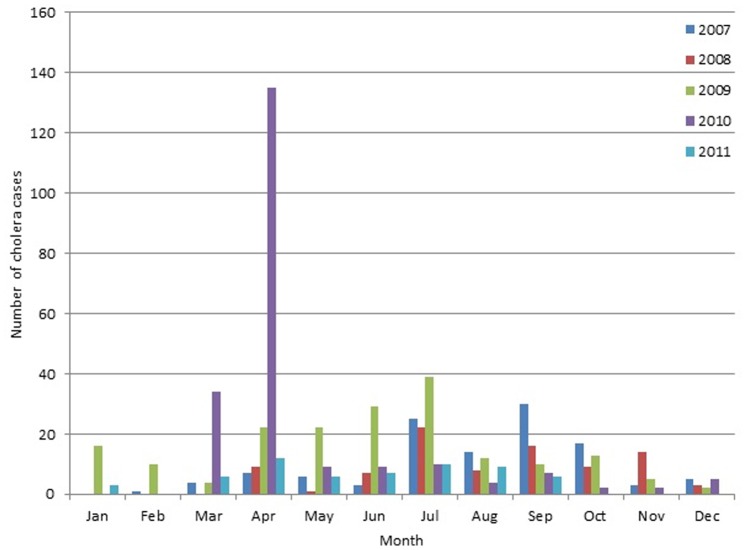
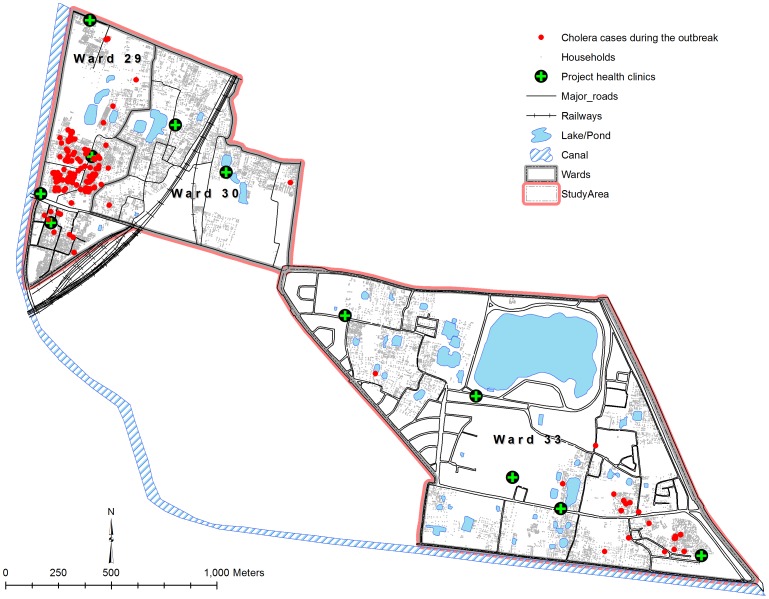
Despite advancement of our knowledge, cholera remains a public health concern. During March-April 2010, a large cholera outbreak afflicted the eastern part of Kolkata, India. The quantification of importance of socio-environmental factors in the risk of cholera, and the calculation of the risk is fundamental for deploying vaccination strategies. Here we investigate socio-environmental characteristics between high and low risk areas as well as the potential impact of vaccination on the spatial occurrence of the disease.
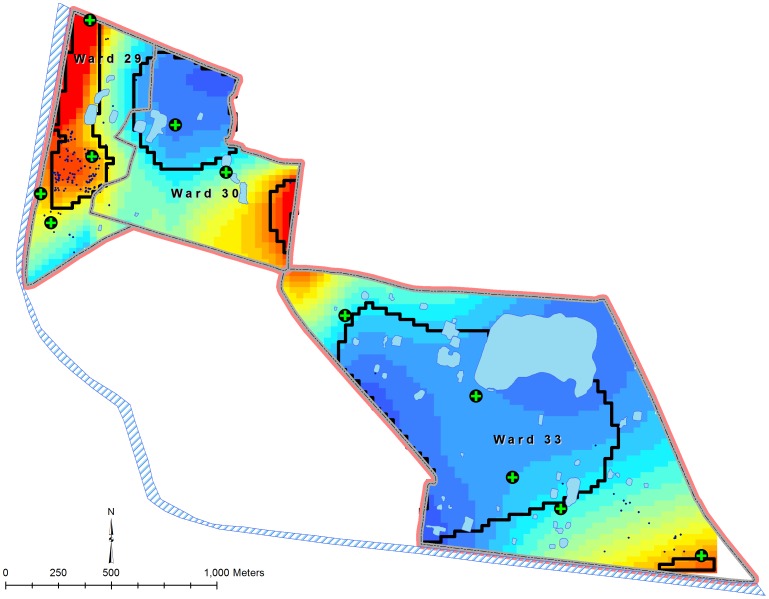
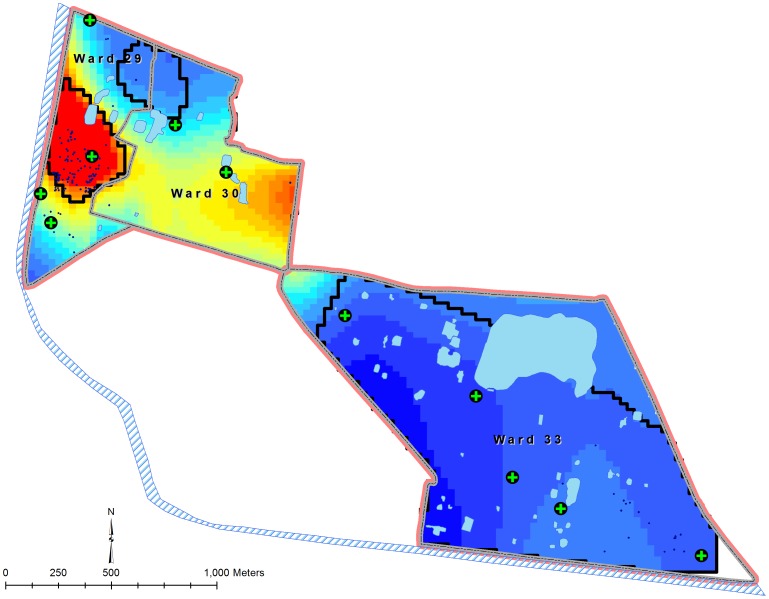
The study area comprised three wards of Kolkata Municipal Corporation. A mass cholera vaccination campaign was conducted in mid-2006 as the part of a clinical trial. Cholera cases and data of the trial to identify high risk areas for cholera were analyzed. We used a generalized additive model (GAM) to detect risk areas, and to evaluate the importance of socio-environmental characteristics between high and low risk areas. During the one-year pre-vaccination and two-year post-vaccination periods, 95 and 183 cholera cases were detected in 111,882 and 121,827 study participants, respectively. The GAM model predicts that high risk areas in the west part of the study area where the outbreak largely occurred. High risk areas in both periods were characterized by poor people, use of unsafe water, and proximity to canals used as the main drainage for rain and waste water. Cholera vaccine uptake was significantly lower in the high risk areas compared to low risk areas.
The study shows that even a parsimonious model like GAM predicts high risk areas where cholera outbreaks largely occurred. This is useful for indicating where interventions would be effective in controlling the disease risk. Data showed that vaccination decreased the risk of infection. Overall, the GAM-based risk map is useful for policymakers, especially those from countries where cholera remains to be endemic with periodic outbreaks.
尽管我们的知识有所进步,但霍乱仍然是一个公共卫生关注点。2010 年 3 月至 4 月期间,印度加尔各答东部发生了大规模霍乱疫情。量化社会环境因素在霍乱风险中的重要性,并计算风险对于部署疫苗接种策略至关重要。在这里,我们研究了高风险和低风险地区之间的社会环境特征,以及疫苗接种对疾病空间发生的潜在影响。
研究区域包括加尔各答市政公司的三个区。2006 年中期进行了大规模霍乱疫苗接种运动,作为临床试验的一部分。分析了霍乱病例和试验数据,以确定霍乱的高风险地区。我们使用广义加性模型(GAM)来检测风险区域,并评估高风险和低风险区域之间社会环境特征的重要性。在一年的疫苗接种前和两年的疫苗接种后期间,在 111882 名和 121827 名研究参与者中分别检测到 95 例和 183 例霍乱病例。GAM 模型预测了疫情主要发生的研究区域西部的高风险地区。在两个时期,高风险地区的特点是人口贫困,使用不安全的水,以及靠近用作雨水和废水主要排水渠的运河。与低风险地区相比,高风险地区的霍乱疫苗接种率明显较低。
研究表明,即使是像 GAM 这样的简约模型也可以预测出霍乱疫情主要发生的高风险地区。这对于指示干预措施将在控制疾病风险方面有效的地方非常有用。数据表明,疫苗接种降低了感染风险。总体而言,基于 GAM 的风险地图对政策制定者有用,特别是对那些霍乱仍然流行且周期性爆发的国家。