Estación Biológica de Doñana, Consejo Superior de Investigaciones Científicas (CSIC), Avda, Américo Vespucio s/n, Seville, Spain.
Parasit Vectors. 2013 Aug 22;6(1):242. doi: 10.1186/1756-3305-6-242.
Wildlife radio tracking has gained popularity during the recent past. Ecologists and conservationists use radio-collars for different purposes: animal movement monitoring, home range, productivity, population estimation, behaviour, habitat use, survival, and predator-prey interaction, among others. The aim of our present study is to highlight the application of radio-collars for wildlife diseases monitoring. The spread of wildlife diseases and the efficacy of management actions for controlling them propose serious challenges for ecologists and conservationists, since it is difficult to re-capture (or simply observe) the same animal in pre-determined temporal interval, but such difficulty is overcome by the use of gps-gsm radio collars.
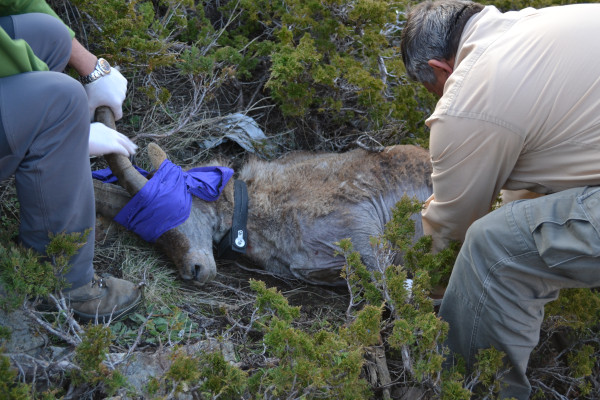
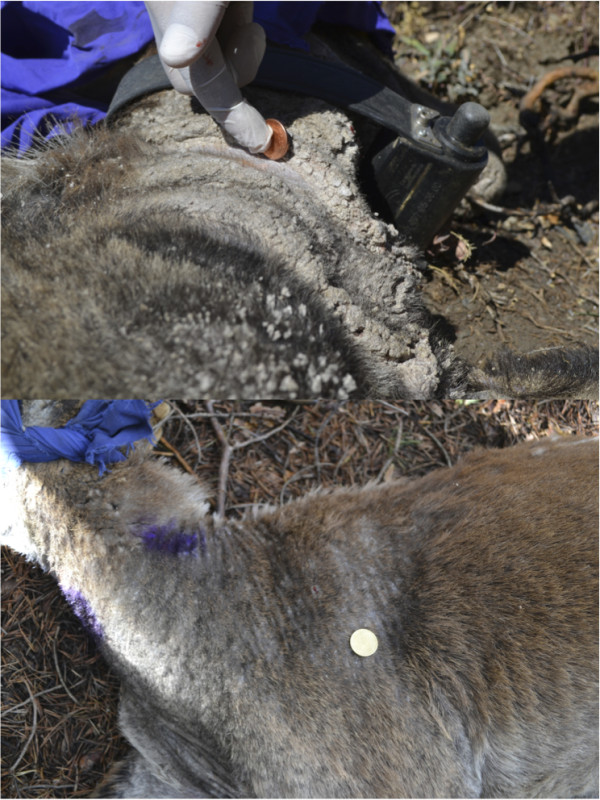
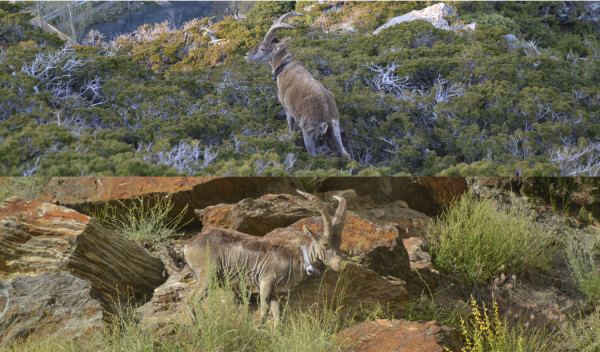
In the present study we report, for the first time to our knowledge, the use of radio-collars in the monitoring of Iberian ibex affected by Sarcoptes scabiei in Sierra Nevada mountain range, Spain. Twenty-five moderate or slightly mangy animals were radio-collared between 2006 and 2013.
The radio-collars allowed us to confirm the presence of resistance to S. scabiei within Iberian ibex population. Twenty (80%) of the collared animals recovered totally from mange, while the disease progressed in the other five Iberian ibex (20% of the collared animals) and the animals died. The average estimated recovery time of the resistant animals was 245 ± 277 days, and the estimated average survival time of the non-resistant Iberian ibex was 121 ± 71 days. Non-resistant animals survived at least 100 days, while all of them died with less than 200 days. Sixty per cent of the resistant animals were recovered with less than 200 days.
We report, for the first time, the successful use of radio collars for wildlife diseases monitoring using Iberian ibex/S. scabiei as a model. By using radio collars we documented that most of the Sarcoptes-infected Iberian ibex are resistant to this disease, and we estimated the average time for Iberian ibex recovering from mange infection and the average survival time of the non-resistant ones. We expect wider use of radio-collars for wild animals diseases monitoring, affected/not-affected animals interaction, and treatment efficacy, among others.
野生动物无线电追踪在最近一段时间变得越来越流行。生态学家和自然资源保护论者使用无线电项圈来进行不同的研究目的:动物运动监测、活动范围、生产力、种群估计、行为、栖息地利用、生存和捕食者-猎物相互作用等。我们目前的研究旨在强调无线电项圈在野生动物疾病监测中的应用。野生动物疾病的传播以及控制这些疾病的管理措施的效果,对生态学家和自然资源保护论者提出了严峻的挑战,因为很难在预先确定的时间间隔内重新捕获(或简单地观察)同一动物,但使用 GPS-GSM 无线电项圈可以克服这一困难。
在本研究中,我们首次报告了在西班牙内华达山脉监测受疥螨影响的伊比利亚野山羊时使用无线电项圈的情况。2006 年至 2013 年间,我们给 25 只中等或轻度感染的动物佩戴了无线电项圈。
无线电项圈使我们能够确认伊比利亚野山羊种群中存在对疥螨的抗性。20 只(80%)佩戴项圈的动物完全从疥癣中恢复,而疾病在其他 5 只伊比利亚野山羊(20%的佩戴项圈的动物)中进展,并导致动物死亡。抗性动物的平均估计恢复时间为 245±277 天,非抗性伊比利亚野山羊的平均估计存活时间为 121±71 天。非抗性动物至少存活 100 天,而所有动物在不到 200 天内死亡。60%的抗性动物在 200 天内被回收。
我们首次报告了使用伊比利亚野山羊/疥螨作为模型成功地使用无线电项圈监测野生动物疾病。通过使用无线电项圈,我们记录到大多数感染疥螨的伊比利亚野山羊对这种疾病具有抗性,并估计了伊比利亚野山羊从疥癣感染中恢复的平均时间和非抗性个体的平均存活时间。我们期望更广泛地使用无线电项圈来监测野生动物疾病、受感染/未受感染动物的相互作用以及治疗效果等。