Cleveland Clinic, Wellness Institute, 1950 Richmond Road/TR2-203, Lyndhurst, OH 44124, USA.
Nutrients. 2013 Aug 19;5(8):3299-310. doi: 10.3390/nu5083299.
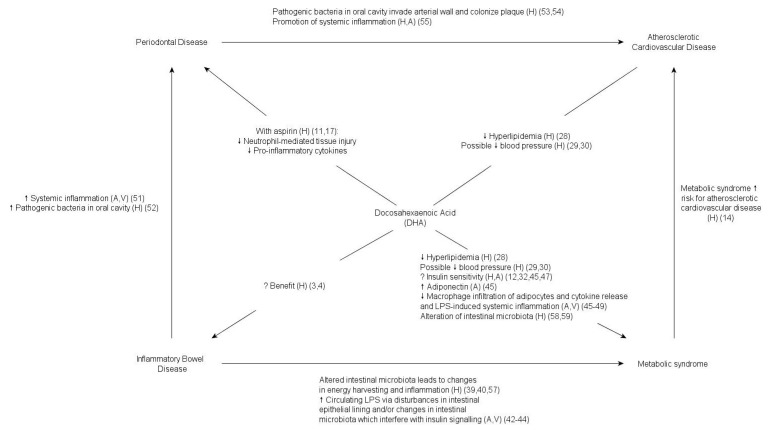
Docosahexaenoic acid (DHA), a long-chain omega-3 polyunsaturated fatty acid, has been used to treat a range of different conditions, including periodontal disease (PD) and inflammatory bowel disease (IBD). That DHA helps with these oral and gastrointestinal diseases in which inflammation and bacterial dysbiosis play key roles, raises the question of whether DHA may assist in the prevention or treatment of other inflammatory conditions, such as the metabolic syndrome, which have also been linked with inflammation and alterations in normal host microbial populations. Here we review established and investigated associations between DHA, PD, and IBD. We conclude that by beneficially altering cytokine production and macrophage recruitment, the composition of intestinal microbiota and intestinal integrity, lipopolysaccharide- and adipose-induced inflammation, and insulin signaling, DHA may be a key tool in the prevention of metabolic syndrome.
二十二碳六烯酸(DHA),一种长链ω-3 多不饱和脂肪酸,已被用于治疗一系列不同的疾病,包括牙周病(PD)和炎症性肠病(IBD)。DHA 有助于缓解这些口腔和胃肠道疾病,这些疾病的特点是炎症和细菌失调发挥关键作用,这就提出了一个问题,即 DHA 是否可以帮助预防或治疗其他炎症性疾病,如代谢综合征,这些疾病也与炎症和正常宿主微生物群的改变有关。在这里,我们回顾了 DHA 与 PD 和 IBD 之间已建立和研究的关联。我们的结论是,通过有益地改变细胞因子的产生和巨噬细胞的募集、肠道微生物群的组成和肠道完整性、脂多糖和脂肪诱导的炎症以及胰岛素信号,DHA 可能是预防代谢综合征的关键工具。