Institute of Biomedical Engineering, Department of Engineering Science, University of Oxford, UK; Department of Biomedical Engineering, King's College London, UK; Centre for the Developing Brain, King's College London, UK.
Med Image Anal. 2013 Dec;17(8):1137-50. doi: 10.1016/j.media.2013.07.004. Epub 2013 Jul 30.
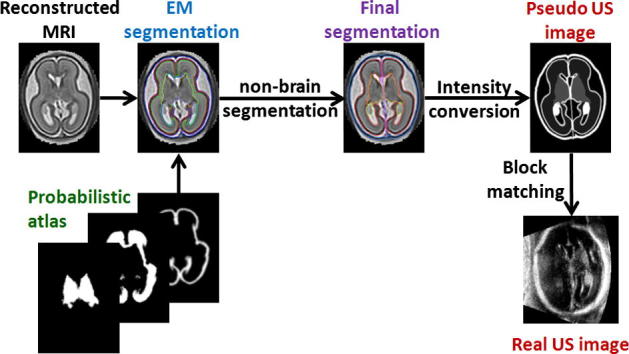
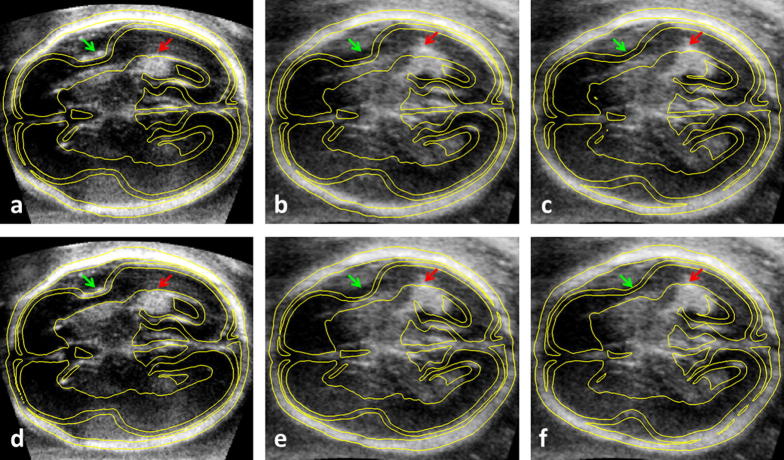
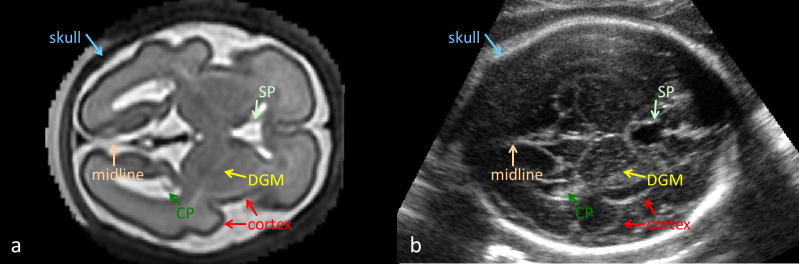
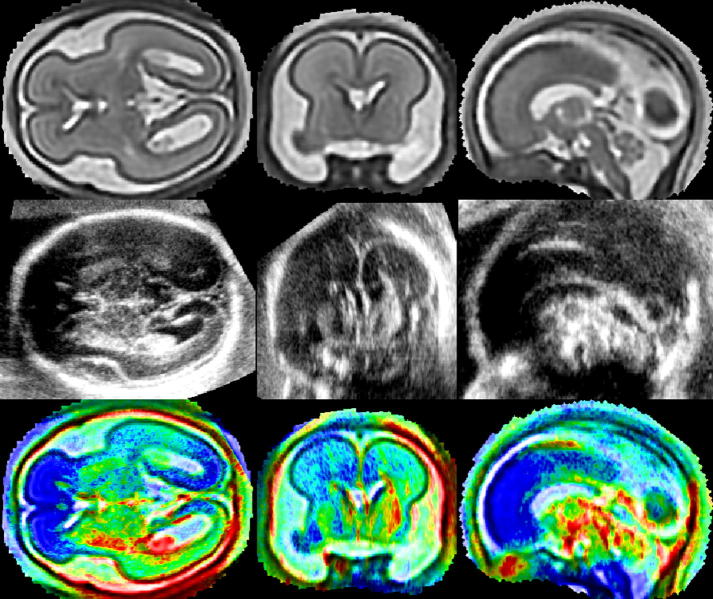
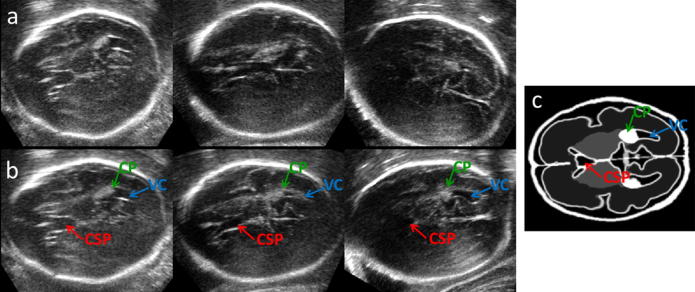
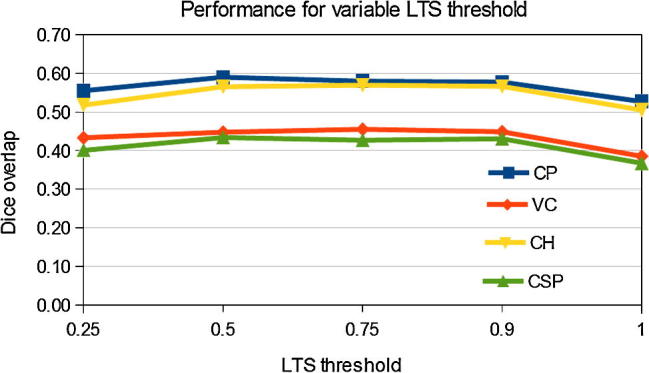
We propose a method for registration of 3D fetal brain ultrasound with a reconstructed magnetic resonance fetal brain volume. This method, for the first time, allows the alignment of models of the fetal brain built from magnetic resonance images with 3D fetal brain ultrasound, opening possibilities to develop new, prior information based image analysis methods for 3D fetal neurosonography. The reconstructed magnetic resonance volume is first segmented using a probabilistic atlas and a pseudo ultrasound image volume is simulated from the segmentation. This pseudo ultrasound image is then affinely aligned with clinical ultrasound fetal brain volumes using a robust block-matching approach that can deal with intensity artefacts and missing features in the ultrasound images. A qualitative and quantitative evaluation demonstrates good performance of the method for our application, in comparison with other tested approaches. The intensity average of 27 ultrasound images co-aligned with the pseudo ultrasound template shows good correlation with anatomy of the fetal brain as seen in the reconstructed magnetic resonance image.
我们提出了一种将 3D 胎儿脑超声与重建的磁共振胎儿脑容积配准的方法。该方法首次允许从磁共振图像构建的胎儿脑模型与 3D 胎儿脑超声进行配准,为开发新的基于先验信息的 3D 胎儿神经超声图像分析方法开辟了可能性。首先使用概率图谱对重建的磁共振容积进行分割,并从分割中模拟出伪超声图像容积。然后,使用稳健的块匹配方法将伪超声图像与临床超声胎儿脑容积进行仿射对齐,该方法可以处理超声图像中的强度伪影和缺失特征。定性和定量评估表明,与其他测试方法相比,该方法在我们的应用中具有良好的性能。与伪超声模板共配准的 27 张超声图像的强度平均值与重建磁共振图像中所见的胎儿脑解剖结构具有很好的相关性。