Department of Environmental and Preventive Medicine, Oita University Faculty of Medicine, Yufu, Japan; Department of General Medicine, Oita University Faculty of Medicine, Yufu, Japan.
J Gastroenterol Hepatol. 2014 Jan;29(1):67-73. doi: 10.1111/jgh.12359.
Subjects infected with Helicobacter pylori containing cagA do not always induce serum CagA antibody. Our previous meta-analysis showed that serum CagA seropositivity was associated with gastric cancer even in East Asian countries. However, it remains unclear why serum CagA-positive status is associated with gastric cancer. In this study, we aimed to examine the relationship between anti-CagA antibody titer and the levels of pepsinogen (PG), and histological score.
Eighty-eight H. pylori-positive Japanese patients with gastritis were included. Serum CagA antibody titer, PG I, and PG II were evaluated by ELISA. Histological scores were evaluated according to Update Sydney System. CagA expression was examined by immunoblot.
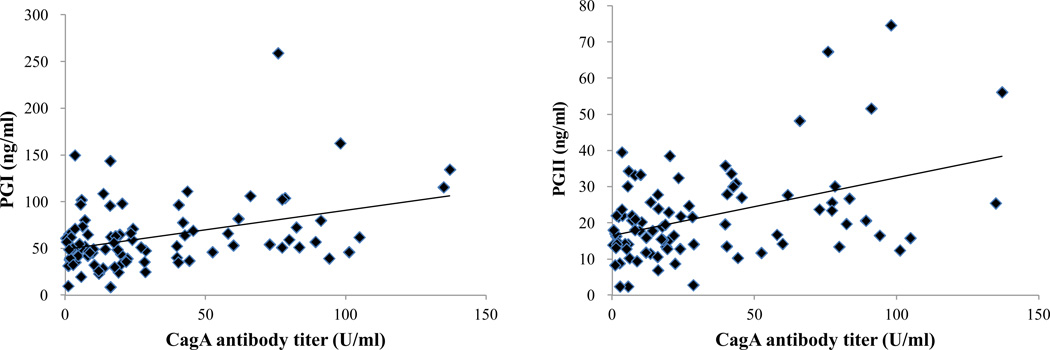
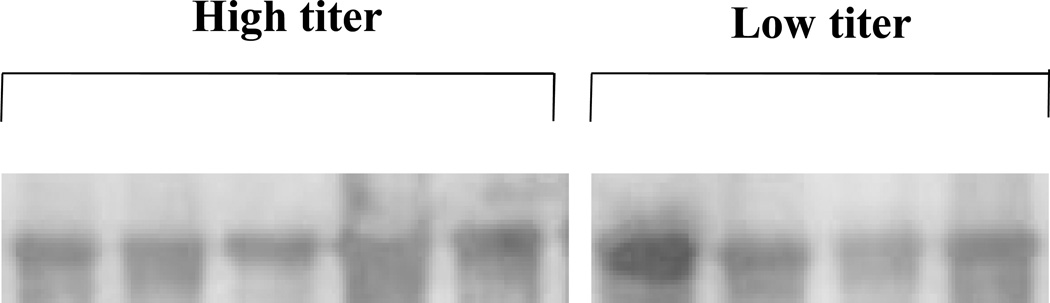
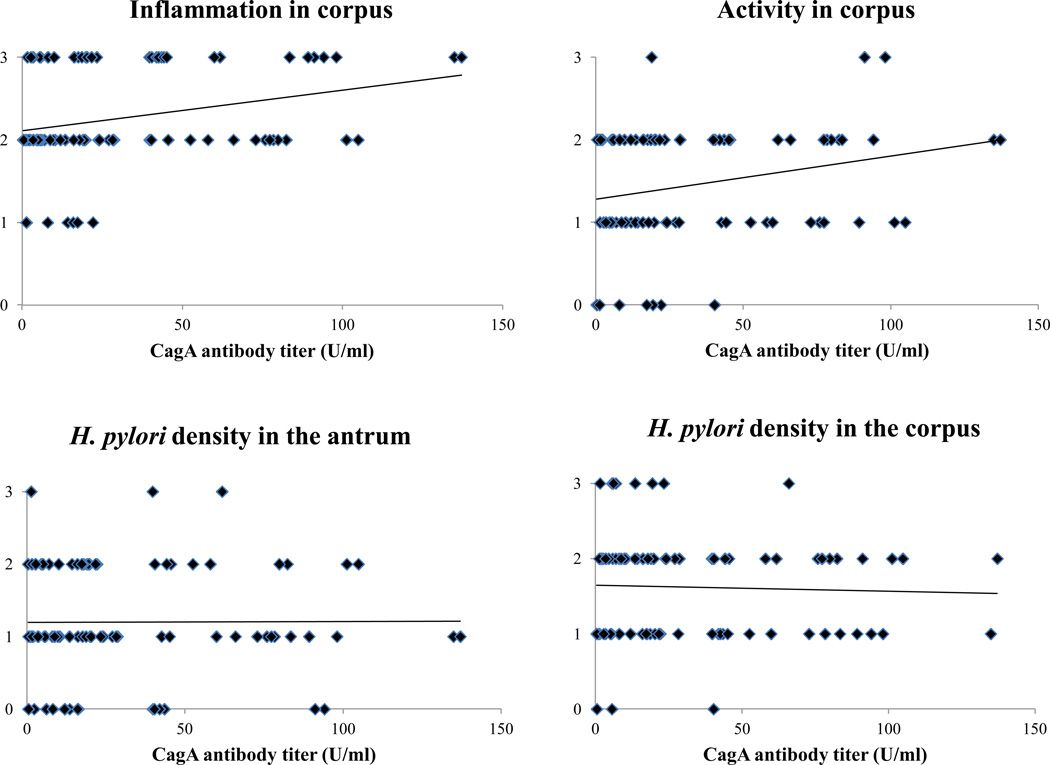
Seroprevalence of CagA antibody was found in 75.0%. Interestingly, serum CagA antibody titer was significantly correlated with PG I and PG II levels (P = 0.003 and 0.004, respectively). Serum CagA antibody titer was also significantly correlated with mucosal inflammation in the corpus (P = 0.04). On the other hand, bacterial density was not related with CagA antibody titer. CagA expression level of the strains was irrespective of the status of PG and serum CagA antibody.
Subjects with higher serum CagA antibody titer can be considered as high-risk population for the development of gastric cancer from the point of strong gastric inflammatory response even in Japan. Host recognition rather than bacterial colonization might be associated with the difference of serum CagA antibody titer.
感染含有 cagA 的幽门螺杆菌的受试者并非总是会诱导血清 CagA 抗体。我们之前的荟萃分析表明,即使在东亚国家,血清 CagA 血清阳性与胃癌相关。然而,目前尚不清楚为什么血清 CagA 阳性状态与胃癌相关。在这项研究中,我们旨在检查抗 CagA 抗体滴度与胃蛋白酶原(PG)和组织学评分之间的关系。
纳入 88 例胃炎阳性的日本幽门螺杆菌感染患者。通过 ELISA 评估血清 CagA 抗体滴度、PG I 和 PG II。根据悉尼系统更新评估组织学评分。通过免疫印迹检查 CagA 表达。
发现 CagA 抗体的血清患病率为 75.0%。有趣的是,血清 CagA 抗体滴度与 PG I 和 PG II 水平显著相关(P=0.003 和 0.004)。血清 CagA 抗体滴度也与胃体黏膜炎症显著相关(P=0.04)。另一方面,细菌密度与 CagA 抗体滴度无关。菌株的 CagA 表达水平与 PG 和血清 CagA 抗体的状态无关。
从强烈的胃炎症反应的角度来看,具有较高血清 CagA 抗体滴度的受试者可以被认为是胃癌发展的高危人群,即使在日本也是如此。宿主识别而不是细菌定植可能与血清 CagA 抗体滴度的差异有关。