Department of Pharmacology and Systems Therapeutics and Systems Biology Center, Icahn School of Medicine at Mount Sinai, New York, NY 10029, USA.
Cell. 2013 Sep 12;154(6):1356-69. doi: 10.1016/j.cell.2013.08.026.
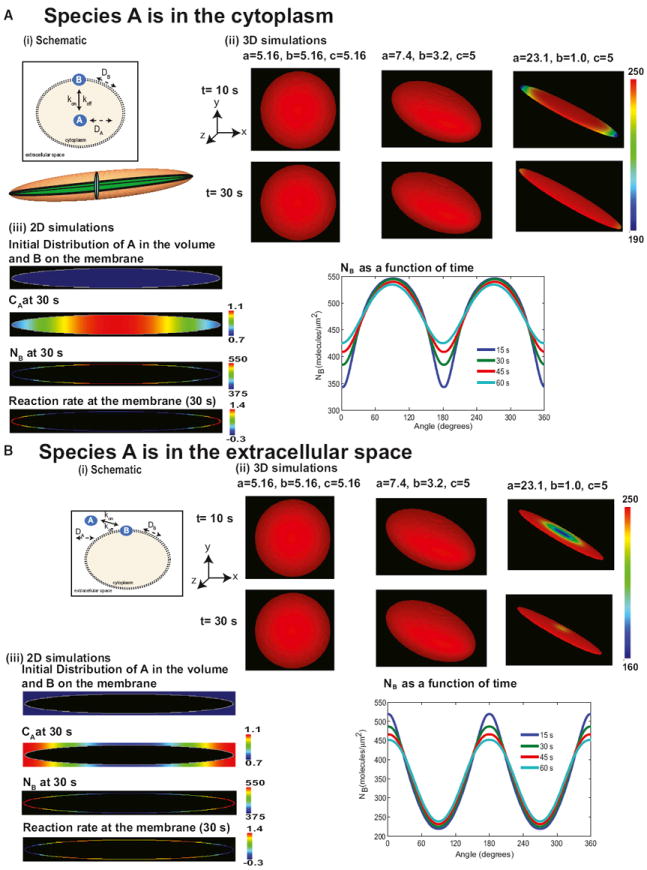
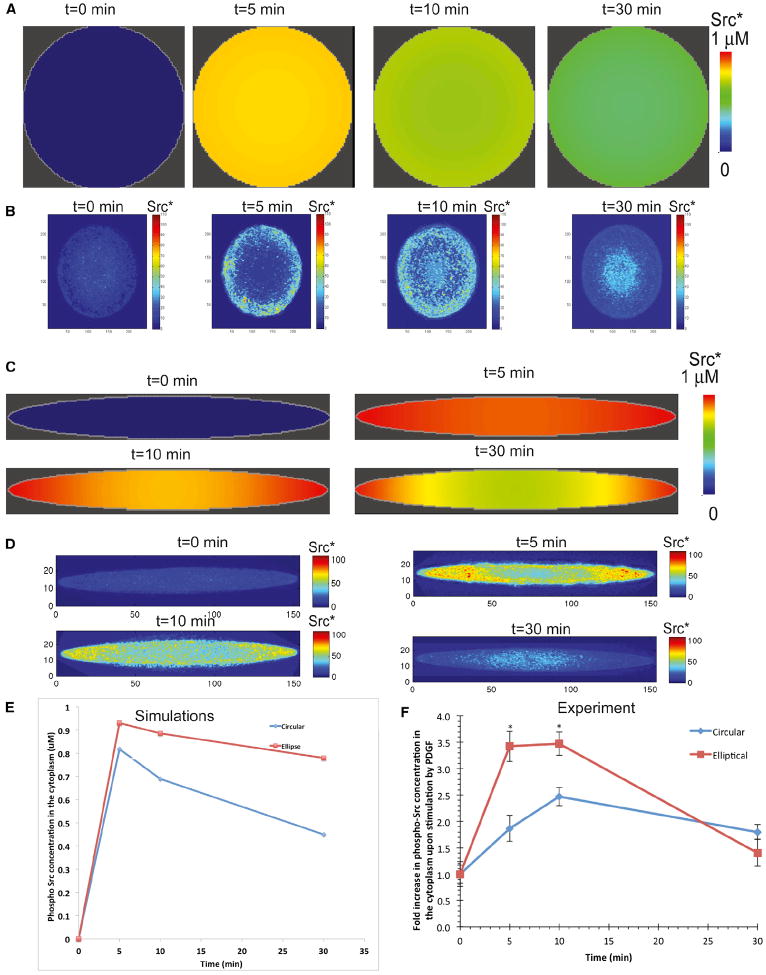
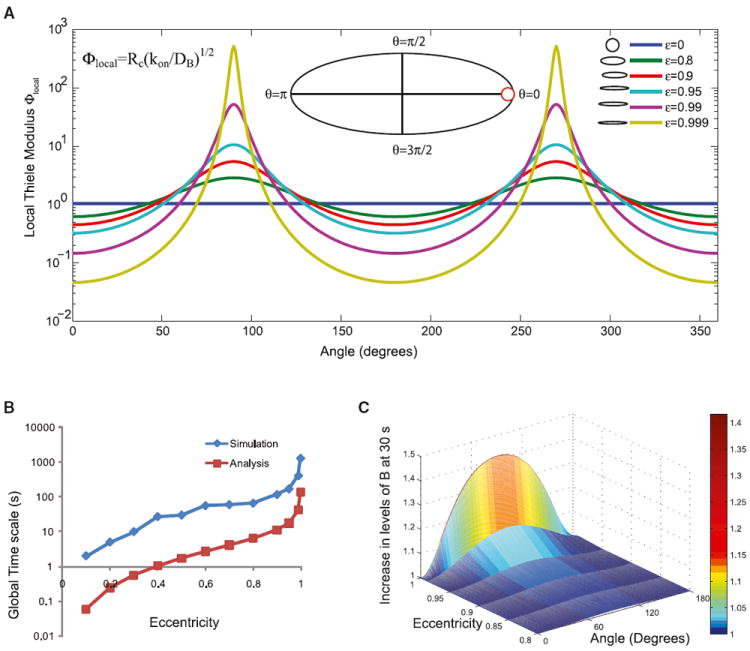
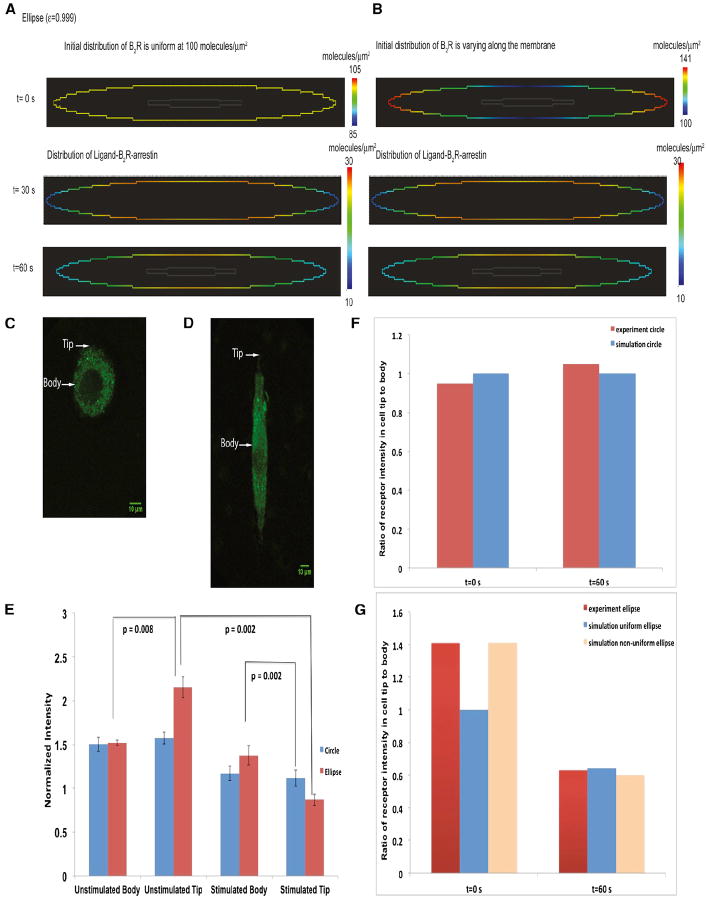
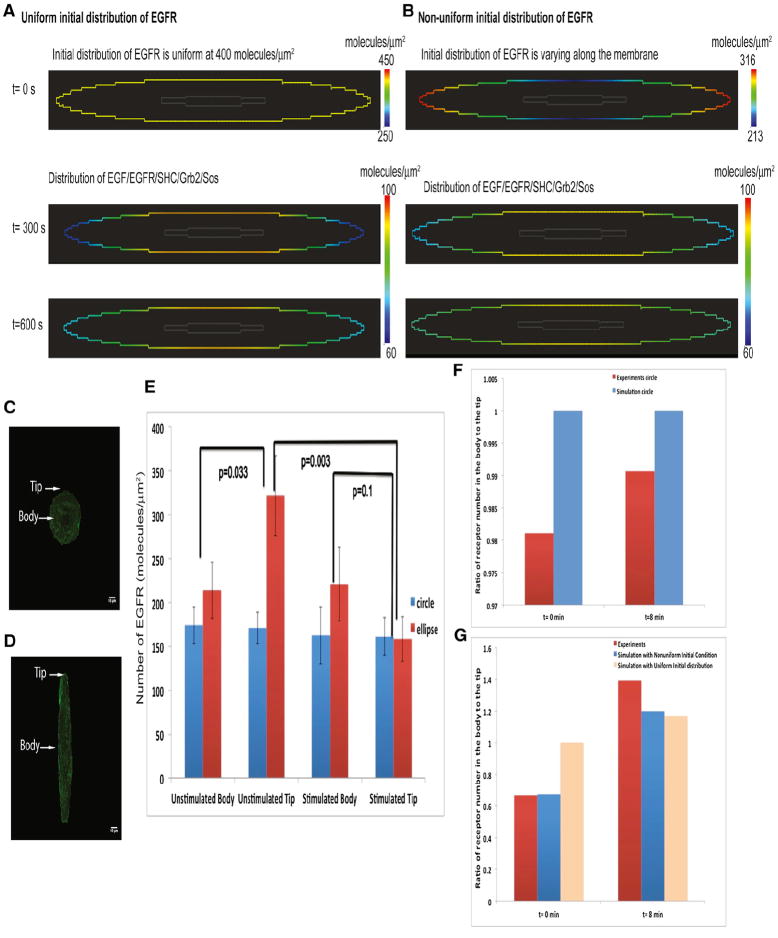
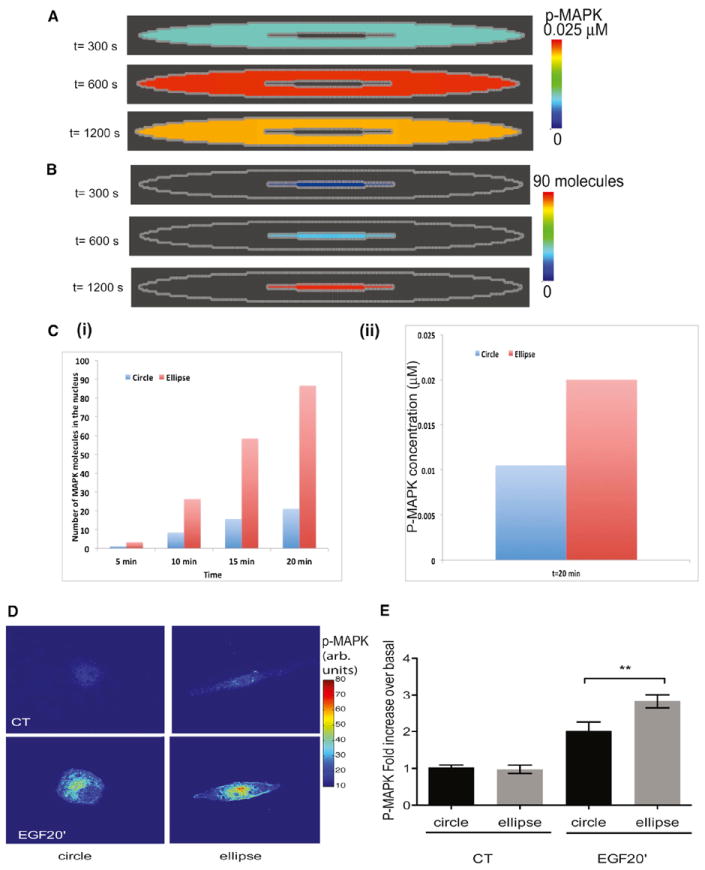
Shape is an indicator of cell health. But how is the information in shape decoded? We hypothesize that decoding occurs by modulation of signaling through changes in plasma membrane curvature. Using analytical approaches and numerical simulations, we studied how elongation of cell shape affects plasma membrane signaling. Mathematical analyses reveal transient accumulation of activated receptors at regions of higher curvature with increasing cell eccentricity. This distribution of activated receptors is periodic, following the Mathieu function, and it arises from local imbalance between reaction and diffusion of soluble ligands and receptors in the plane of the membrane. Numerical simulations show that transient microdomains of activated receptors amplify signals to downstream protein kinases. For growth factor receptor pathways, increasing cell eccentricity elevates the levels of activated cytoplasmic Src and nuclear MAPK1,2. These predictions were experimentally validated by changing cellular eccentricity, showing that shape is a locus of retrievable information storage in cells.
形状是细胞健康的指标。但是,如何对形状中的信息进行解码呢?我们假设,通过改变质膜曲率来调节信号,从而实现解码。我们使用分析方法和数值模拟研究了细胞形状的伸长如何影响质膜信号。数学分析揭示了随着细胞偏心率的增加,激活受体在曲率较高的区域会暂时积累。这种激活受体的分布是周期性的,遵循马蒂厄函数,它源于膜平面上可溶性配体和受体的反应和扩散之间的局部不平衡。数值模拟表明,激活受体的瞬时微区会放大信号到下游蛋白激酶。对于生长因子受体途径,增加细胞偏心率会提高细胞质Src 和核 MAPK1,2 的激活水平。通过改变细胞的偏心率,实验验证了这些预测,表明形状是细胞中可检索信息存储的位置。