Department of Plant Nutrition, Leibniz-Institute of Vegetable and Ornamental Crops, Grossbeeren, Germany.
PLoS One. 2013 Sep 5;8(9):e71877. doi: 10.1371/journal.pone.0071877. eCollection 2013.
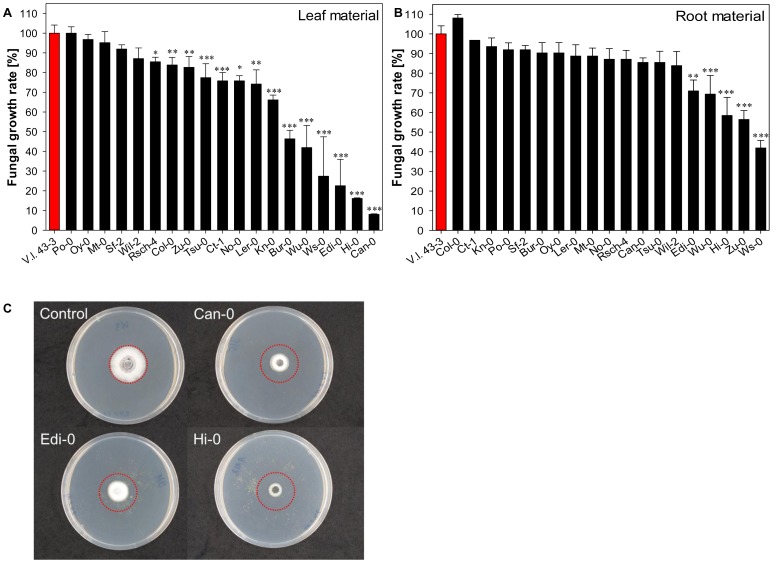
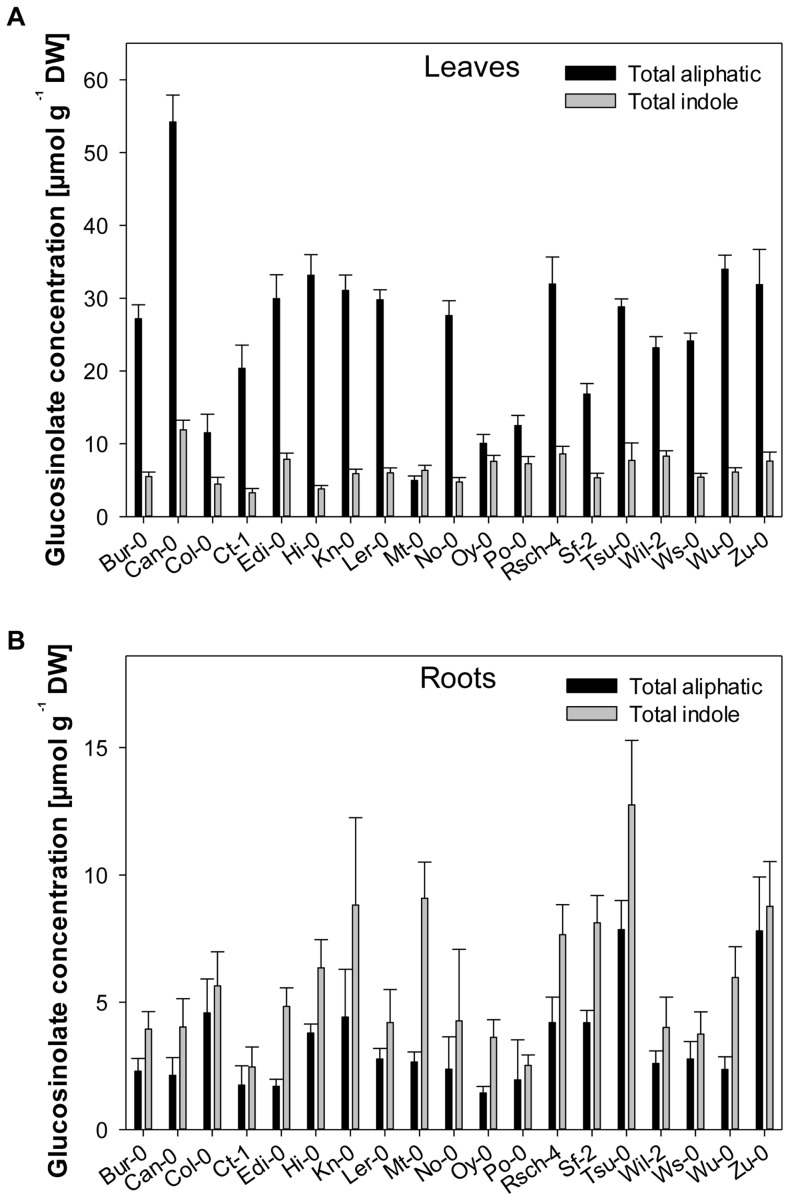
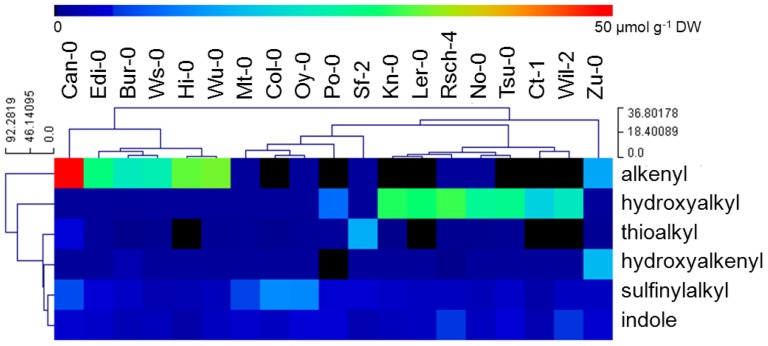
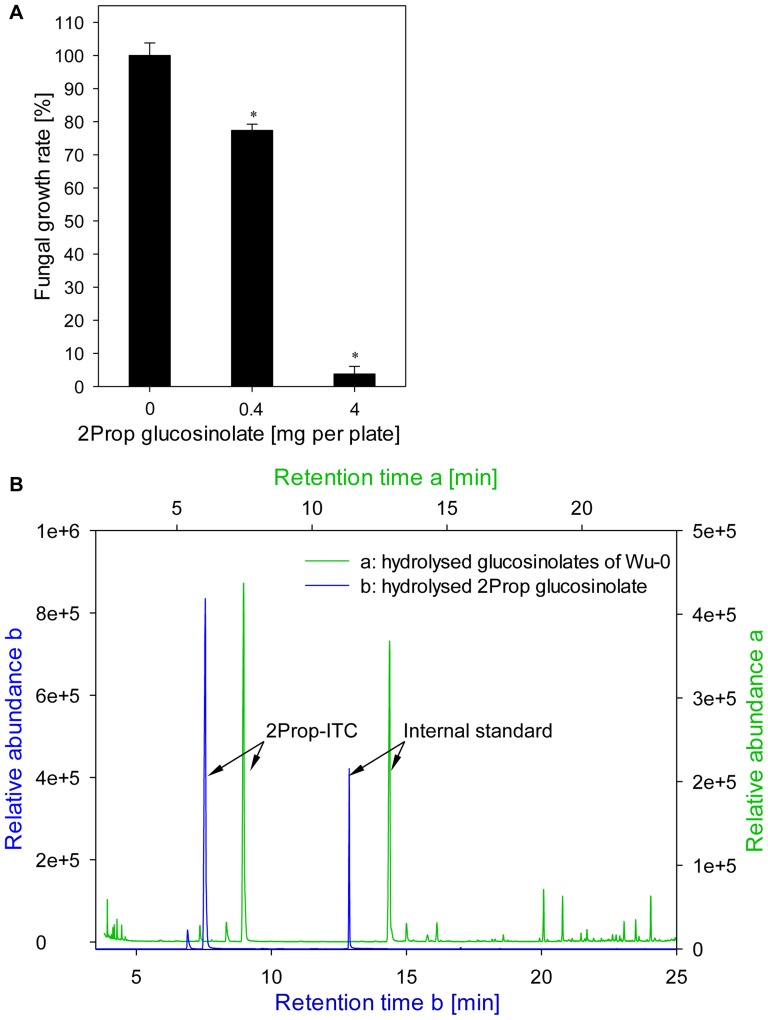
The soil-borne fungal pathogen Verticillium longisporum is able to penetrate the root of a number of plant species and spread systemically via the xylem. Fumigation of Verticillium contaminated soil with Brassica green manure is used as an environmentally friendly method for crop protection. Here we present a study focused on the potential role of glucosinolates and their breakdown products of the model plant Arabidopsis thaliana in suppressing growth of V. longisporum. For this purpose we analysed the glucosinolate composition of the leaves and roots of a set of 19 key accessions of A. thaliana. The effect of volatile glucosinolate hydrolysis products on the in vitro growth of the pathogen was tested by exposing the fungus to hydrated lyophilized plant tissue. Volatiles released from leaf tissue were more effective than from root tissue in suppressing mycelial growth of V. longisporum. The accessions varied in their efficacy, with the most effective suppressing mycelial growth by 90%. An analysis of glucosinolate profiles and their enzymatic degradation products revealed a correlation between fungal growth inhibition and the concentration of alkenyl glucosinolates, particularly 2-propenyl (2Prop) glucosinolate, respectively its hydrolysis products. Exposure of the fungus to purified 2Prop glucosinolate revealed that its suppressive activity was correlated with its concentration. Spiking of 2Prop glucosinolate to leaf material of one of the least effective A. thaliana accessions led to fungal growth suppression. It is suggested that much of the inhibitory effect observed for the tested accessions can be explained by the accumulation of 2Prop glucosinolate.
土传真菌病原体长蠕孢菌能够穿透许多植物物种的根部,并通过木质部系统传播。用芸薹属绿肥对长蠕孢菌污染的土壤进行熏蒸是一种用于作物保护的环保方法。在这里,我们提出了一项研究,重点研究拟南芥中硫代葡萄糖苷及其分解产物在抑制长蠕孢菌生长方面的潜在作用。为此,我们分析了 19 个拟南芥关键品系的叶片和根部的硫代葡萄糖苷组成。通过将真菌暴露于水合冻干植物组织来测试挥发性硫代葡萄糖苷水解产物对病原体体外生长的影响。叶片组织释放的挥发物比根组织更有效地抑制长蠕孢菌的菌丝生长。这些品系在其功效上存在差异,最有效的品系抑制菌丝生长达 90%。对硫代葡萄糖苷图谱及其酶解产物的分析表明,真菌生长抑制与烯丙基硫代葡萄糖苷的浓度之间存在相关性,特别是 2-丙烯基(2Prop)硫代葡萄糖苷及其水解产物。将真菌暴露于纯化的 2Prop 硫代葡萄糖苷中表明,其抑制活性与其浓度相关。向最不有效的拟南芥品系之一的叶片材料中添加 2Prop 硫代葡萄糖苷会导致真菌生长受到抑制。因此,观察到的测试品系的大部分抑制作用可以用 2Prop 硫代葡萄糖苷的积累来解释。