Garcia-Pinto Angélica B, Santos-Filho Sebastião D, Carvalho Jorge J, Pereira Mário J S, Fonseca Adenilson S, Bernardo-Filho Mário
Laboratório de Radiofarmácia Experimental, Departamento de Biofísica e Biometria, Instituto de Biologia Roberto Alcantara Gomes, Universidade do Estado do Rio de Janeiro, RJ, Brasil ; Programa de Pós-Graduação em Biologia Humana e Experimental, Instituto de Biologia Roberto Alcantara Gomes, Universidade do Estado do Rio de Janeiro, RJ, Brasil.
Pharmacogn Mag. 2013 Oct;9(Suppl 1):S49-56. doi: 10.4103/0973-1296.117867.
Natural products might alter the labeling of blood constituents with technetium-99m ((99m)Tc) and these results may be correlated with modifications of the shape of the red blood cells (RBC). The biodistribution of radiopharmaceuticals can be also altered.
This investigation aimed to determine biological effects of an aqueous extract of chamomile (CE).
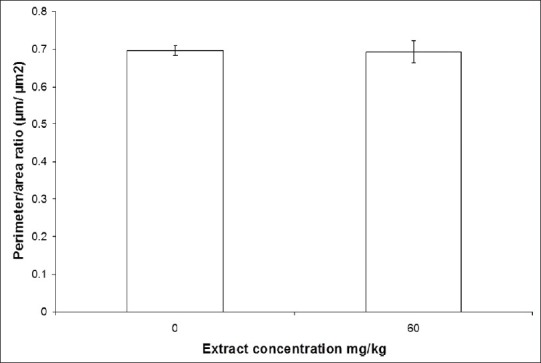
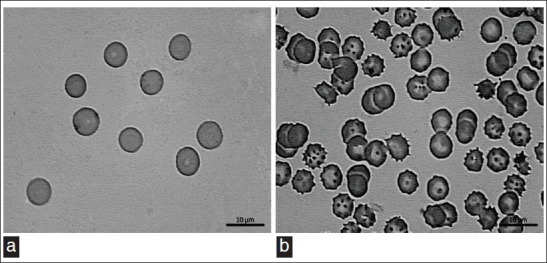
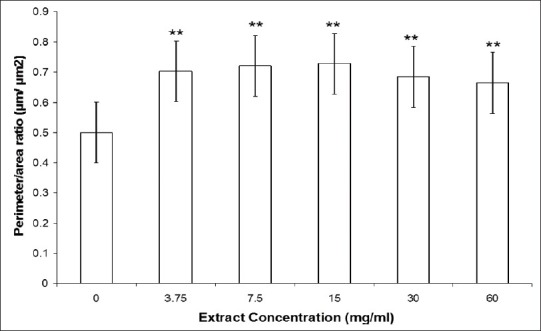
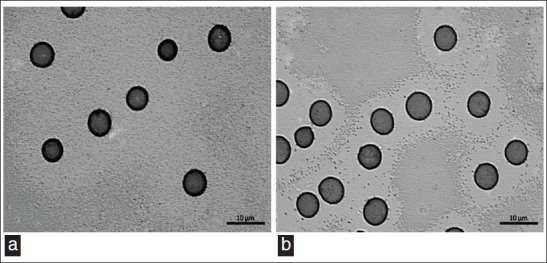
To study the effect of the CE on the labeling of blood constituents with (99m)Tc, in vitro and in vivo assays were performed. The effect of the CE on the morphology of RBC was observed under light microscope. The images were acquired, processed, and the perimeter/area ratio of the RBC determined. To analyze the effect of the CE on biodistribution of the sodium pertechnetate (Na(99m)TcO4) in Wistar rats, these animals were treated or not with a CE. Na(99m)TcO4 was injected, the rats were sacrificed, the organs were removed, weighted and percentage of radioactivity/gram calculated.
In the in vitro experiment, the radioactivity on blood cells compartment and on insoluble fractions of plasma was diminished. The shape and the perimeter/area ratio of the RBC were altered in in vitro assays. An increase of the percentage of radioactivity of Na(99m)TcO4 was observed in stomach after in vivo treatment.
These results could be due to substances of the CE or by the products of the metabolism of this extract in the animal organism. These findings are examples of drug interaction with a radiopharmaceutical, which could lead to misdiagnosis in clinical practice with unexpected consequences.
天然产物可能会改变用锝-99m(99mTc)标记的血液成分标记情况,这些结果可能与红细胞(RBC)形状的改变相关。放射性药物的生物分布也可能会改变。
本研究旨在确定洋甘菊水提取物(CE)的生物学效应。
为研究CE对用99mTc标记血液成分的影响,进行了体外和体内试验。在光学显微镜下观察CE对RBC形态的影响。采集图像、进行处理,并测定RBC的周长/面积比。为分析CE对Wistar大鼠中高锝酸钠(Na99mTcO4)生物分布的影响,对这些动物给予或不给予CE处理。注射Na99mTcO4后,处死大鼠,取出器官、称重并计算每克的放射性百分比。
在体外实验中,血细胞区室和血浆不溶部分的放射性降低。在体外试验中,RBC的形状和周长/面积比发生了改变。体内处理后,胃中Na99mTcO4的放射性百分比增加。
这些结果可能是由于CE中的物质或该提取物在动物体内的代谢产物所致。这些发现是药物与放射性药物相互作用的实例,这可能导致临床实践中的误诊并产生意想不到的后果。