Department of Pathology, Bacteriology and Avian Diseases, Faculty of Veterinary Medicine, Ghent University, Merelbeke, Belgium.
PLoS One. 2013 Oct 16;8(10):e77966. doi: 10.1371/journal.pone.0077966. eCollection 2013.
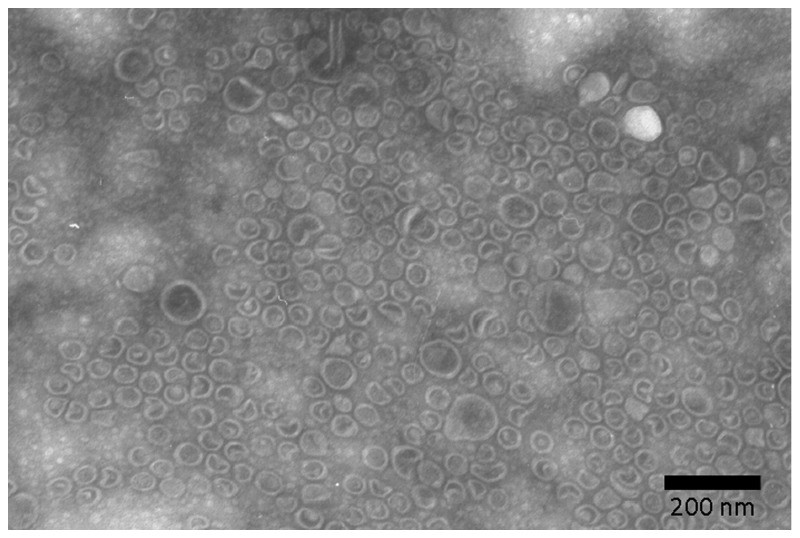
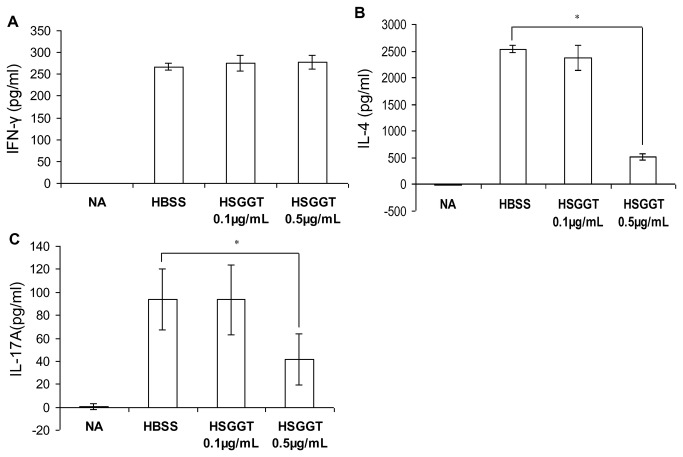
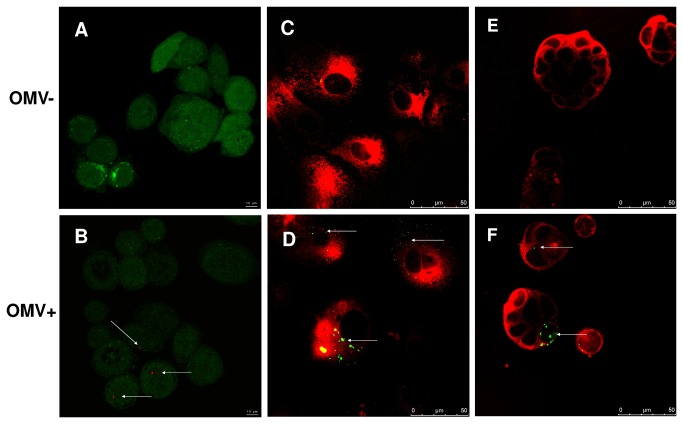
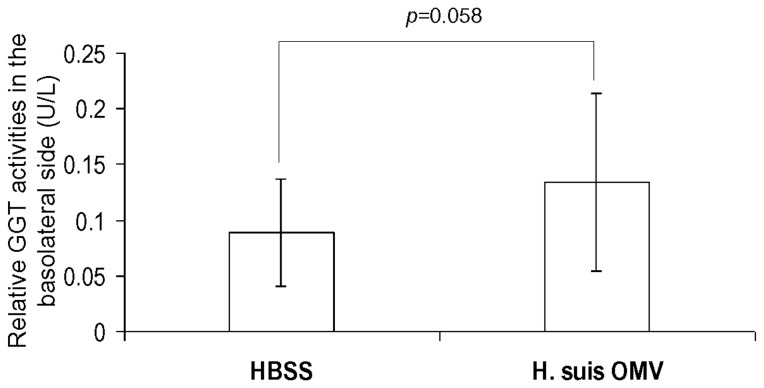
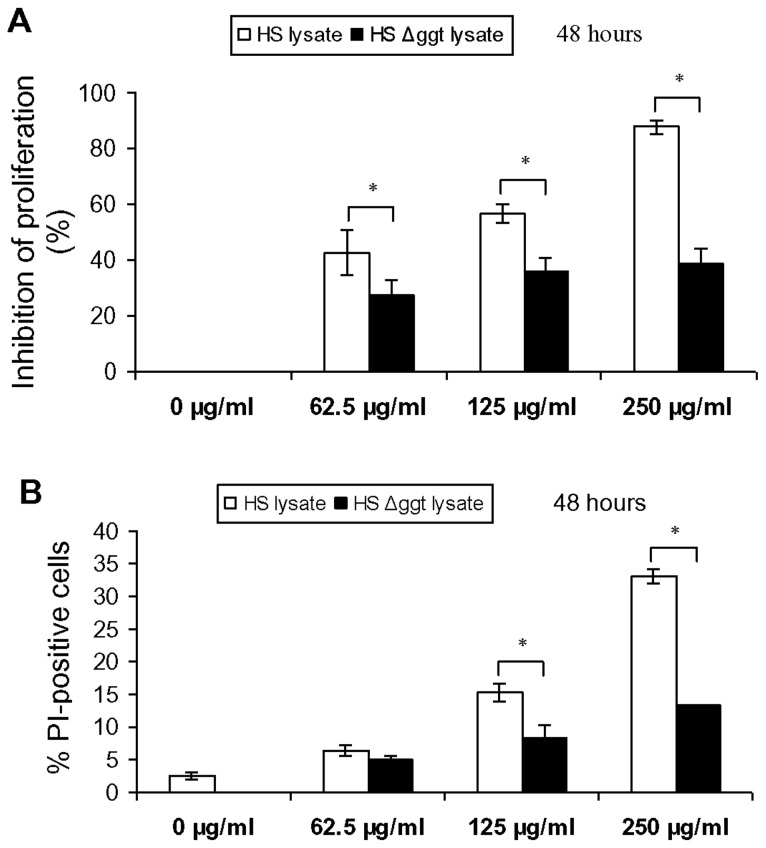
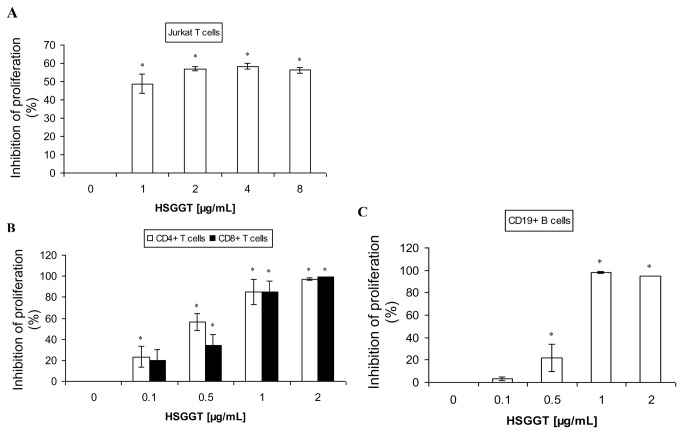
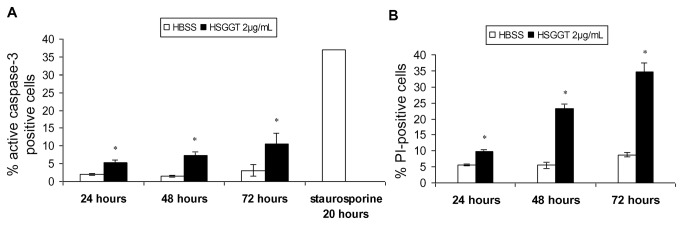
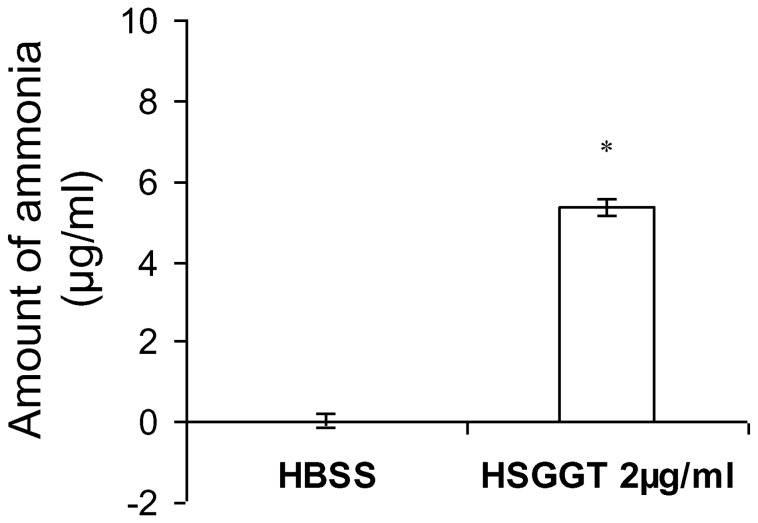
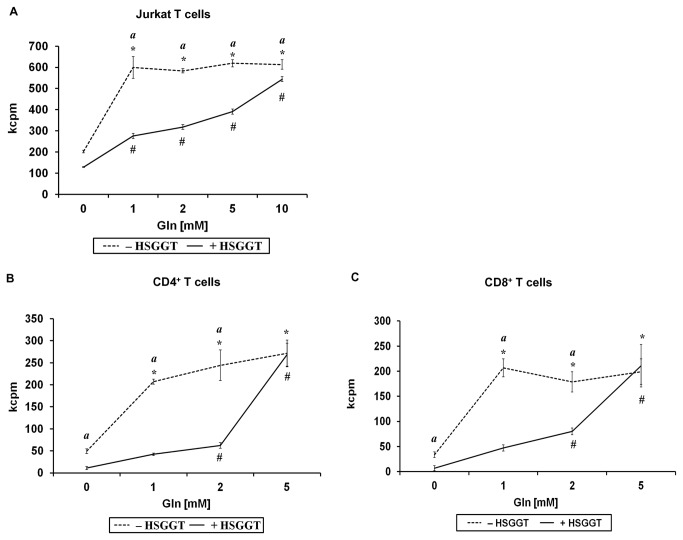
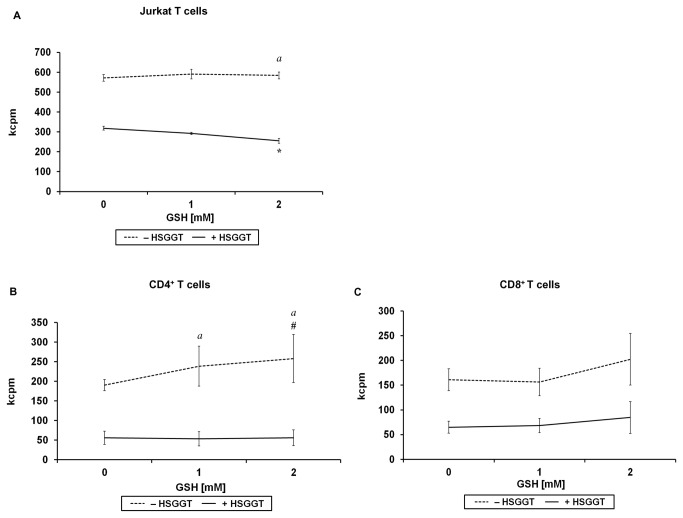
Helicobacter (H.) suis colonizes the stomach of the majority of pigs as well as a minority of humans worldwide. Infection causes chronic inflammation in the stomach of the host, however without an effective clearance of the bacteria. Currently, no information is available about possible mechanisms H. suis utilizes to interfere with the host immune response. This study describes the effect on various lymphocytes of the γ-glutamyl transpeptidase (GGT) from H. suis. Compared to whole cell lysate from wild-type H. suis, lysate from a H. suis ggt mutant strain showed a decrease of the capacity to inhibit Jurkat T cell proliferation. Incubation of Jurkat T cells with recombinantly expressed H. suis GGT resulted in an impaired proliferation, and cell death was shown to be involved. A similar but more pronounced inhibitory effect was also seen on primary murine CD4(+) T cells, CD8(+) T cells, and CD19(+) B cells. Supplementation with known GGT substrates was able to modulate the observed effects. Glutamine restored normal proliferation of the cells, whereas supplementation with reduced glutathione strengthened the H. suis GGT-mediated inhibition of proliferation. H. suis GGT treatment abolished secretion of IL-4 and IL-17 by CD4(+) T cells, without affecting secretion of IFN-γ. Finally, H. suis outer membrane vesicles (OMV) were identified as a possible delivery route of H. suis GGT to lymphocytes residing in the deeper mucosal layers. Thus far, this study is the first to report that the effects on lymphocytes of this enzyme, not only important for H. suis metabolism but also for that of other Helicobacter species, depend on the degradation of two specific substrates: glutamine and reduced glutatione. This will provide new insights into the pathogenic mechanisms of H. suis infection in particular and infection with gastric helicobacters in general.
猪源螺杆菌(H. suis)在全球范围内定植于大多数猪的胃部,也定植于少数人类的胃部。感染会导致宿主胃部的慢性炎症,但细菌无法被有效清除。目前,尚无关于 H. suis 可能利用哪些机制来干扰宿主免疫反应的信息。本研究描述了 H. suis 的γ-谷氨酰转肽酶(GGT)对各种淋巴细胞的影响。与野生型 H. suis 的全细胞裂解物相比,来自 H. suis ggt 突变株的裂解物显示出抑制 Jurkat T 细胞增殖的能力降低。Jurkat T 细胞与重组表达的 H. suis GGT 孵育会导致增殖受损,并显示细胞死亡涉及其中。在原代小鼠 CD4(+)T 细胞、CD8(+)T 细胞和 CD19(+)B 细胞中也观察到类似但更明显的抑制作用。补充已知的 GGT 底物能够调节观察到的作用。谷氨酰胺能够恢复细胞的正常增殖,而补充还原型谷胱甘肽则增强了 H. suis GGT 介导的增殖抑制作用。H. suis GGT 处理会消除 CD4(+)T 细胞分泌的 IL-4 和 IL-17,而不影响 IFN-γ 的分泌。最后,鉴定出 H. suis 外膜囊泡(OMV)是 H. suis GGT 递送至位于更深粘膜层的淋巴细胞的可能途径。到目前为止,这项研究首次报道了这种酶对淋巴细胞的作用不仅对 H. suis 的代谢很重要,而且对其他幽门螺杆菌物种的代谢也很重要,这取决于两种特定底物的降解:谷氨酰胺和还原型谷胱甘肽。这将为猪源螺杆菌感染特别是胃幽门螺杆菌感染的致病机制提供新的见解。