Department of Pathology, Bacteriology and Avian Diseases, Faculty of Veterinary Medicine, Ghent University, 9820 Merelbeke, Belgium.
Vet Res. 2012 Mar 22;43(1):22. doi: 10.1186/1297-9716-43-22.
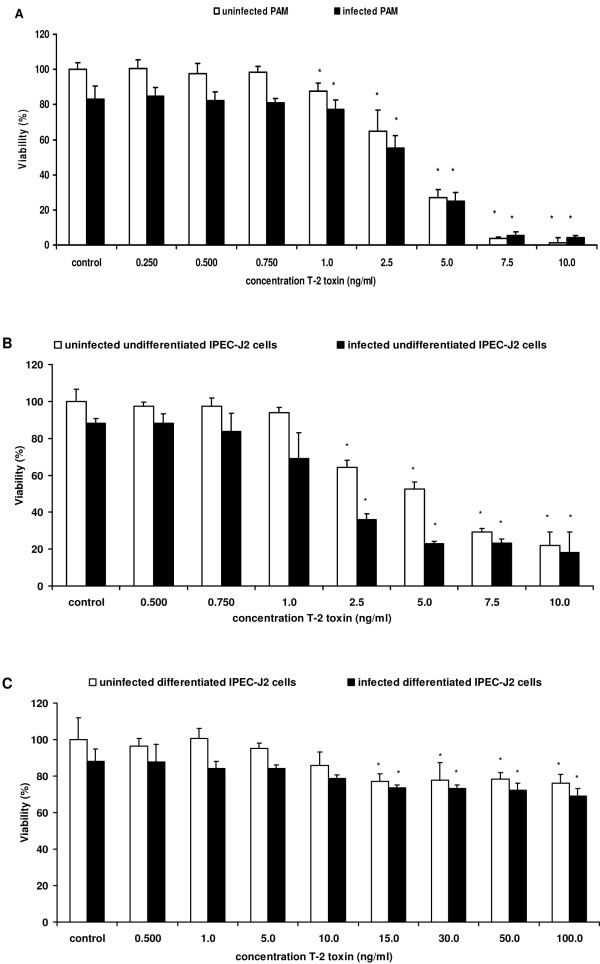
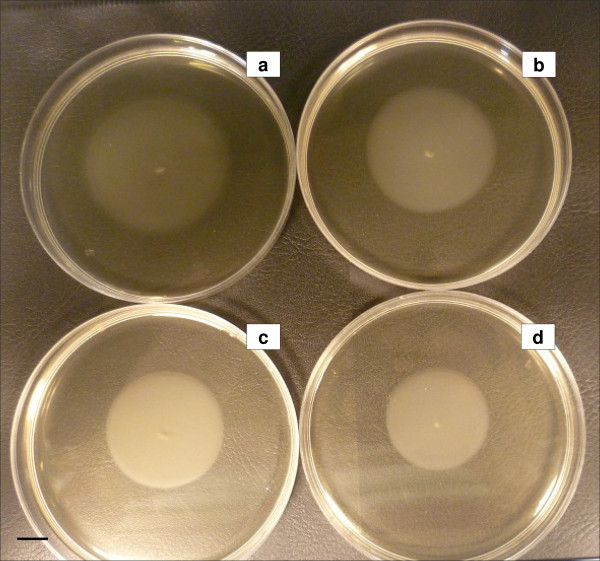
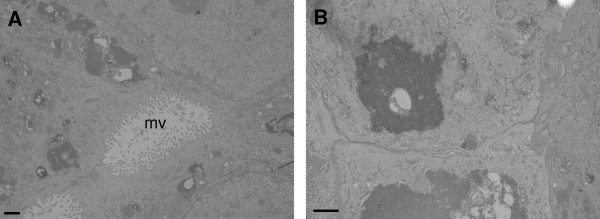
The mycotoxin T-2 toxin and Salmonella Typhimurium infections pose a significant threat to human and animal health. Interactions between both agents may result in a different outcome of the infection. Therefore, the aim of the presented study was to investigate the effects of low and relevant concentrations of T-2 toxin on the course of a Salmonella Typhimurium infection in pigs. We showed that the presence of 15 and 83 μg T-2 toxin per kg feed significantly decreased the amount of Salmonella Typhimurium bacteria present in the cecum contents, and a tendency to a reduced colonization of the jejunum, ileum, cecum, colon and colon contents was noticed. In vitro, proteomic analysis of porcine enterocytes revealed that a very low concentration of T-2 toxin (5 ng/mL) affects the protein expression of mitochondrial, endoplasmatic reticulum and cytoskeleton associated proteins, proteins involved in protein synthesis and folding, RNA synthesis, mitogen-activated protein kinase signaling and regulatory processes. Similarly low concentrations (1-100 ng/mL) promoted the susceptibility of porcine macrophages and intestinal epithelial cells to Salmonella Typhimurium invasion, in a SPI-1 independent manner. Furthermore, T-2 toxin (1-5 ng/mL) promoted the translocation of Salmonella Typhimurium over an intestinal porcine epithelial cell monolayer. Although these findings may seem in favour of Salmonella Typhimurium, microarray analysis showed that T-2 toxin (5 ng/mL) causes an intoxication of Salmonella Typhimurium, represented by a reduced motility and a downregulation of metabolic and Salmonella Pathogenicity Island 1 genes. This study demonstrates marked interactions of T-2 toxin with Salmonella Typhimurium pathogenesis, resulting in bacterial intoxication.
真菌毒素 T-2 毒素和沙门氏菌 Typhimurium 感染对人类和动物的健康构成重大威胁。这两种病原体之间的相互作用可能导致感染的结果不同。因此,本研究的目的是研究低浓度和相关浓度的 T-2 毒素对猪沙门氏菌 Typhimurium 感染过程的影响。我们表明,饲料中存在 15 和 83μg T-2 毒素/公斤可显著降低盲肠内容物中沙门氏菌 Typhimurium 细菌的数量,并且注意到空肠、回肠、盲肠、结肠和结肠内容物的定植减少的趋势。在体外,猪肠细胞的蛋白质组学分析表明,非常低浓度的 T-2 毒素(5ng/mL)会影响与线粒体、内质网和细胞骨架相关的蛋白质、参与蛋白质合成和折叠、RNA 合成、丝裂原激活蛋白激酶信号和调节过程的蛋白质的表达。同样低浓度(1-100ng/mL)以 SPI-1 独立的方式促进猪巨噬细胞和肠上皮细胞对沙门氏菌 Typhimurium 侵袭的易感性。此外,T-2 毒素(1-5ng/mL)促进沙门氏菌 Typhimurium 在猪肠上皮细胞单层上的易位。尽管这些发现似乎有利于沙门氏菌 Typhimurium,但微阵列分析表明,T-2 毒素(5ng/mL)会导致沙门氏菌 Typhimurium 中毒,表现为运动能力降低以及代谢和沙门氏菌致病岛 1 基因下调。本研究表明 T-2 毒素与沙门氏菌 Typhimurium 发病机制之间存在明显的相互作用,导致细菌中毒。