Université de Bordeaux, Institut de Biochimie et Génétique Cellulaires, F-33077 Bordeaux Cedex, France.
J Cell Biol. 2013 Nov 25;203(4):585-94. doi: 10.1083/jcb.201306075. Epub 2013 Nov 18.
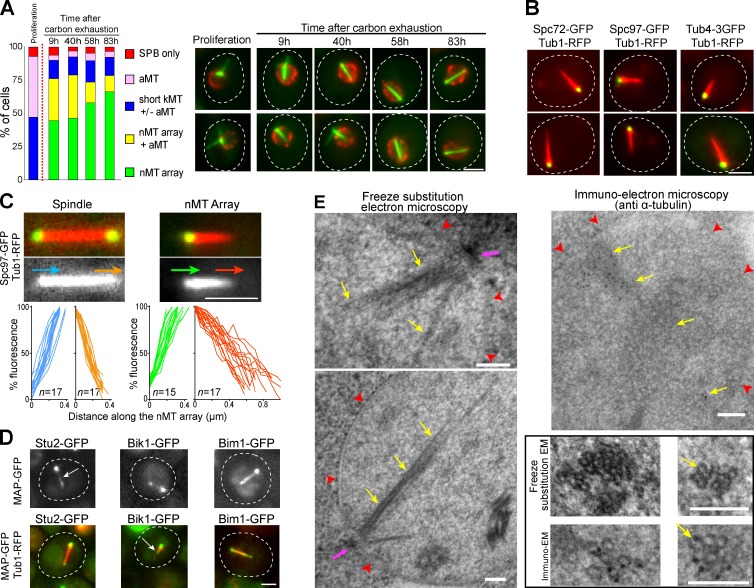
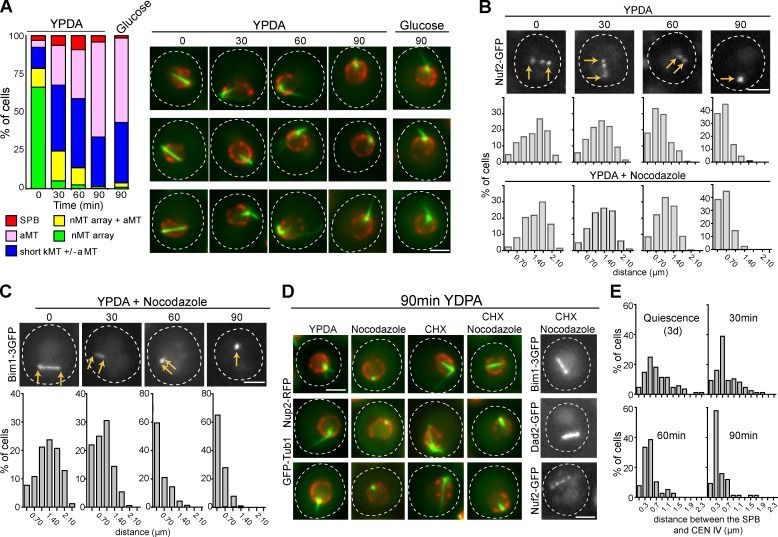
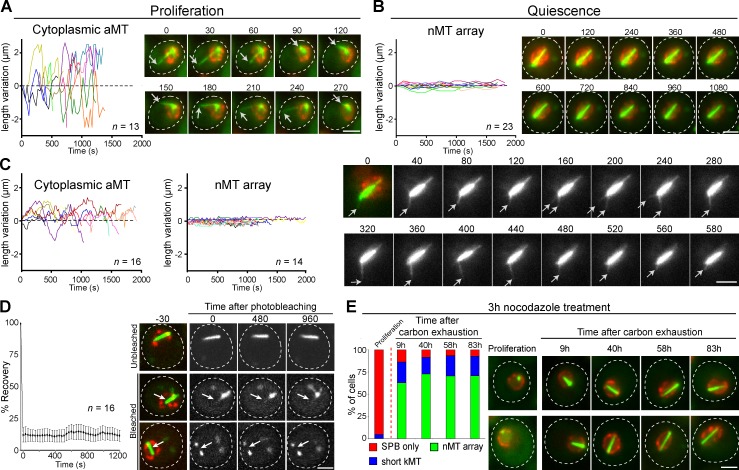
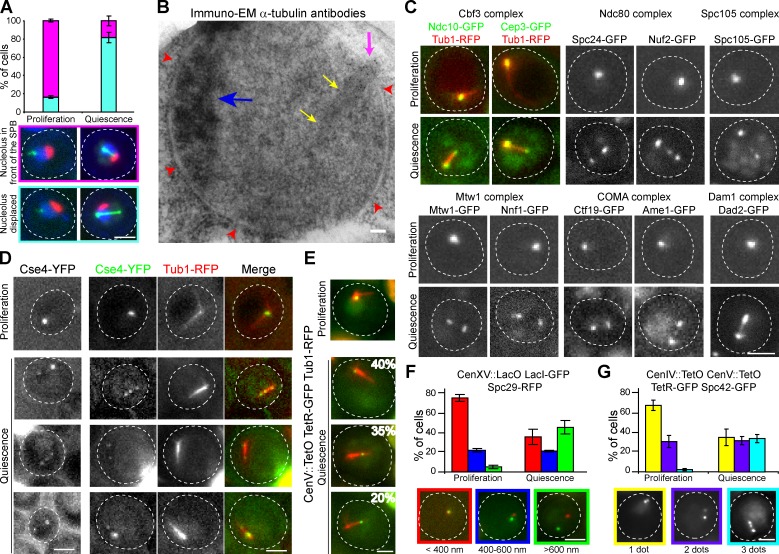
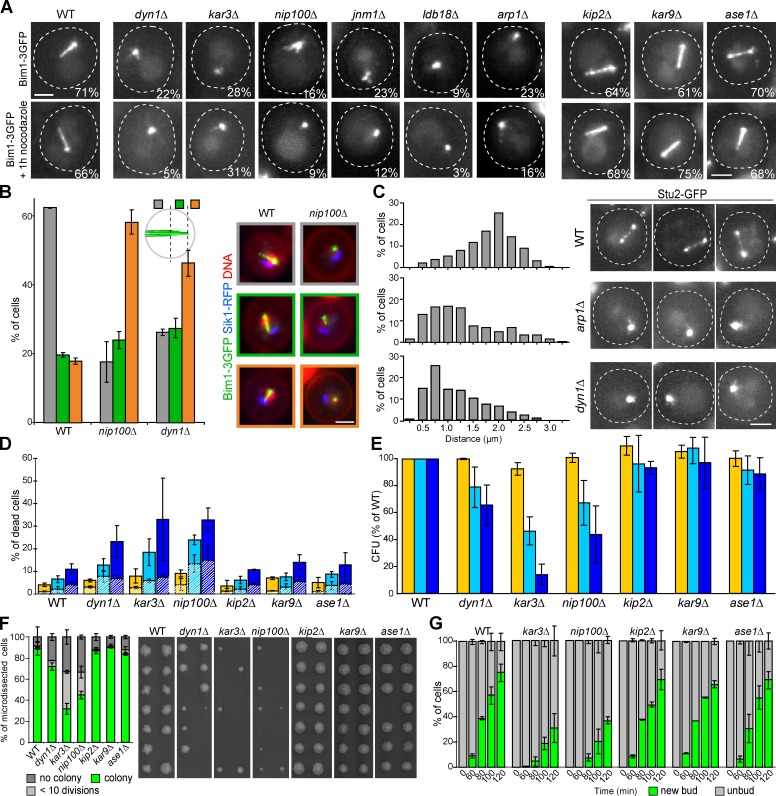
The microtubule cytoskeleton is a highly dynamic network. In dividing cells, its complex architecture not only influences cell shape and movement but is also crucial for chromosome segregation. Curiously, nothing is known about the behavior of this cellular machinery in quiescent cells. Here we show that, upon quiescence entry, the Saccharomyces cerevisiae microtubule cytoskeleton is drastically remodeled. Indeed, while cytoplasmic microtubules vanish, the spindle pole body (SPB) assembles a long and stable monopolar array of nuclear microtubules that spans the entire nucleus. Consequently, the nucleolus is displaced. Kinetochores remain attached to microtubule tips but lose SPB clustering and distribute along the microtubule array, leading to a large reorganization of the nucleus. When cells exit quiescence, the nuclear microtubule array slowly depolymerizes and, by pulling attached centromeres back to the SPB, allows the recovery of a typical Rabl-like configuration. Finally, mutants that do not assemble a nuclear array of microtubules are impaired for both quiescence survival and exit.
微管细胞骨架是一个高度动态的网络。在分裂的细胞中,其复杂的结构不仅影响细胞的形状和运动,而且对染色体分离也至关重要。奇怪的是,关于静止细胞中这种细胞机制的行为,人们一无所知。在这里,我们表明,进入静止状态后,酿酒酵母的微管细胞骨架会发生剧烈的重塑。实际上,虽然细胞质微管消失了,但纺锤体极体 (SPB) 会组装出一个长而稳定的核微管单极阵列,该阵列跨越整个细胞核。因此,核仁被移位。动粒仍然附着在微管尖端,但失去了 SPB 聚集并沿着微管阵列分布,导致细胞核的大规模重组。当细胞退出静止期时,核微管阵列会缓慢解聚,并且通过将附着的着丝粒拉回到 SPB,允许恢复典型的 Rabl 样构型。最后,不能组装核微管阵列的突变体在静止期存活和退出方面都受到损害。