Department of Medical Microbiology, Faculty of Medicine, University of Malaya, Kuala Lumpur 50603, Malaysia.
Sensors (Basel). 2013 Nov 7;13(11):15242-51. doi: 10.3390/s131115242.
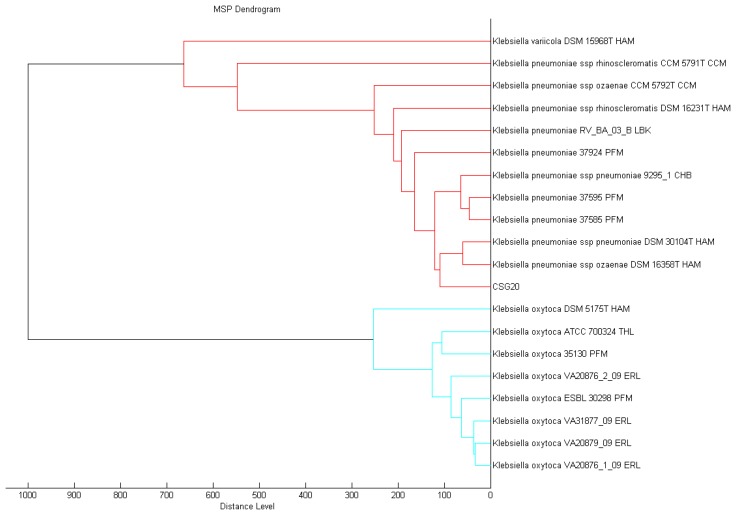
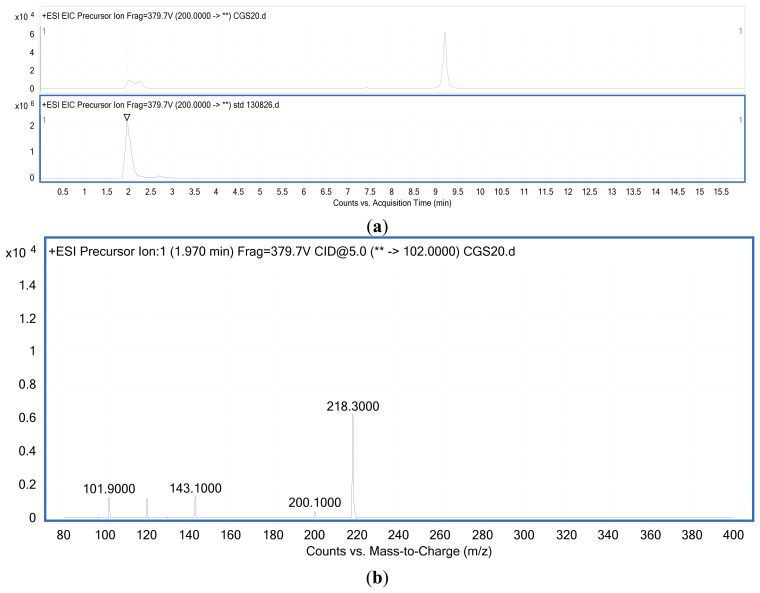
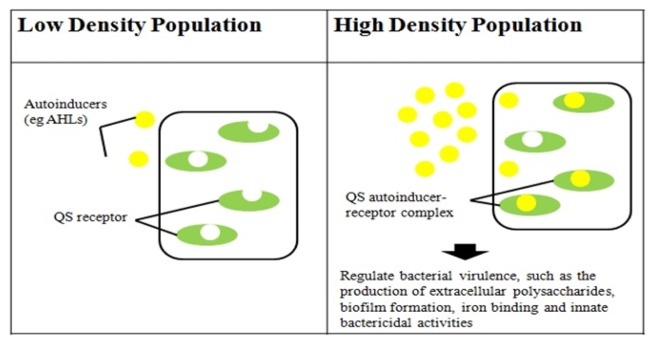
Klebsiella pneumoniae is one of the most common Gram-negative bacterial pathogens in clinical practice. It is associated with a wide range of disorders, ranging from superficial skin and soft tissue infections to potentially fatal sepsis in the lungs and blood stream. Quorum sensing, or bacterial cell-cell communication, refers to population density-dependent gene expression modulation. Quorum sensing in Proteobacteria relies on the production and sensing of signaling molecules which are mostly N-acylhomoserine lactones. Here, we report the identification of a multidrug resistant clinical isolate, K. pneumoniae strain CSG20, using matrix-assisted laser desorption ionization-time-of-flight (MALDI-TOF) mass spectrometry. We further confirmed quorum sensing activity in this strain with the use of high resolution tandem liquid chromatography quadrupole mass spectrometry and provided evidence K. pneumoniae strain CSG20 produced N-hexanoyl-homoserine lactone (C6-HSL). To the best of our knowledge, this is the first report on the production of N-hexanoylhomoserine lactone (C6-HSL) in clinical isolate K. pneumoniae.
肺炎克雷伯菌是临床实践中最常见的革兰氏阴性细菌病原体之一。它与多种疾病有关,从皮肤和软组织的浅表感染到肺部和血液中潜在致命的败血症。群体感应,或细菌细胞间通讯,是指依赖于种群密度的基因表达调控。变形菌的群体感应依赖于信号分子的产生和感应,这些信号分子主要是 N-酰基高丝氨酸内酯。在这里,我们使用基质辅助激光解吸电离飞行时间(MALDI-TOF)质谱法鉴定了一种多药耐药的临床分离株,肺炎克雷伯菌 CSG20 株。我们进一步通过高分辨率串联液相色谱-四极杆质谱证实了该菌株的群体感应活性,并提供了肺炎克雷伯菌 CSG20 株产生 N-己酰基高丝氨酸内酯(C6-HSL)的证据。据我们所知,这是关于临床分离株肺炎克雷伯菌产生 N-己酰基高丝氨酸内酯(C6-HSL)的首次报道。