Division of Genetics and Molecular Biology, Institute of Biological Sciences, Faculty of Science, University of Malaya, Kuala Lumpur 50603, Malaysia.
Sensors (Basel). 2013 Mar 20;13(3):3975-85. doi: 10.3390/s130303975.
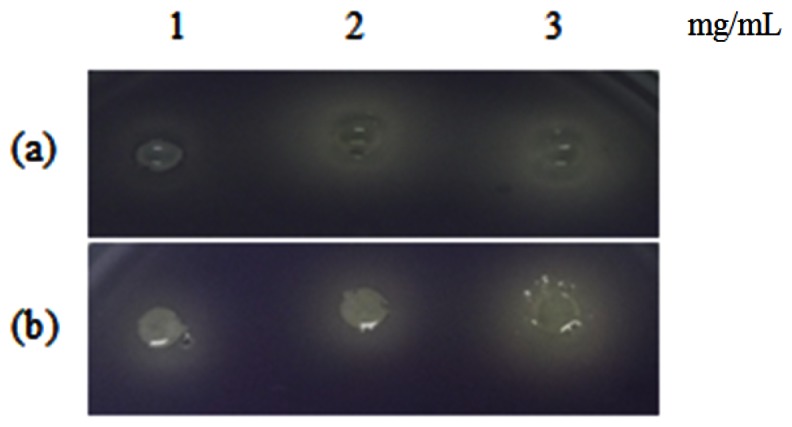
Various parts of Piper nigrum, Piper betle and Gnetum gnemon are used as food sources by Malaysians. The purpose of this study is to examine the anti-quorum sensing (anti-QS) properties of P. nigrum, P. betle and G. gnemon extracts. The hexane, chloroform and methanol extracts of these plants were assessed in bioassays involving Pseudomonas aeruginosa PA01, Escherichia coli [pSB401], E. coli [pSB1075] and Chromobacterium violaceum CV026. It was found that the extracts of these three plants have anti-QS ability. Interestingly, the hexane, chloroform and methanol extracts from P. betle showed the most potent anti-QS activity as judged by the bioassays. Since there is a variety of plants that serve as food sources in Malaysia that have yet to be tested for anti-QS activity, future work should focus on identification of these plants and isolation of the anti-QS compounds.
胡椒、菝葜和买麻藤的不同部位被马来西亚人用作食物来源。本研究旨在研究黑胡椒、菝葜和买麻藤提取物的抗群体感应(anti-QS)特性。采用生物测定法评估了这些植物的正己烷、氯仿和甲醇提取物对铜绿假单胞菌 PA01、大肠杆菌 [pSB401]、大肠杆菌 [pSB1075] 和紫色色杆菌 CV026 的影响。结果发现,这三种植物的提取物均具有抗 QS 能力。有趣的是,根据生物测定结果,菝葜的正己烷、氯仿和甲醇提取物显示出最强的抗 QS 活性。由于马来西亚有多种作为食物来源的植物尚未进行抗 QS 活性测试,因此未来的工作应集中于鉴定这些植物并分离抗 QS 化合物。