Oldmeadow Julian A, Fiske Susan T
Department of Psychology, University of York, Heslington, York YO10 5DD, UK.
Group Process Intergroup Relat. 2010 Jul;13(4). doi: 10.1177/1368430209355650.
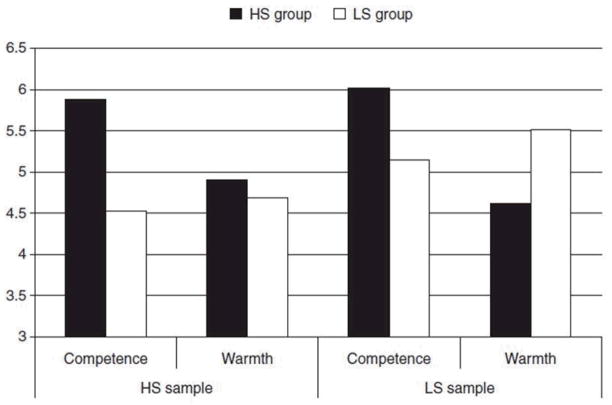
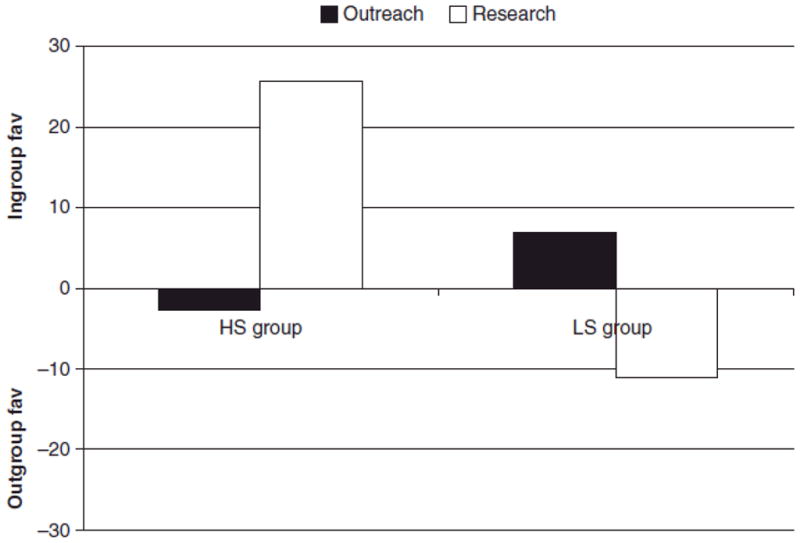
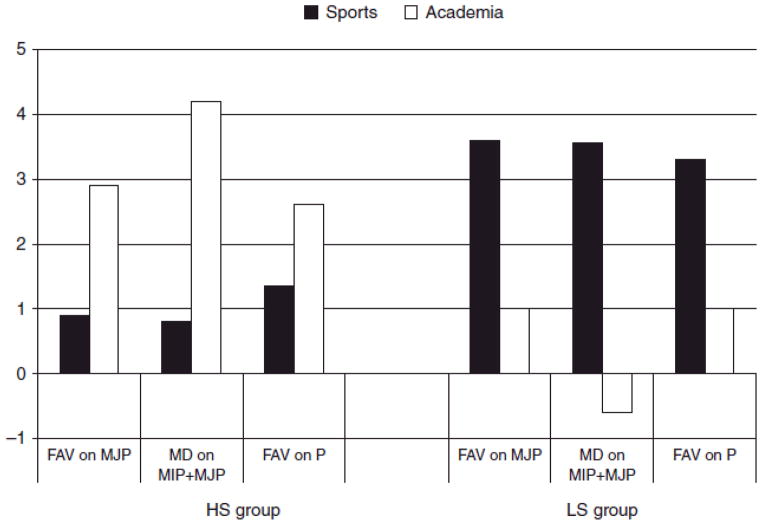
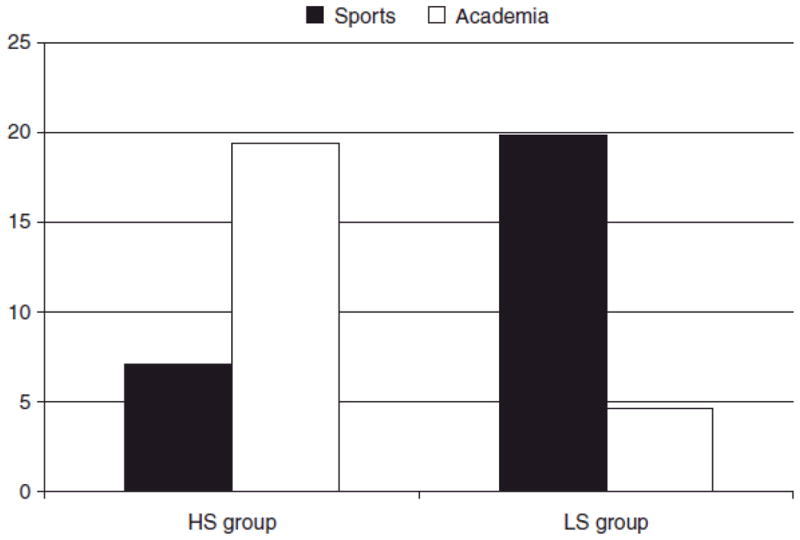
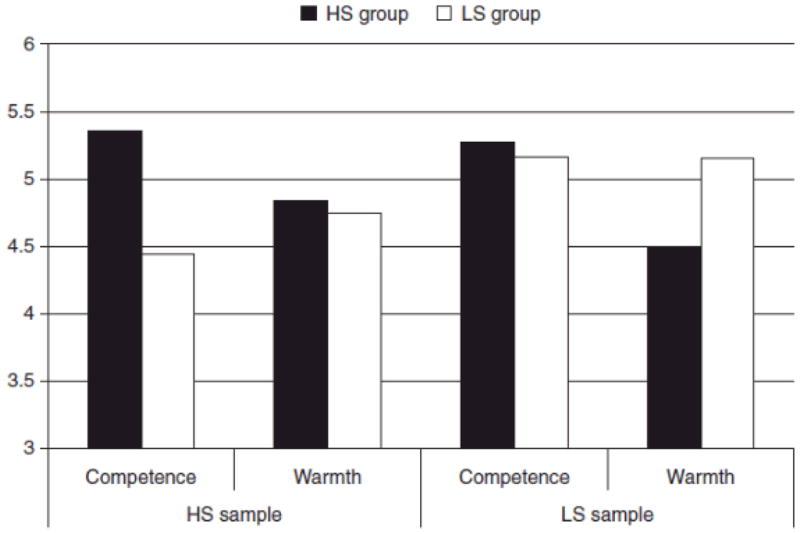
Research on intergroup discrimination has focused on the cognitive and motivational mechanisms involved, but the role of stereotype content has been neglected. Drawing on social identity theory and stereotype content research, the current studies investigated the role of stereotype content in intergroup differentiation and discrimination. Across two studies, students from high- and low-status groups differentiated themselves positively on stereotypes of competence and warmth respectively, and in allocations of resources in domains relevant to competence (academics, research) and warmth (sports, community outreach). Furthermore, there was evidence that discrimination by high- and low-status groups was driven by their respective stereotypes of competence and warmth. It is argued that stereotypes of competence and warmth, derived from status and power relations between groups, define the domains in which groups pursue positively distinct identities.
关于群体间歧视的研究主要集中在其中涉及的认知和动机机制上,但刻板印象内容的作用却被忽视了。基于社会认同理论和刻板印象内容研究,当前的研究调查了刻板印象内容在群体间分化和歧视中的作用。在两项研究中,来自高地位和低地位群体的学生分别在能力和热情的刻板印象上对自己进行了积极的区分,并且在与能力相关的领域(学术、研究)和热情相关的领域(体育、社区外展)的资源分配上也有体现。此外,有证据表明,高地位和低地位群体的歧视是由他们各自关于能力和热情的刻板印象驱动的。有人认为,源自群体间地位和权力关系的能力和热情的刻板印象,界定了群体追求积极独特身份的领域。