Owusu-Agyei Seth, Newton Sam, Mahama Emmanuel, Febir Lawrence Gyabaa, Ali Martha, Adjei Kwame, Tchum Kofi, Alhassan Latifa, Moleah Thabisile, Tanumihardjo Sherry A
Nutr J. 2013 Sep 23;12:131. doi: 10.1186/1475-2891-12-131.
Malaria is a leading cause of morbidity and mortality among young children and is estimated to cause at least 1 million deaths each year especially among pregnant women and young children under the age of five years. Vitamin A supplementation is known to reduce morbidity and mortality in young children. Zinc is required for growth and immunity and we sought to replicate the study by Zeba et al. which showed 30% lower cases of clinical malaria in children on a combination of zinc and a large dose of vitamin A compared with children on vitamin A alone based on the hypothesis that combined vitamin A and zinc reduced symptomatic malaria compared to vitamin A alone.
The primary objective was to determine the effect of vitamin A alone vs. vitamin A and zinc supplements on the incidence of clinical malaria and other anthropometric indices. It also sought to assess the effects on the incidence of anaemia, diarrhoea and pneumonia.
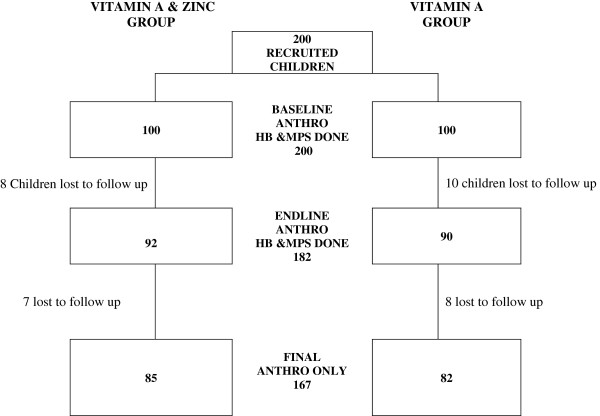
The study was community-based and 200 children between the ages of 6-24 months were randomised to receive either vitamin A (100,000 IU for infants less than 12 months & 200,000 IU for children greater than 12 months and 10 mg daily zinc in the intervention group or vitamin A and zinc placebo for 6 months in the control group.
The number of children who were diagnosed with uncomplicated malaria in the intervention group was 27% significantly lower compared with the children in the control group (p = 0.03). There were, however, no effects on severe malaria, pneumonia, anaemia and diarrhea.
Our study confirms a significant role of vitamin A and zinc in reducing malaria morbidity.
疟疾是幼儿发病和死亡的主要原因,据估计每年至少导致100万人死亡,尤其是孕妇和五岁以下幼儿。已知补充维生素A可降低幼儿的发病率和死亡率。锌对生长和免疫是必需的,我们试图重复泽巴等人的研究,该研究表明,基于维生素A和锌联合使用比单独使用维生素A能降低有症状疟疾的假设,服用锌和大剂量维生素A组合的儿童临床疟疾病例比仅服用维生素A的儿童低30%。
主要目的是确定单独使用维生素A与维生素A和锌补充剂对临床疟疾发病率及其他人体测量指标的影响。它还试图评估对贫血、腹泻和肺炎发病率的影响。
该研究以社区为基础,将200名6至24个月大的儿童随机分组,干预组接受维生素A(12个月以下婴儿为100,000国际单位,12个月以上儿童为200,000国际单位)及每日10毫克锌,对照组接受维生素A和锌安慰剂,为期6个月。
干预组中被诊断为非复杂性疟疾的儿童数量比对照组儿童显著低27%(p = 0.03)。然而,对重症疟疾、肺炎、贫血和腹泻没有影响。
我们的研究证实了维生素A和锌在降低疟疾发病率方面的重要作用。