Centre for Global Development, University of Central Lancashire, Preston, Lancashire, United Kingdom.
Independent contractor, Dunedin, New Zealand.
Adv Nutr. 2022 Dec 22;13(6):2488-2518. doi: 10.1093/advances/nmac088.
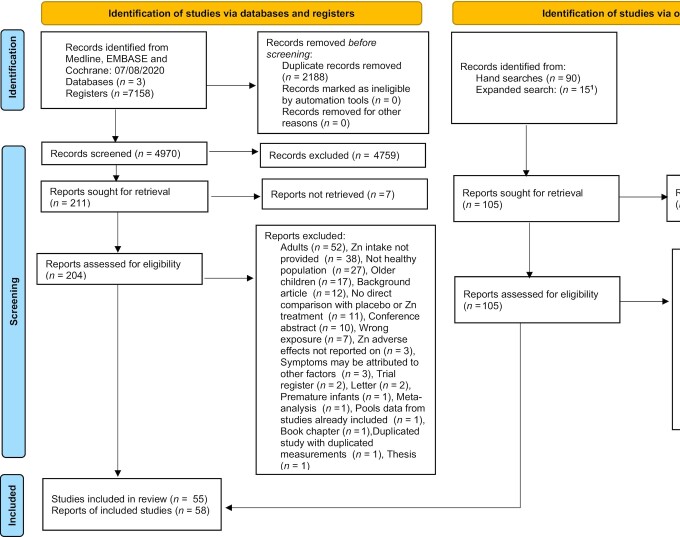
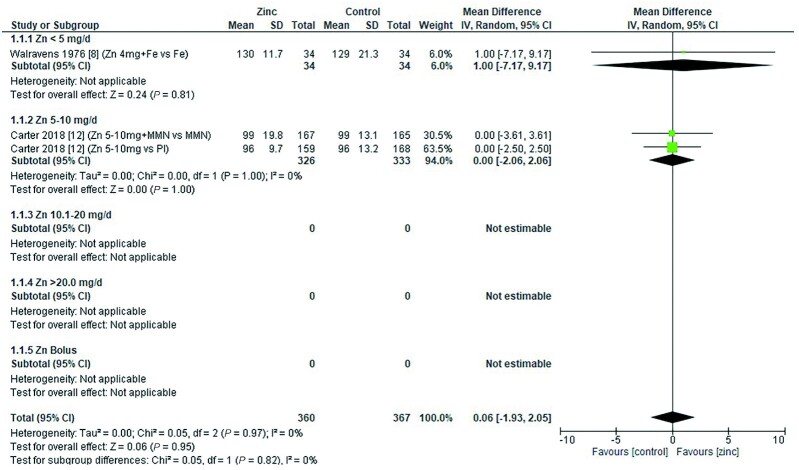
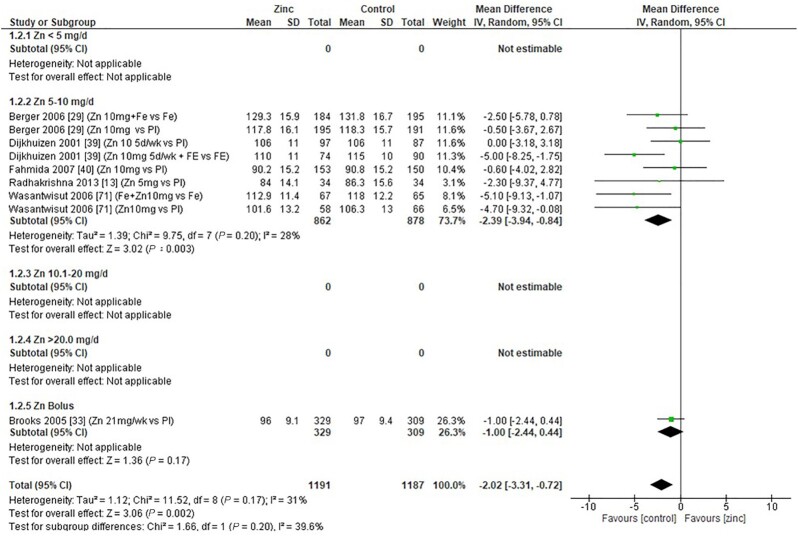
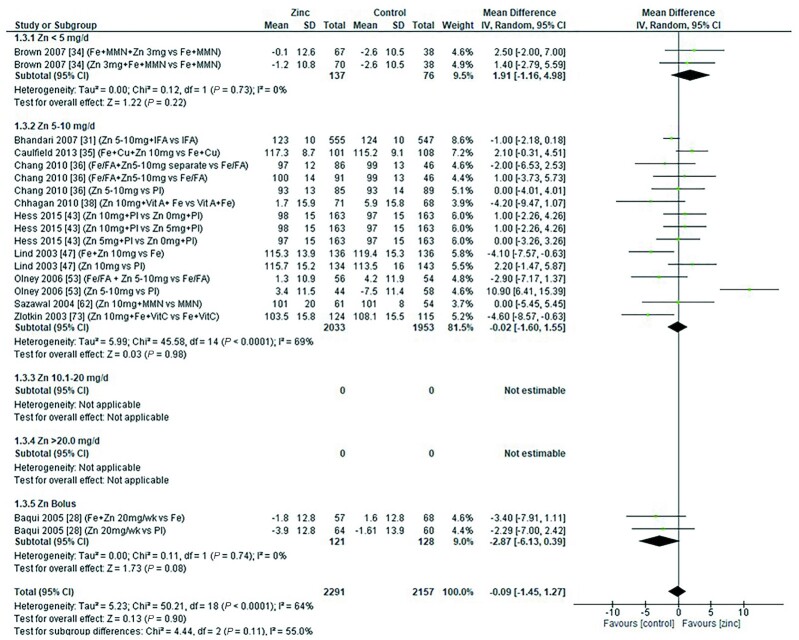
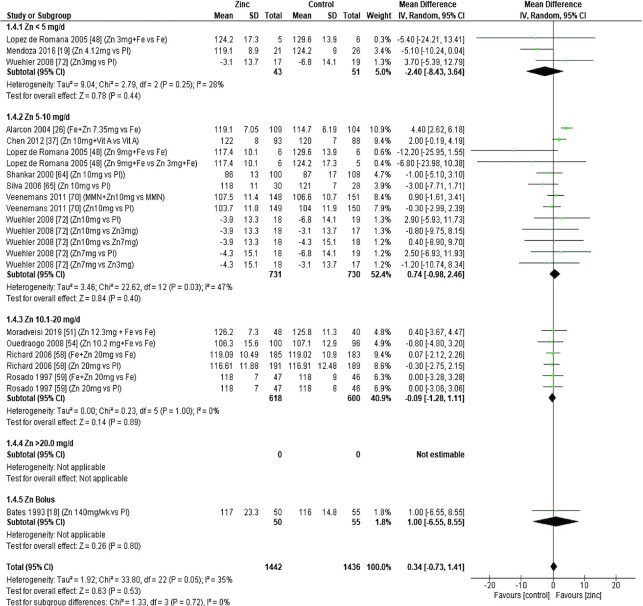
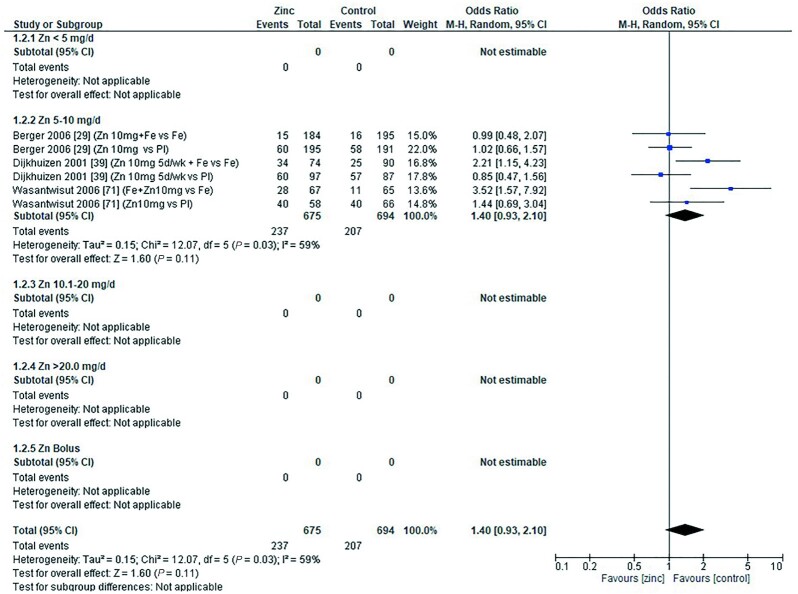
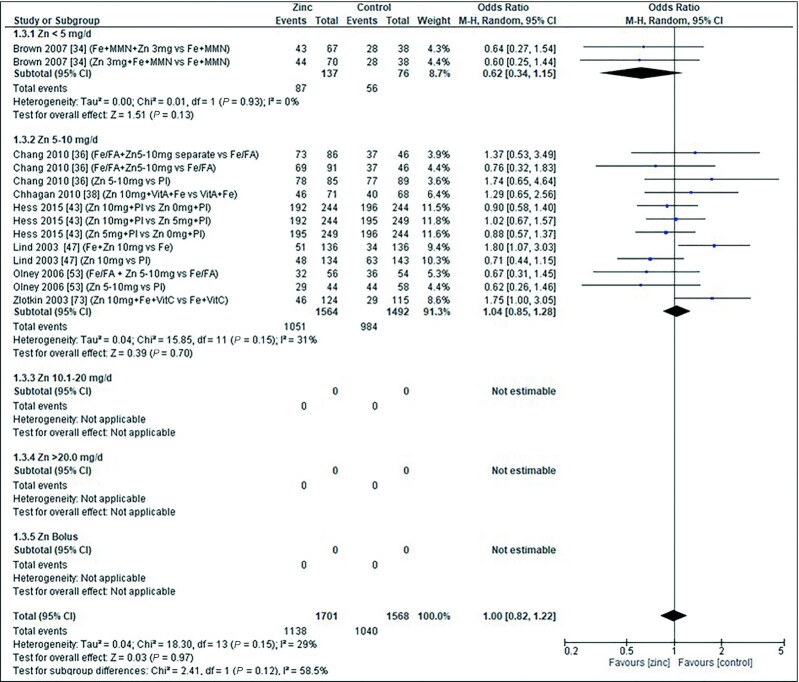
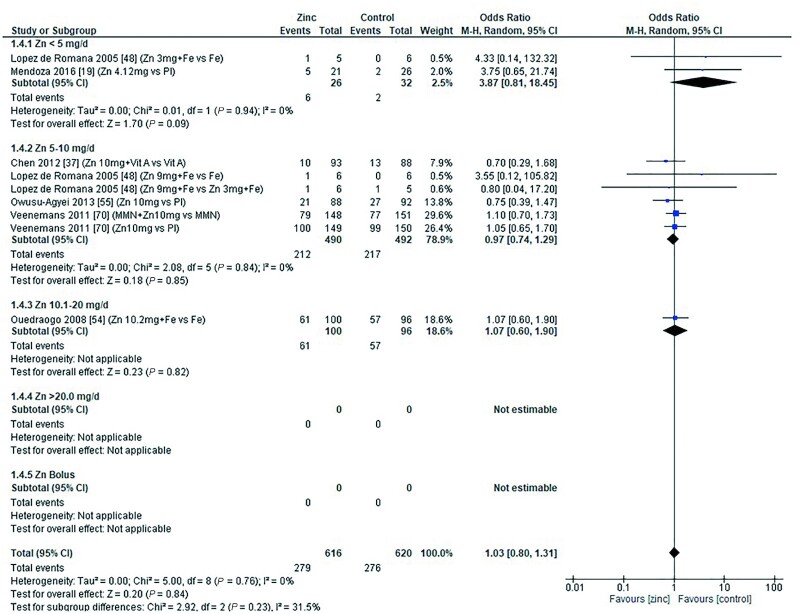
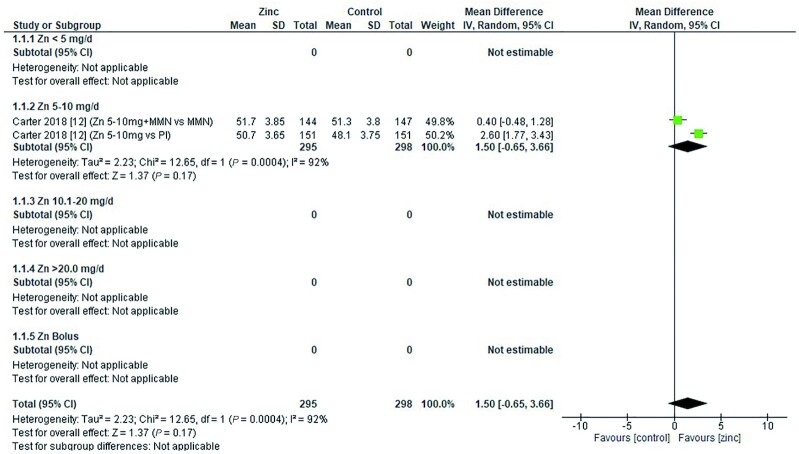
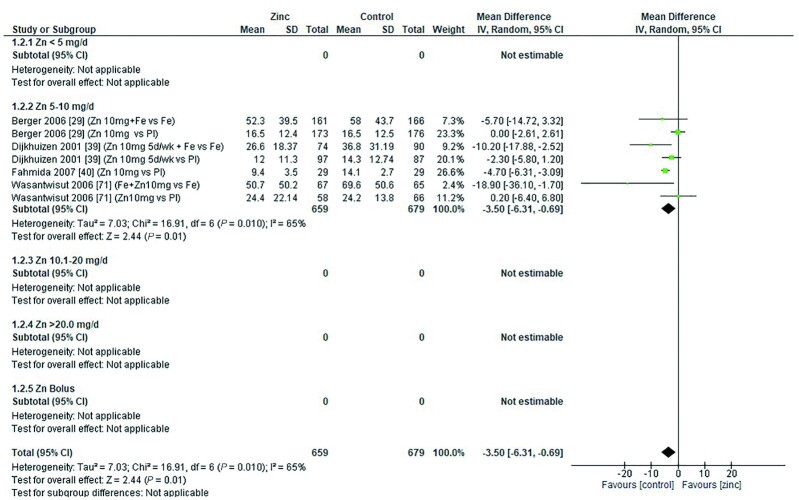
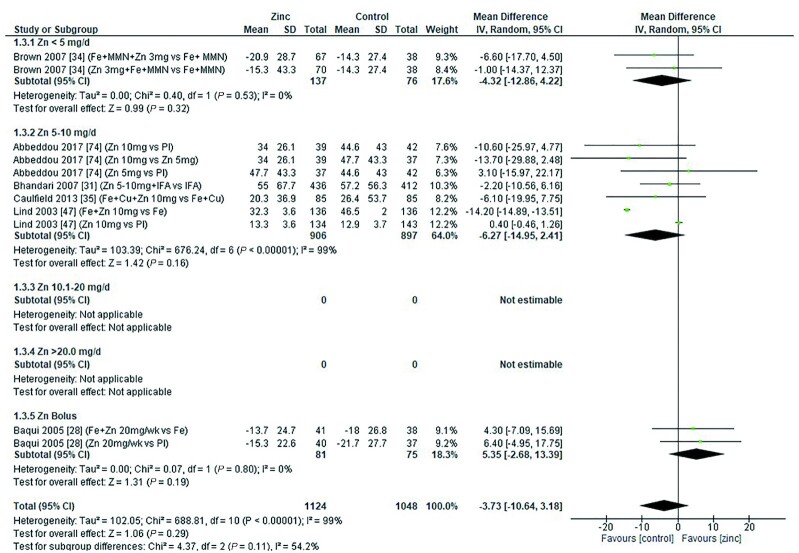
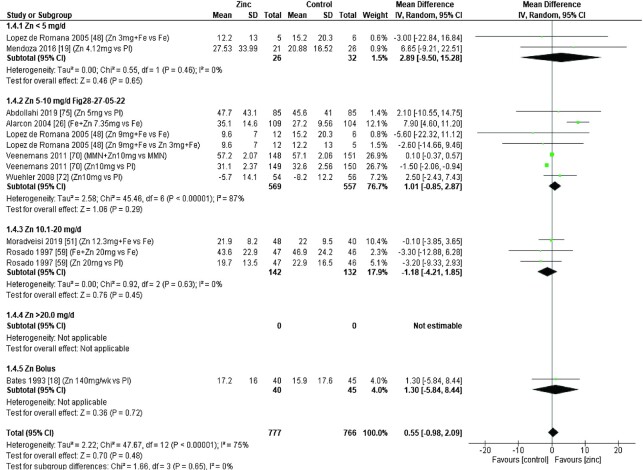
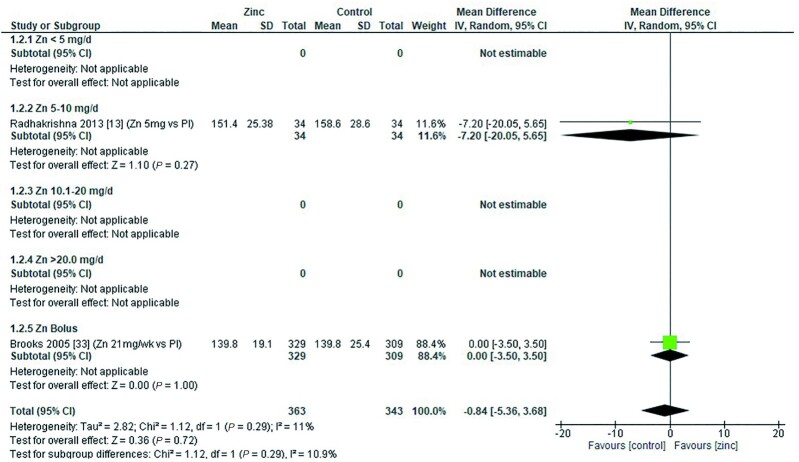
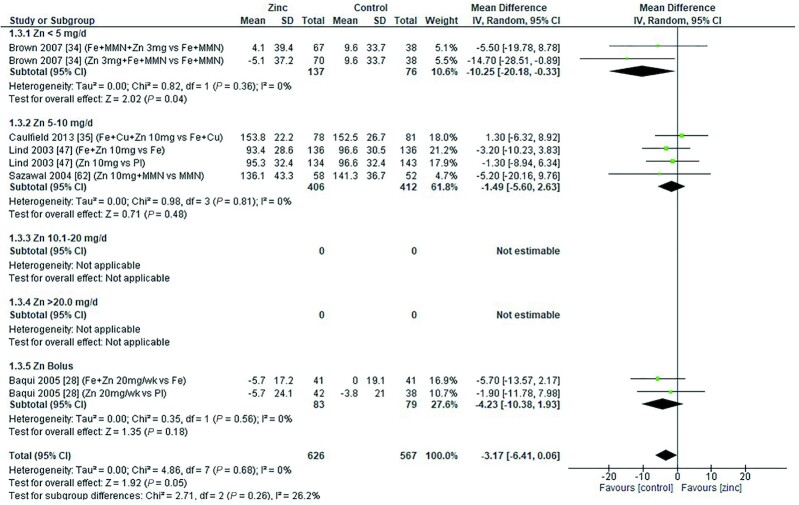
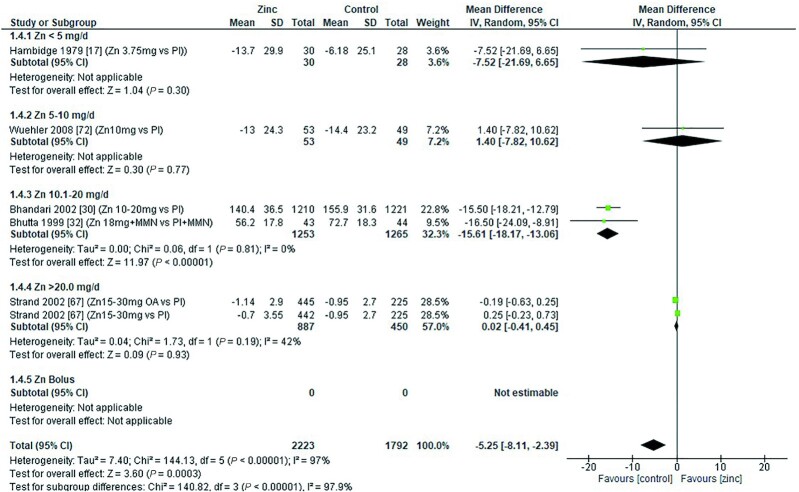
Zinc supplementation reduces morbidity, but evidence suggests that excessive intakes can have negative health consequences. Current guidelines of upper limits (ULs) of zinc intake for young children are extrapolated from adult data. This systematic review (PROSPERO; registration no. CRD42020215187) aimed to determine the levels of zinc intake at which adverse effects are observed in young children. Studies reporting potential adverse effects of zinc intake in children aged 0-3 y were identified (from inception to August 2020) in MEDLINE, Embase, and the Cochrane Library, with no limits on study design. Adverse clinical and physical effects of zinc intake were synthesized narratively, and meta-analyses of biochemical outcomes were conducted. Random effects models were used to generate forest plots to examine the evidence by age category, dose, dose duration, chemical formula of zinc, and zinc compared with placebo. The Joanna Briggs Institute Critical Appraisal Checklist, Cochrane Risk of Bias 2, and Grading of Recommendations Assessment, Development, and Evaluation (GRADE) guideline were employed to assess risk of bias and to appraise the certainty of evidence. Fifty-eight studies assessed possible adverse effects of zinc doses ranging from 3 to 70 mg/d. Data from 39 studies contributed to meta-analyses. Zinc supplementation had an adverse effect on serum ferritin, plasma/serum copper concentration, serum transferrin receptor, hemoglobin, hematocrit, and the odds of anemia in ≥1 of the subgroups investigated. Lactulose:mannitol ratio was improved with zinc supplementation, and no significant effect was observed on C-reactive protein, erythrocyte superoxide dismutase, zinc protoporphyrin, blood cholesterol, and iron deficiency anemia. The certainty of the evidence, as assessed using GRADE, was very low to moderate. Although possible adverse effects of zinc supplementation were observed in some subgroups, it is unclear whether these findings are clinically important. The synthesized data can be used to undertake a dose-response analysis to update current guidelines of ULs of zinc intake for young children.
锌补充剂可降低发病率,但有证据表明,过量摄入可能对健康产生负面影响。目前,儿童锌摄入量上限(UL)的指导方针是从成人数据推断得出的。本系统评价(PROSPERO;注册号:CRD42020215187)旨在确定在儿童中观察到锌摄入不良影响的水平。从 MEDLINE、Embase 和 Cochrane Library 中确定了(从成立到 2020 年 8 月)报告儿童(0-3 岁)锌摄入潜在不良影响的研究,对研究设计没有限制。对锌摄入的不良临床和身体影响进行了叙述性综合,对生化结果进行了 meta 分析。随机效应模型用于生成森林图,按年龄类别、剂量、剂量持续时间、锌的化学公式以及锌与安慰剂进行检查证据。使用 Joanna Briggs 研究所批判性评估清单、Cochrane 偏倚风险 2 和推荐评估、制定和评估(GRADE)指南来评估偏倚风险并评估证据的确定性。58 项研究评估了锌剂量 3-70mg/d 可能产生的不良影响。39 项研究的数据纳入了 meta 分析。锌补充剂对血清铁蛋白、血浆/血清铜浓度、血清转铁蛋白受体、血红蛋白、血细胞比容和调查的亚组中至少 1 个亚组的贫血几率有不良影响。用锌补充剂可改善乳果糖:甘露醇比值,而对 C-反应蛋白、红细胞超氧化物歧化酶、锌原卟啉、血胆固醇和缺铁性贫血无显著影响。使用 GRADE 评估,证据的确定性为极低到中度。虽然在一些亚组中观察到锌补充剂的不良影响,但尚不清楚这些发现是否具有临床意义。综合数据可用于进行剂量-反应分析,以更新儿童锌摄入量上限的现行指南。