Parasit Vectors. 2013 Oct 28;6:311. doi: 10.1186/1756-3305-6-311.
The distribution of anopheline mosquitoes is determined by temporally dynamic environmental and human-associated variables, operating over a range of spatial scales. Macro-spatial short-term trends are driven predominantly by prior (lagged) seasonal changes in climate, which regulate the abundance of suitable aquatic larval habitats. Micro-spatial distribution is determined by the location of these habitats, proximity and abundance of available human bloodmeals and prevailing micro-climatic conditions. The challenge of analysing--in a single coherent statistical framework--the lagged and distributed effect of seasonal climate changes simultaneously with the effects of an underlying hierarchy of spatial factors has hitherto not been addressed.
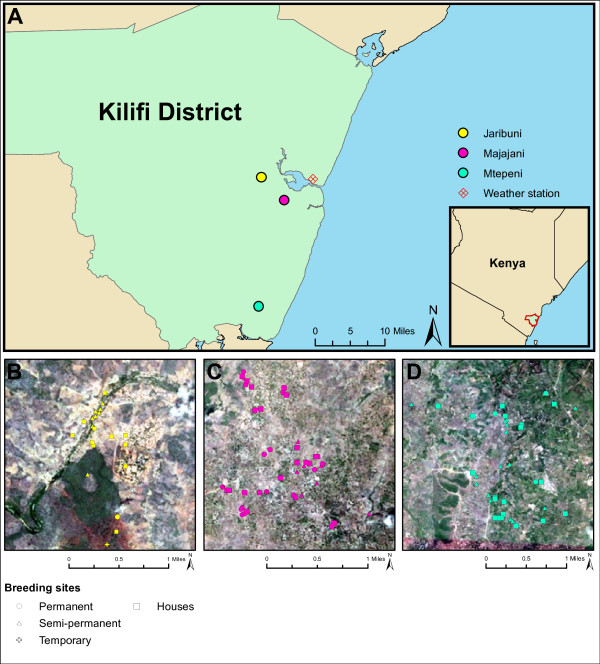
Data on Anopheles gambiae sensu stricto and A. funestus collected from households in Kilifi district, Kenya, were analysed using polynomial distributed lag generalized linear mixed models (PDL GLMMs).
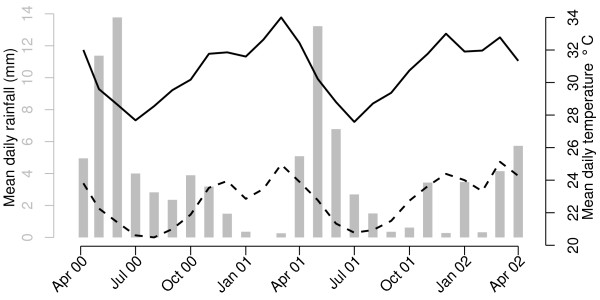
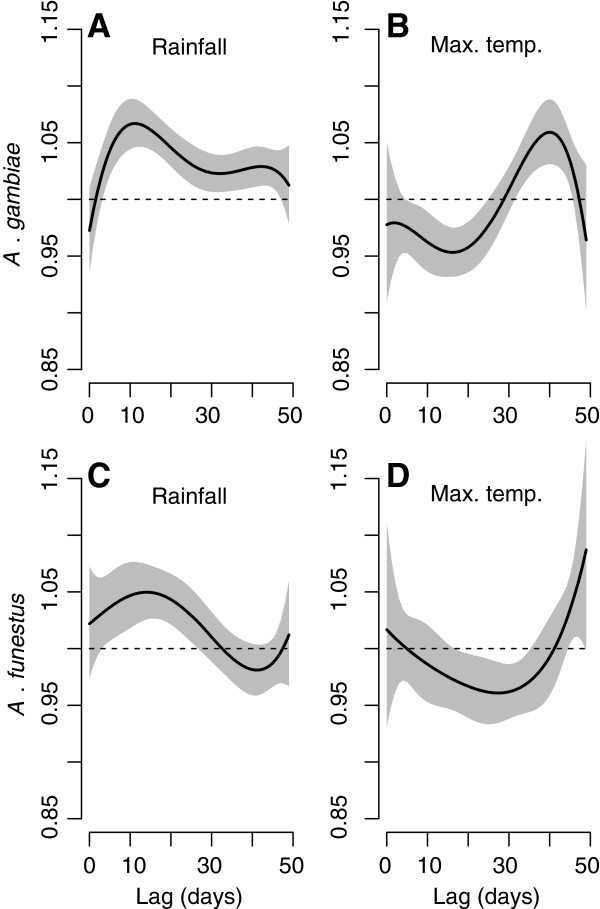
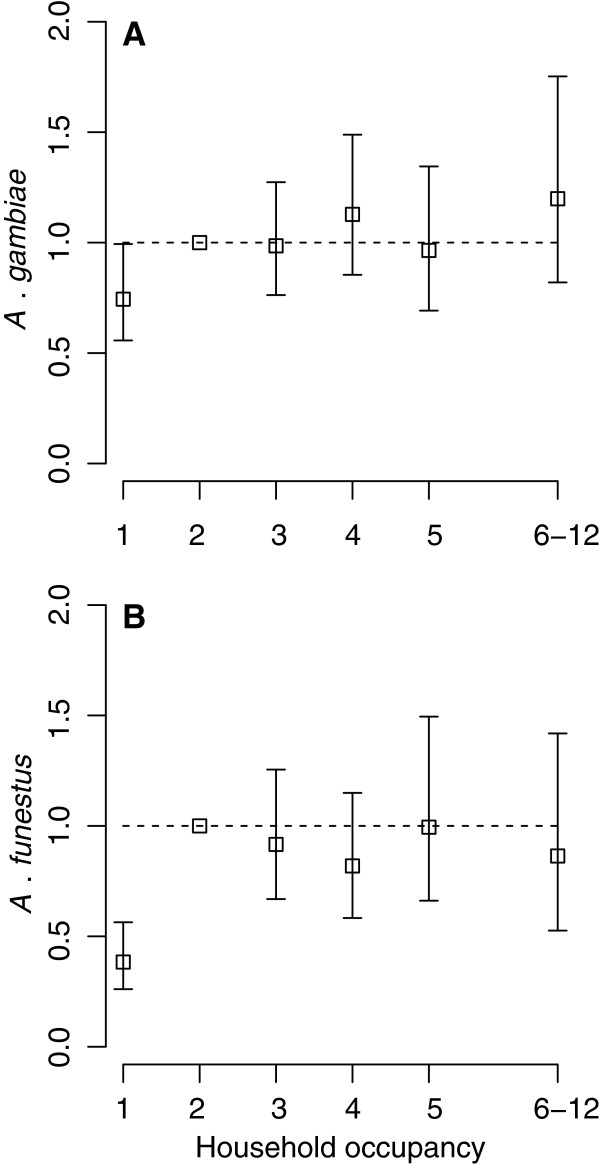
Anopheline density was positively and significantly associated with amount of rainfall between 4 to 47 days, negatively and significantly associated with maximum daily temperature between 5 and 35 days, and positively and significantly associated with maximum daily temperature between 29 and 48 days in the past (depending on Anopheles species). Multiple-occupancy households harboured greater mosquito numbers than single-occupancy households. A significant degree of mosquito clustering within households was identified.
The PDL GLMMs developed here represent a generalizable framework for analysing hierarchically-structured data in combination with explanatory variables which elicit lagged effects. The framework is a valuable tool for facilitating detailed understanding of determinants of the spatio-temporal distribution of Anopheles. Such understanding facilitates delivery of targeted, cost-effective and, in certain circumstances, preventative antivectorial interventions against malaria.
按蚊的分布由随时间动态变化的环境和人类相关变量决定,这些变量在不同的空间尺度上起作用。宏观短期趋势主要由气候的前期(滞后)季节性变化驱动,这些变化调节了适宜的水生幼虫栖息地的丰度。微观空间分布由这些栖息地的位置、可用人类血液餐的接近度和丰度以及盛行的小气候条件决定。迄今尚未解决在单一连贯的统计框架中分析季节性气候变化的滞后和分布式效应与基本空间因素层次结构的效应的问题。
使用多项式分布滞后广义线性混合模型(PDL GLMM)分析了肯尼亚基利菲区家庭中采集的按蚊属 sensu stricto 和 A. funestus 的数据。
按蚊密度与 4 至 47 天之间的降雨量呈正相关且显著相关,与 5 至 35 天之间的日最高温度呈负相关且显著相关,与过去 29 至 48 天之间的日最高温度呈正相关且显著相关(取决于按蚊种)。多住户家庭比单住户家庭容纳更多的蚊子。在家庭内发现了蚊子的高度聚类。
这里开发的 PDL GLMM 代表了一个可推广的框架,用于分析与引发滞后效应的解释变量相结合的分层结构数据。该框架是深入了解按蚊时空分布决定因素的有用工具。这种理解有助于针对疟疾提供有针对性、具有成本效益的、在某些情况下具有预防性的抗虫媒干预措施。